Copyrighted with all rights reserved by Jean Kruger.
https://www.dailypaintworks.com/buy/auction/1279375
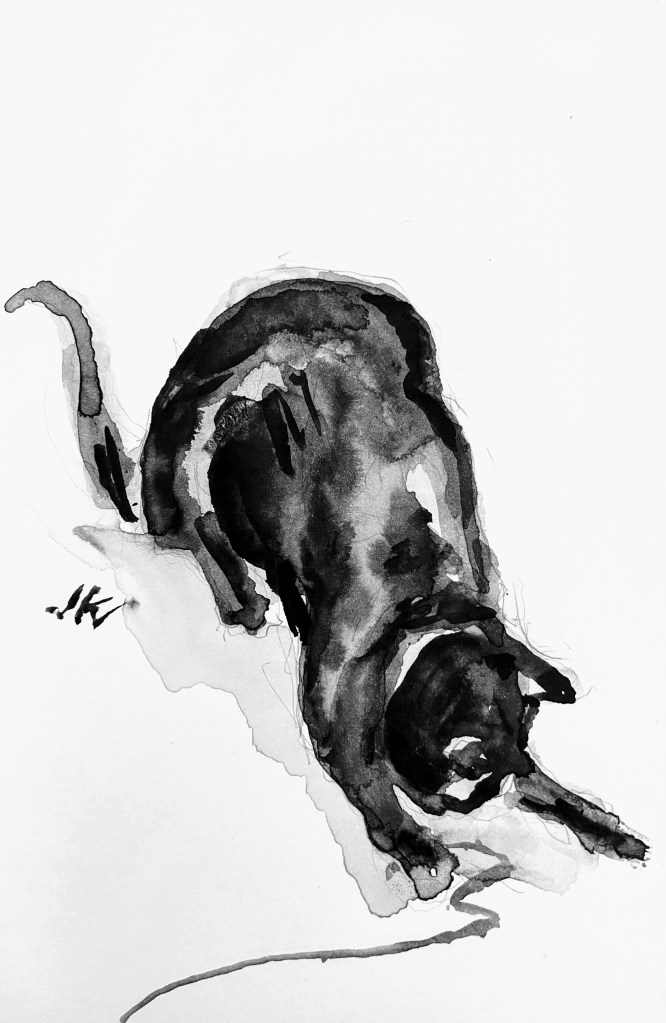
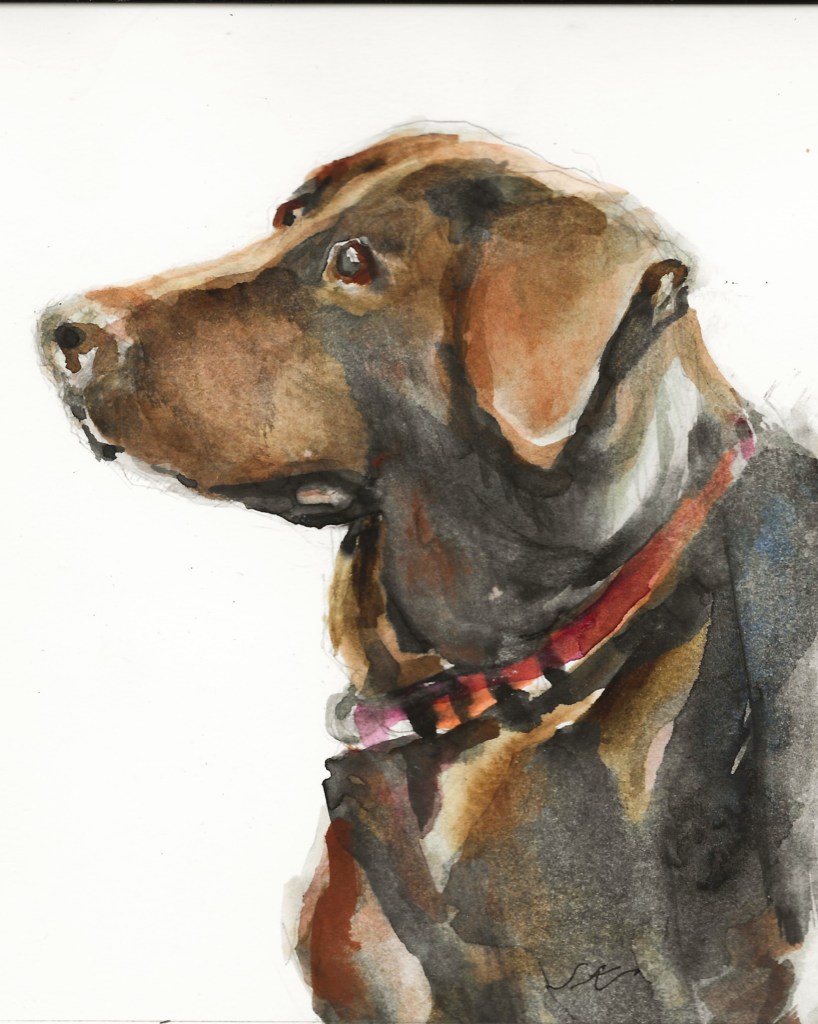
Buck the Cat chases string. What do we chase? Meow.
Buck the Cat chases string. What do we chase? Meow.
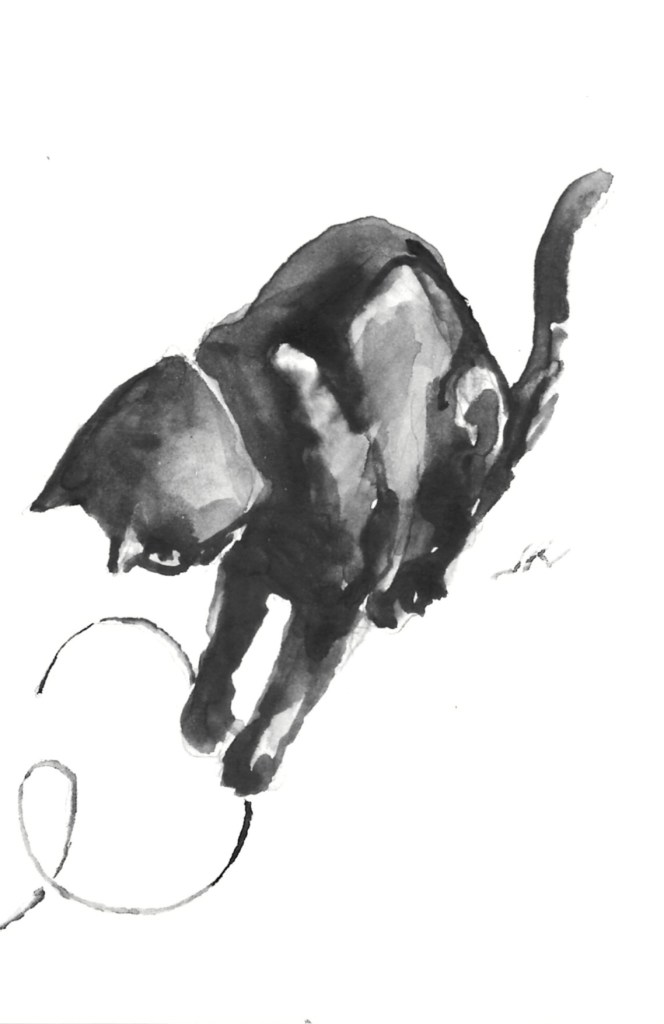
Buck the Cat is almost always busy. Meow.
The Eastern Bracken Fern is found in the Adirondacks of New York State. It’s a deciduous rhizome that appears in spring, lives and spreads in the summer, looses its fronds in the fall, winters underground and then starts it all again when the earth thaws. This painting shows the fern in early spring.
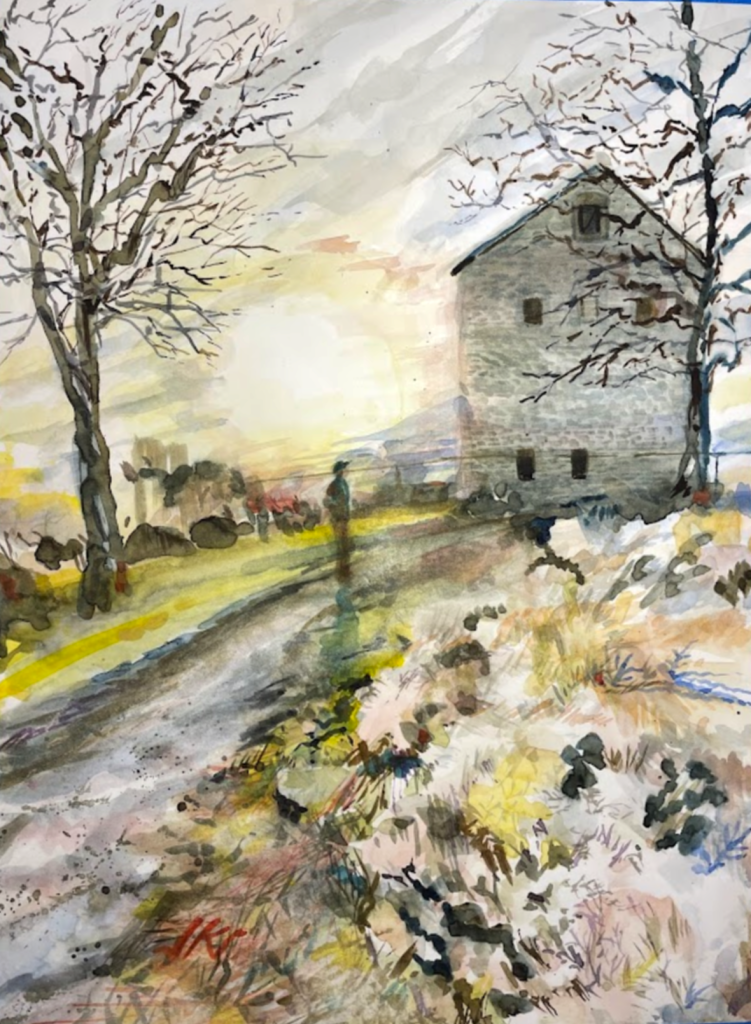
Autumn is upon Valley Forge. The stone barn shown here was built and added to in the 19th c. It has the remnants of a Palladian window in the wall below the ridge, dating it to the Federalist era of architecture.
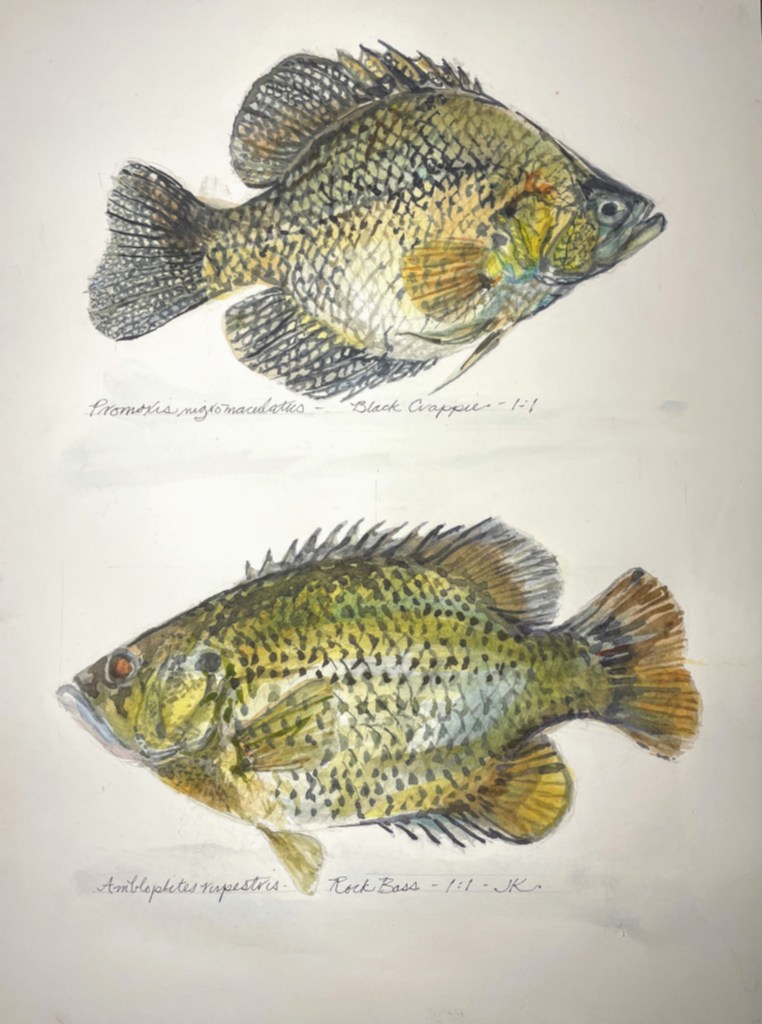
The Black Crappie and the Rock Bass are closely related, both ranging throughout the United States. These were caught in Upstate New York. They are painted true to size.
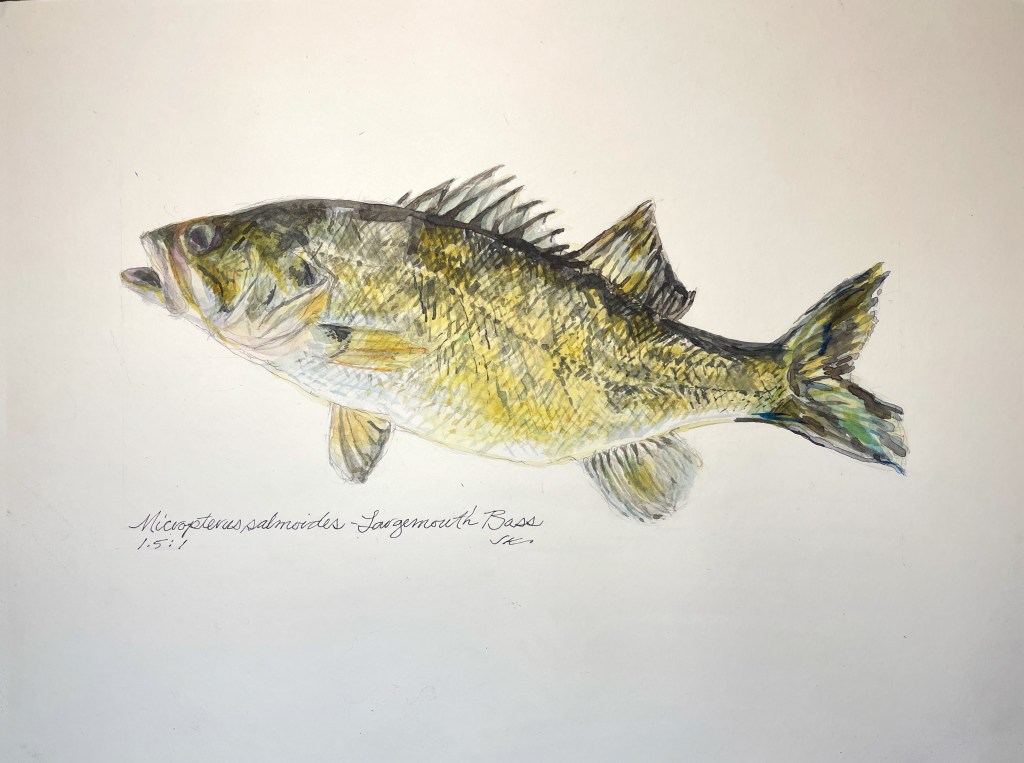
This large mouth bass is painted at a scale of 1.5:1 which means the live one was bigger by half. They can grow really big and don’t like to be caught, putting up a strong fight. The husband caught him, I photoed him and he was released back into the Upstate New York Lake from which he came. Now he’s immortalized in this highly desirable painting.Watercolor, 16×12″, 2021, $265.https://www.dailypaintworks.com/buy/auction/1249639
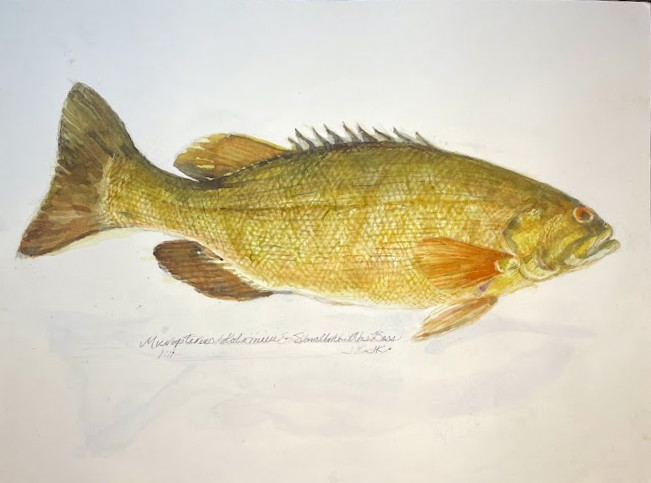
Small Mouth Bass are found in waters of the US, north to south East to west. The fish shown here was caught in the Adirondack Park in New York. It’s a little unusual in that it was a yellow ocher color. Most are in the green grey range. Perhaps the anomaly can be explained by the fishes diet.
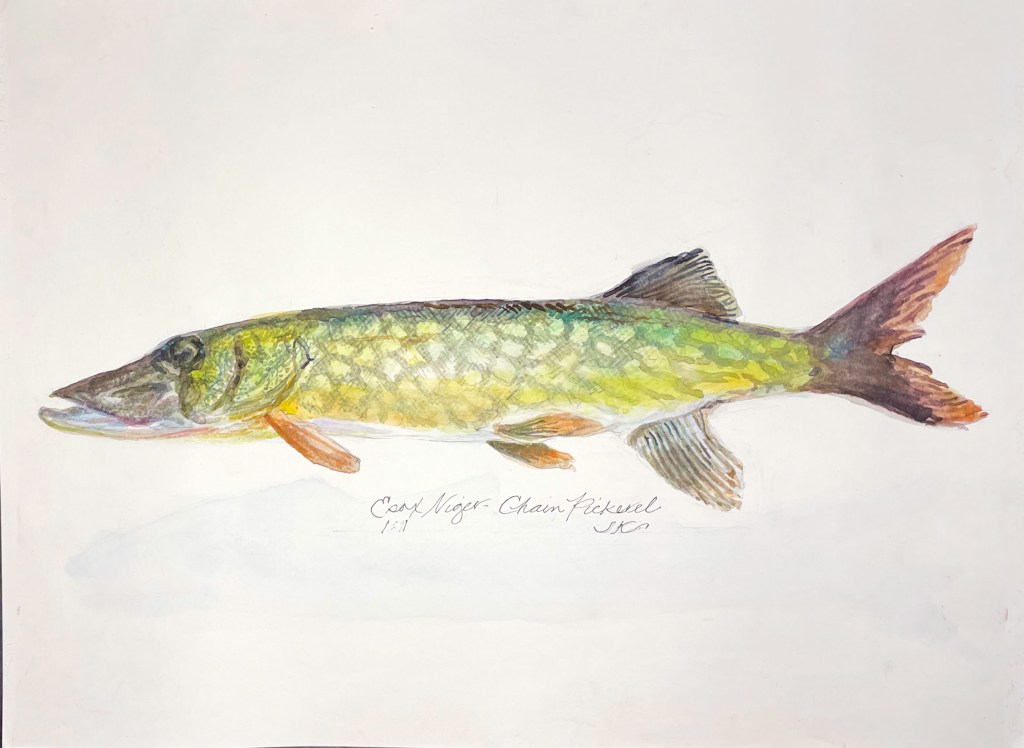
This fish is found in the New York Adirondacks as well as a lot of other waters throughout the US. The one I painted is represented full size although it’s a small example. Ted caught it, I took its picture and then he returned to the cold water to swim again, hopefully a wiser fish but probably not. They live to eat, not thinking much about the possiblility of being eaten.
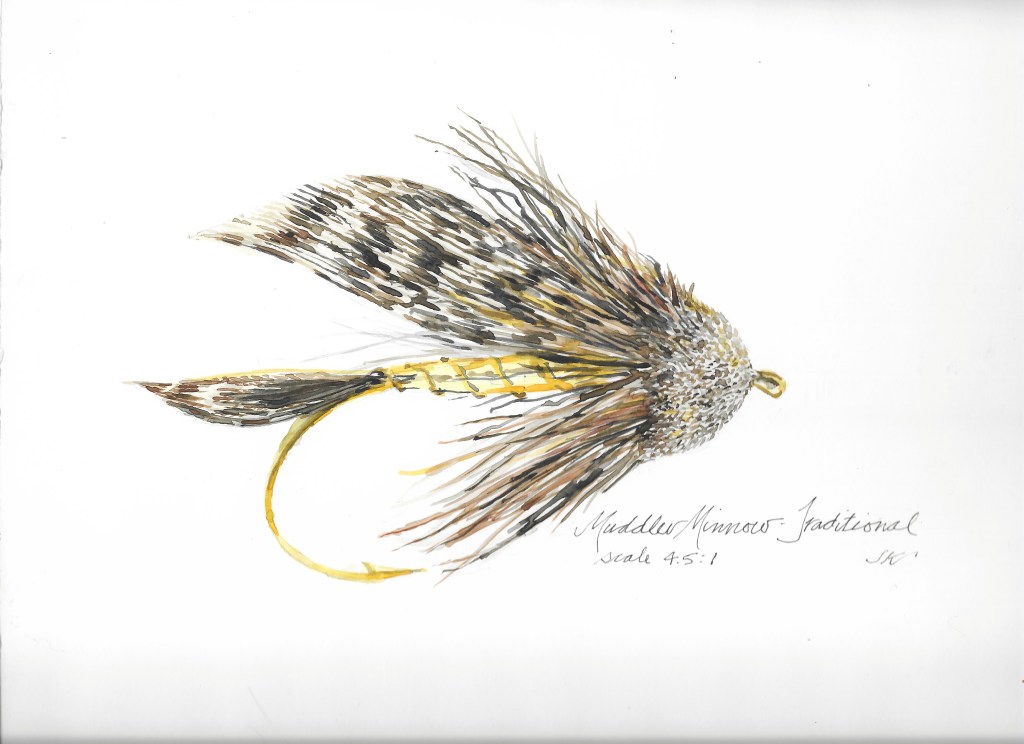
The Muddler Minnow was first tied in 1936 by a guy from Minnisota, Don Gapen by name. It imitates a sculpin and is of the ‘streamer’ body type. It’s a very popular pattern, tied by many with a lot of variations. The one shown here is basic and traditional. My husband says the nose cone should be longer, but I prefer the look of this model.
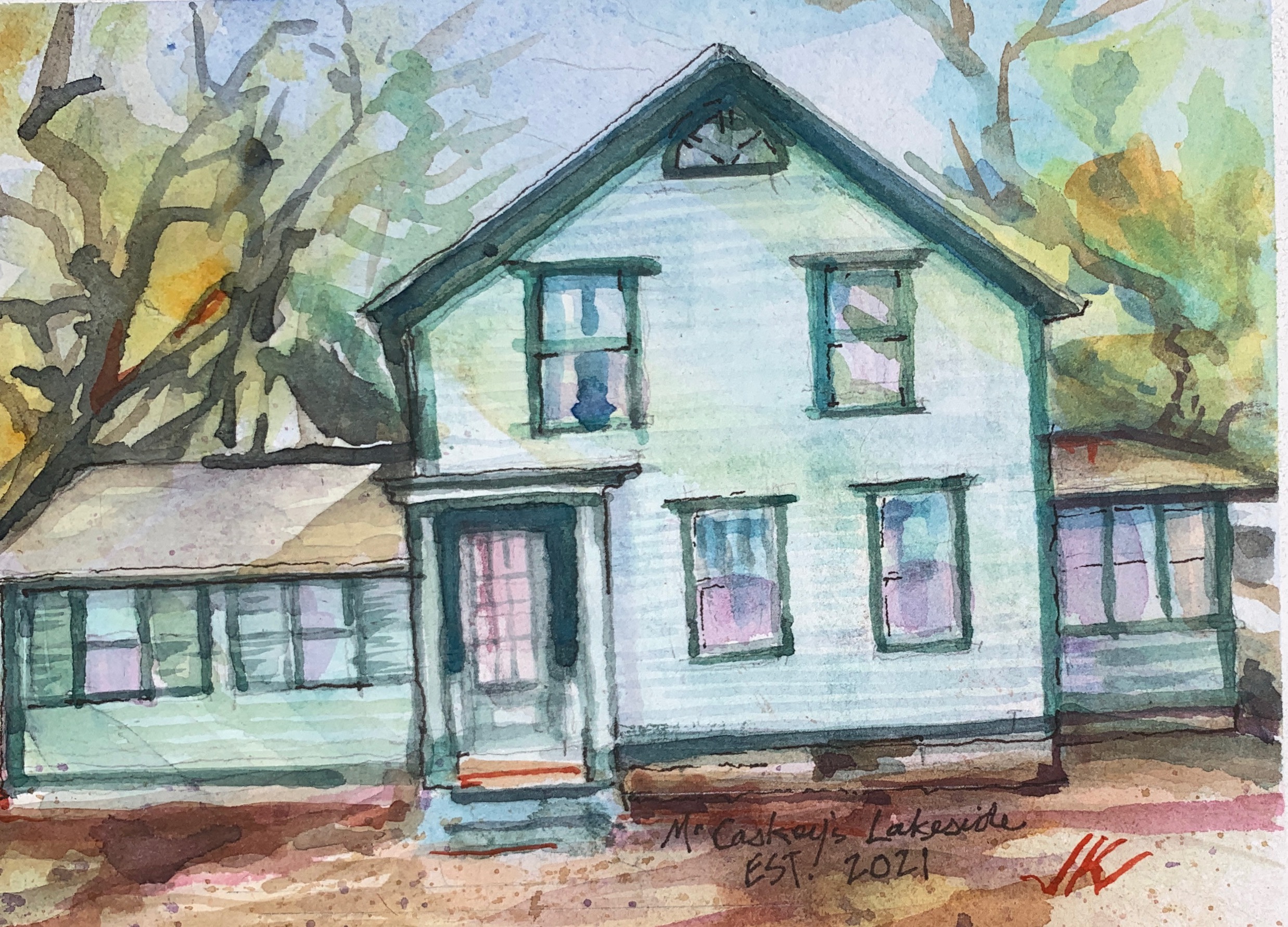
This is a small, quick painting requested by my sister. It’s located in central Wisconsin, USA.
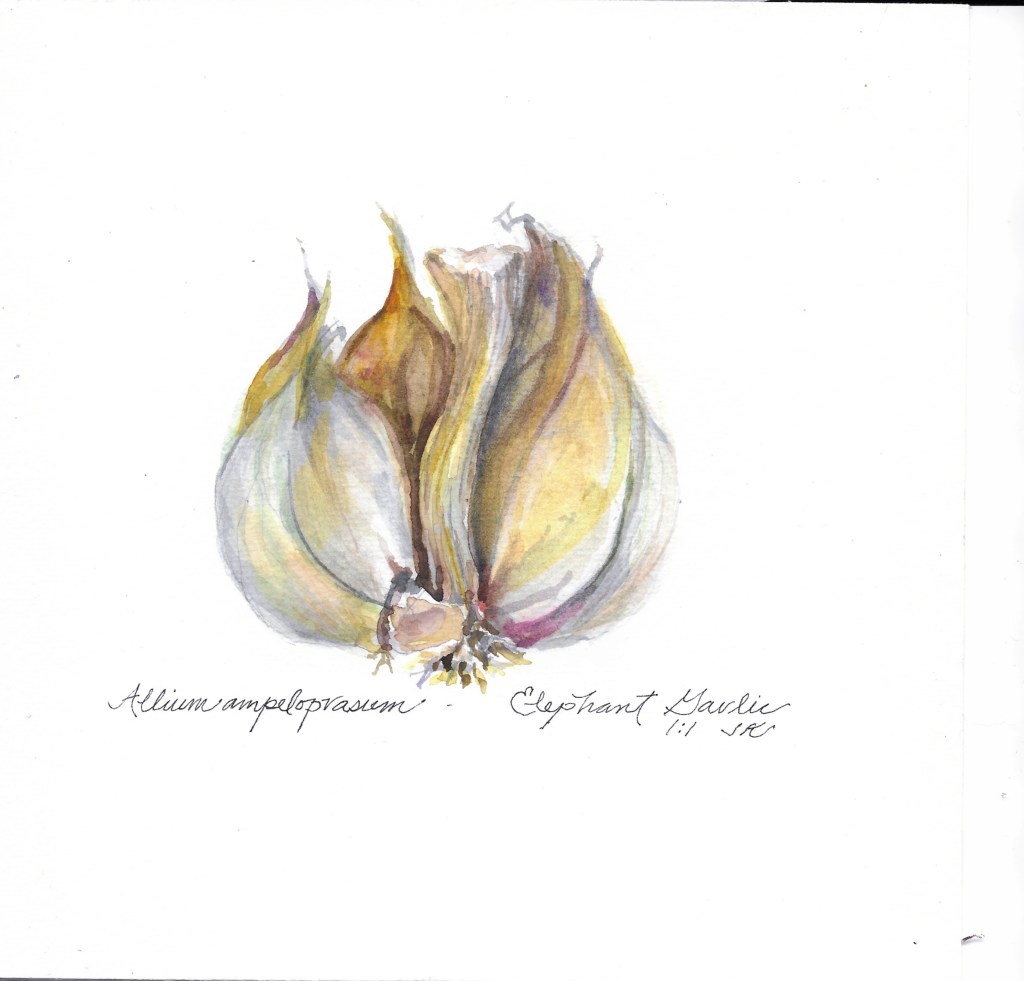
The genus Allium is a fabulous species. It includes the garlics, notably the Elephant Garlic as celebrated by this painting. When in bloom they are showy beyond words, when roasted with olive oil and on sour dough, well, you’d think you’d died and gone to heaven. Enjoy!
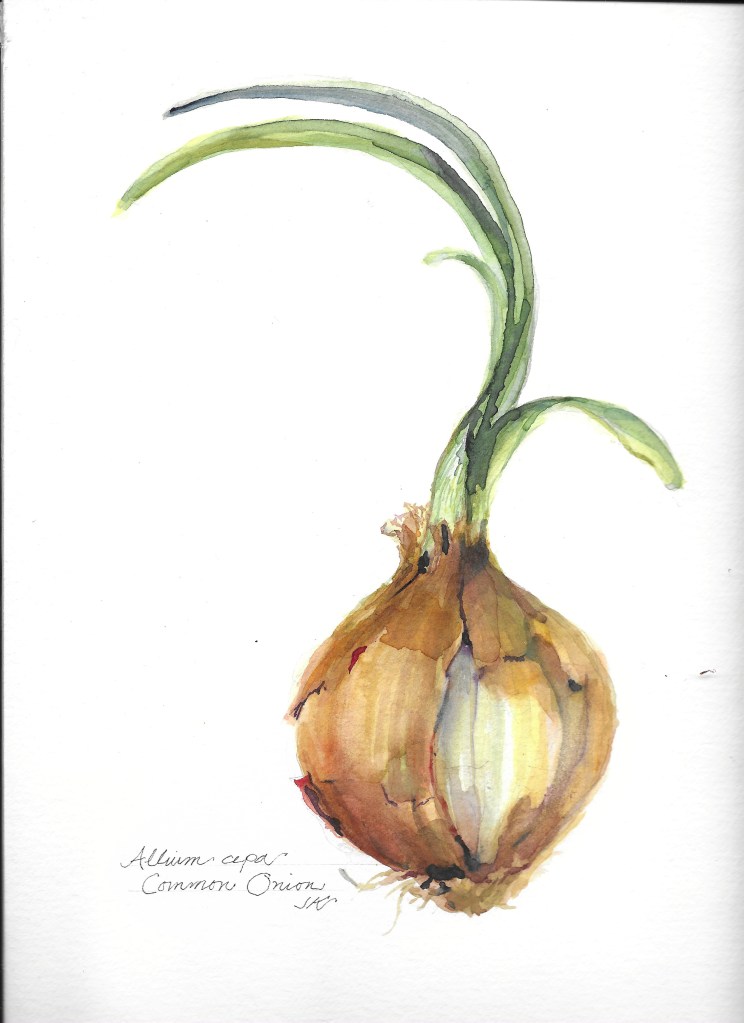
In praise of the lowly but lovely onion.

This is an end-of-day scene looking east. We’d been fishing down in the Salt River, fish weren’t biting, the sun’s sinking and it’s getting cold on the desert. Nothing left to do but walk back to the car and start the hour’s drive home.
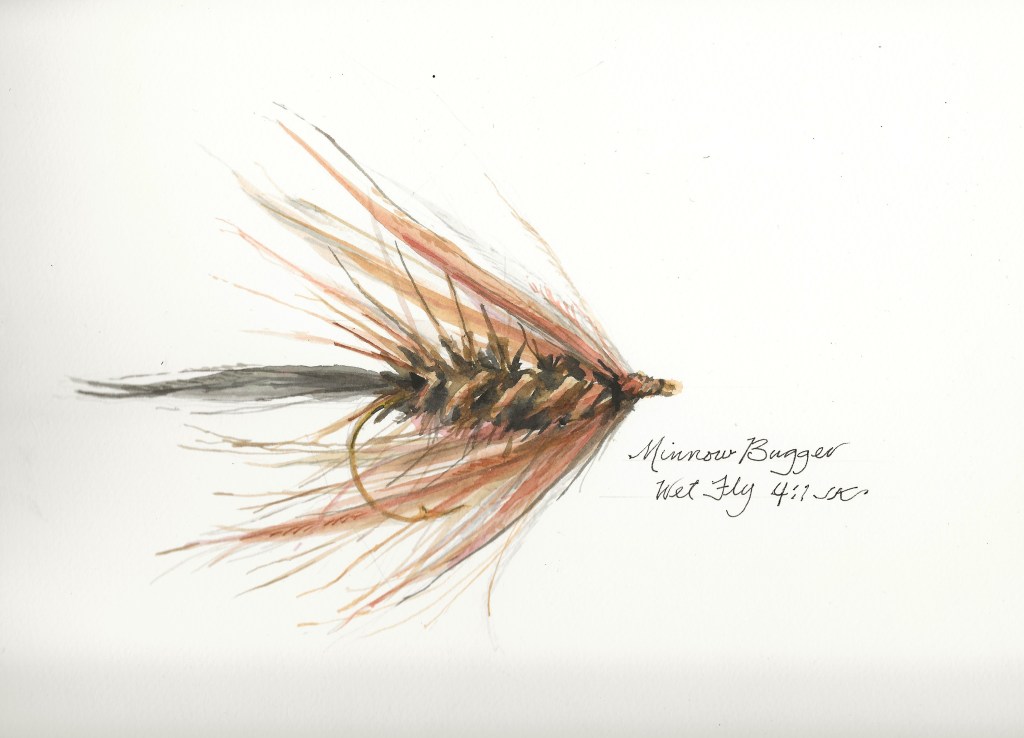
The Minnow Bugger is large as trout files go with its hook measuring about an inch. Some flies are minuscule. This pattern simulates a minnow thus is necessarily larger than the ones that represent gnats and bugs. It travels below the surface of the water making it a “wet fly”.
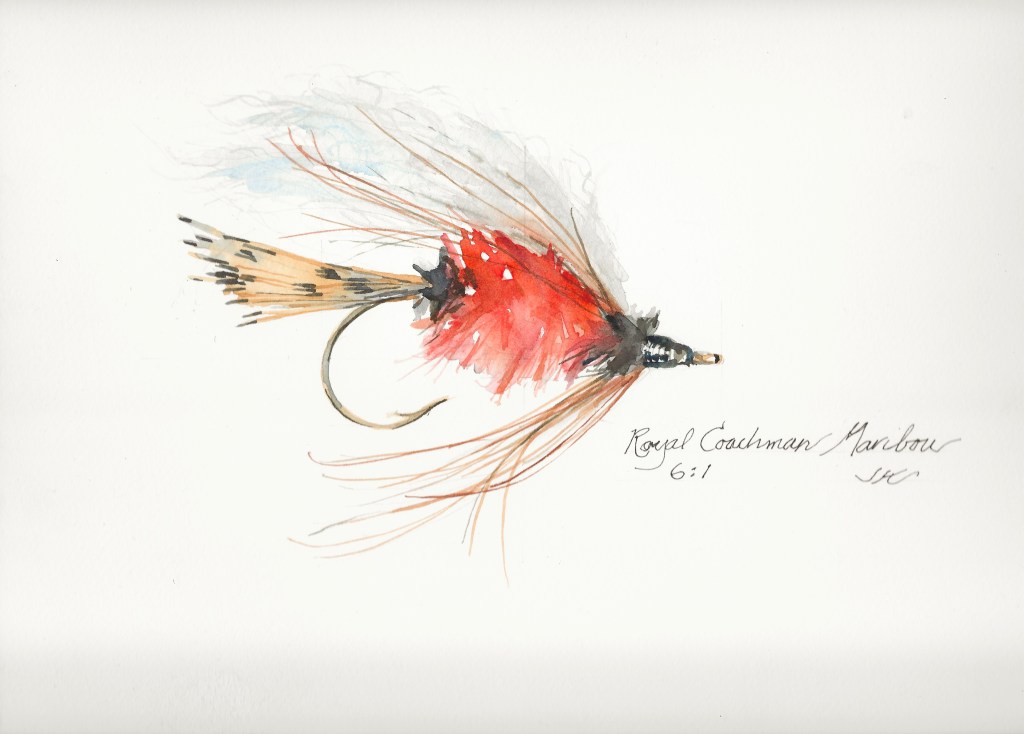
This trout fly is a variation of a classic Royal Coachman pattern. It’s popular and one of the better known lures among fly fisher-folks. This painting is one of my ongoing series of watercolor fishing lures. It pairs nicely on the wall with other paintings in the series or it displays very well all by itself. It’s a one of a kind painting for offices, libraries or family rooms. I will paint custom patterns upon request, email me.
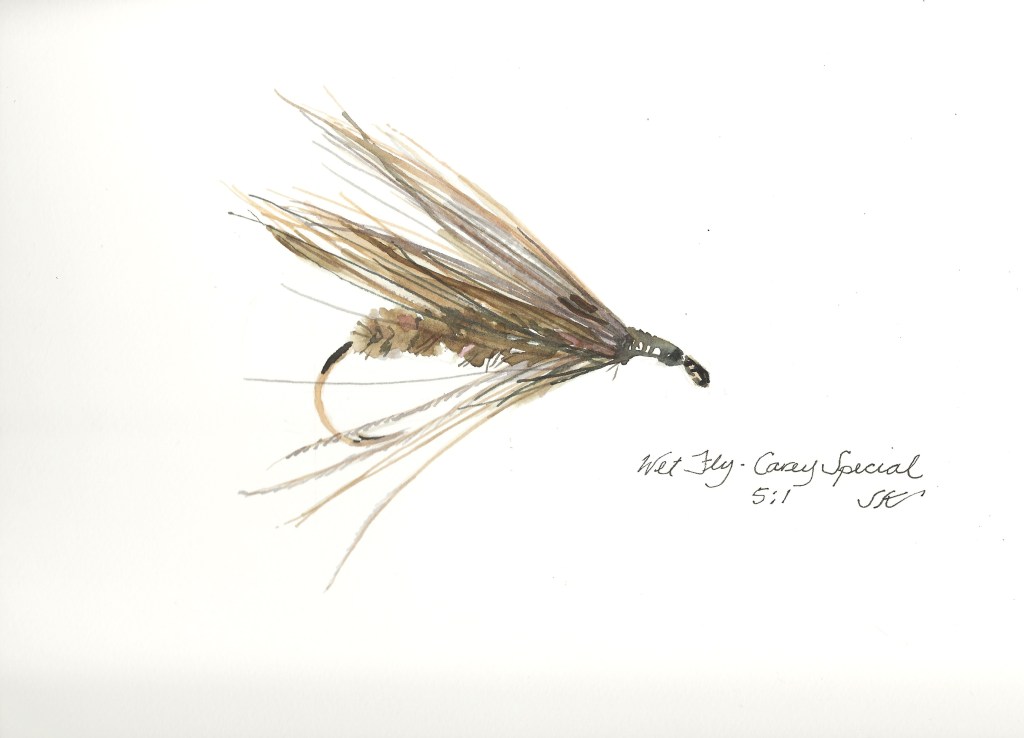
The Carey Special is a common trout fly with a lot of variations. It’s a wet fly which means it travels under the surface of the water rather on to of it. Look at my series of Trout Fly Paintings at the link above. They all show well individually or as a grouping.
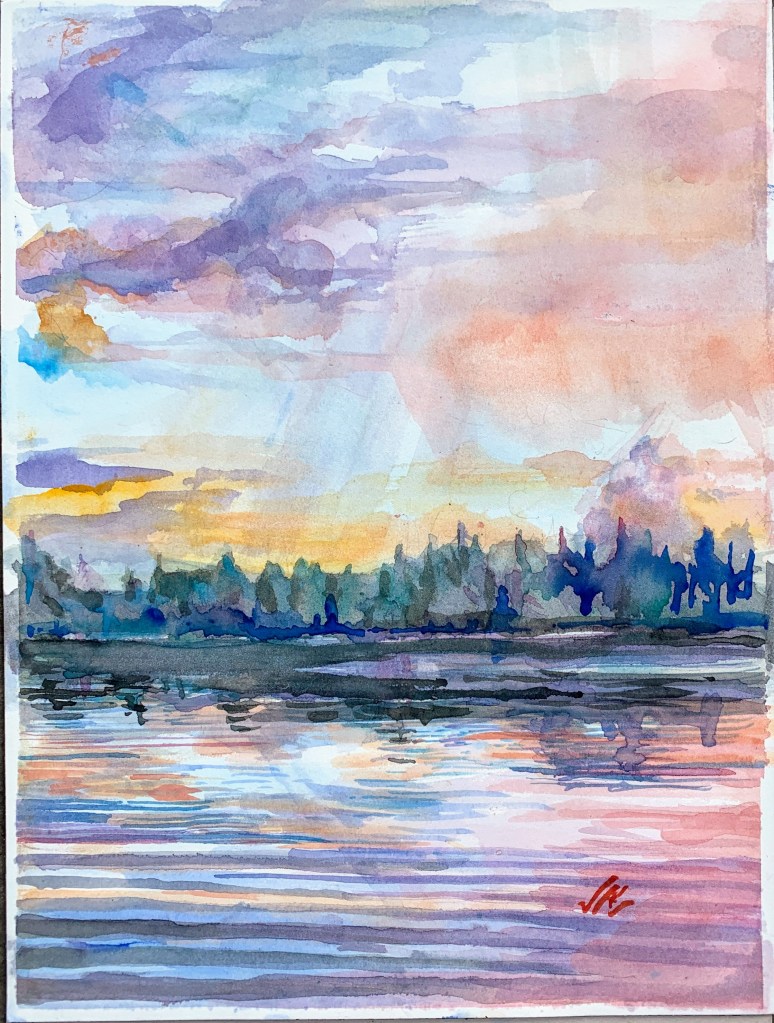
On the water at sunset, Raquette Lake, NY.

This is a study for an larger oil painting executed during the same session. I use the study to locate objects, study the movement of the composition and to use as a reference when composing the oil painting.

View from the front end of a Hornbeck Canoe.

 Jean Krueger Fine Art