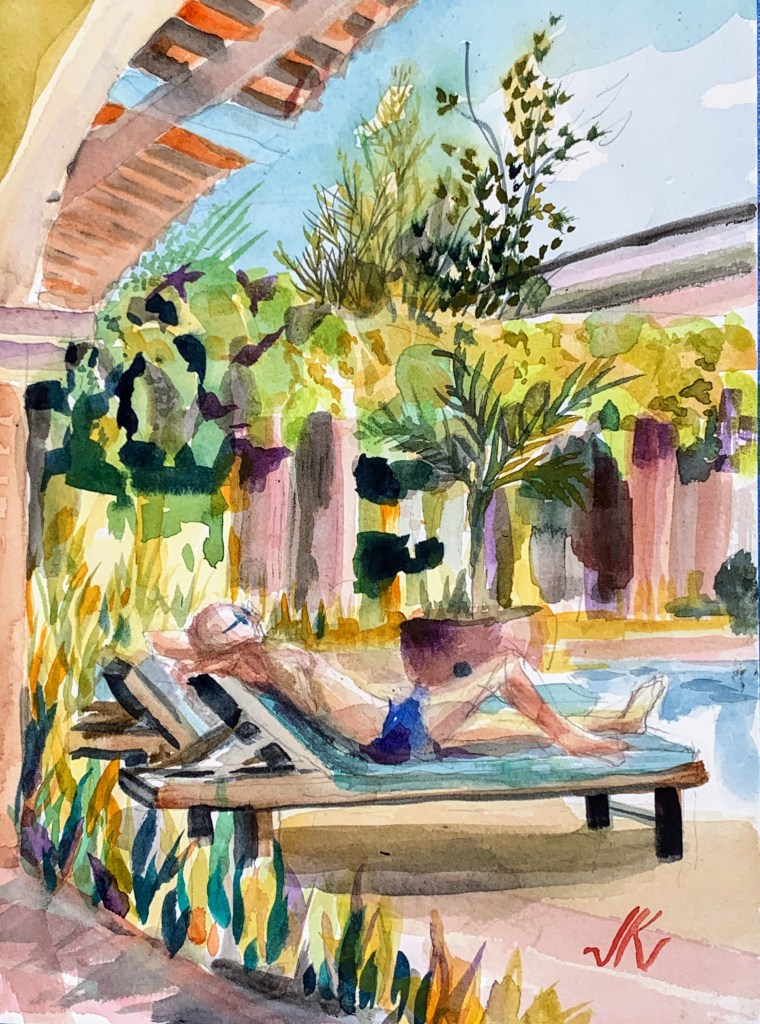
Poolside in Costa Rica.
https://www.dailypaintworks.com/fineart/jean-krueger/lasabana-hotel-san-jose-costa-rica/790299
Poolside in Costa Rica.
https://www.dailypaintworks.com/fineart/jean-krueger/lasabana-hotel-san-jose-costa-rica/790299
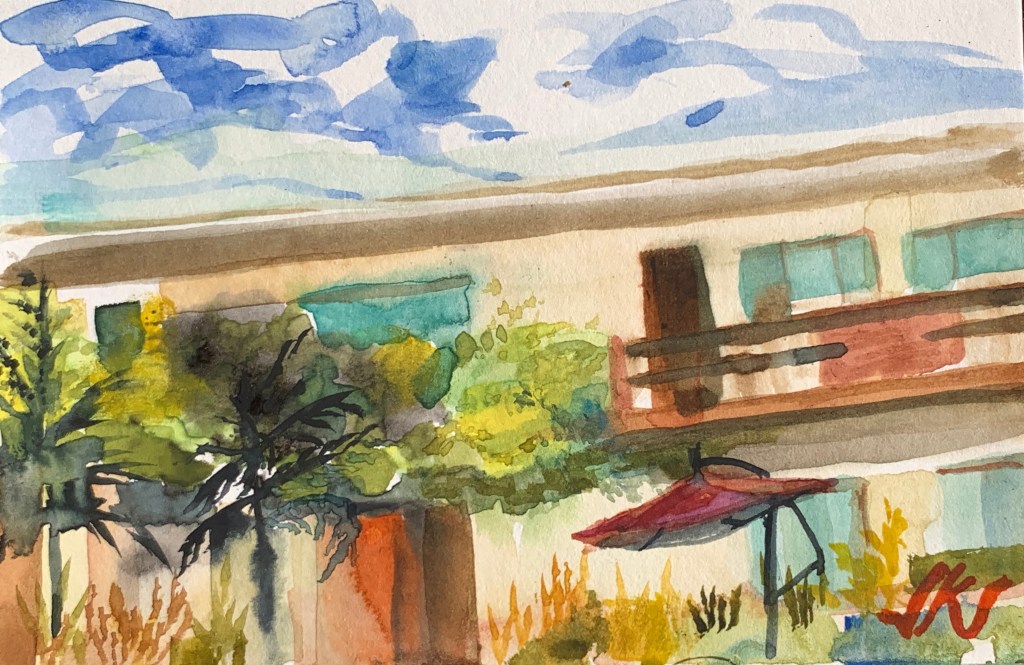
COSTA RICA! Spring break, arrived late night. So much sun!
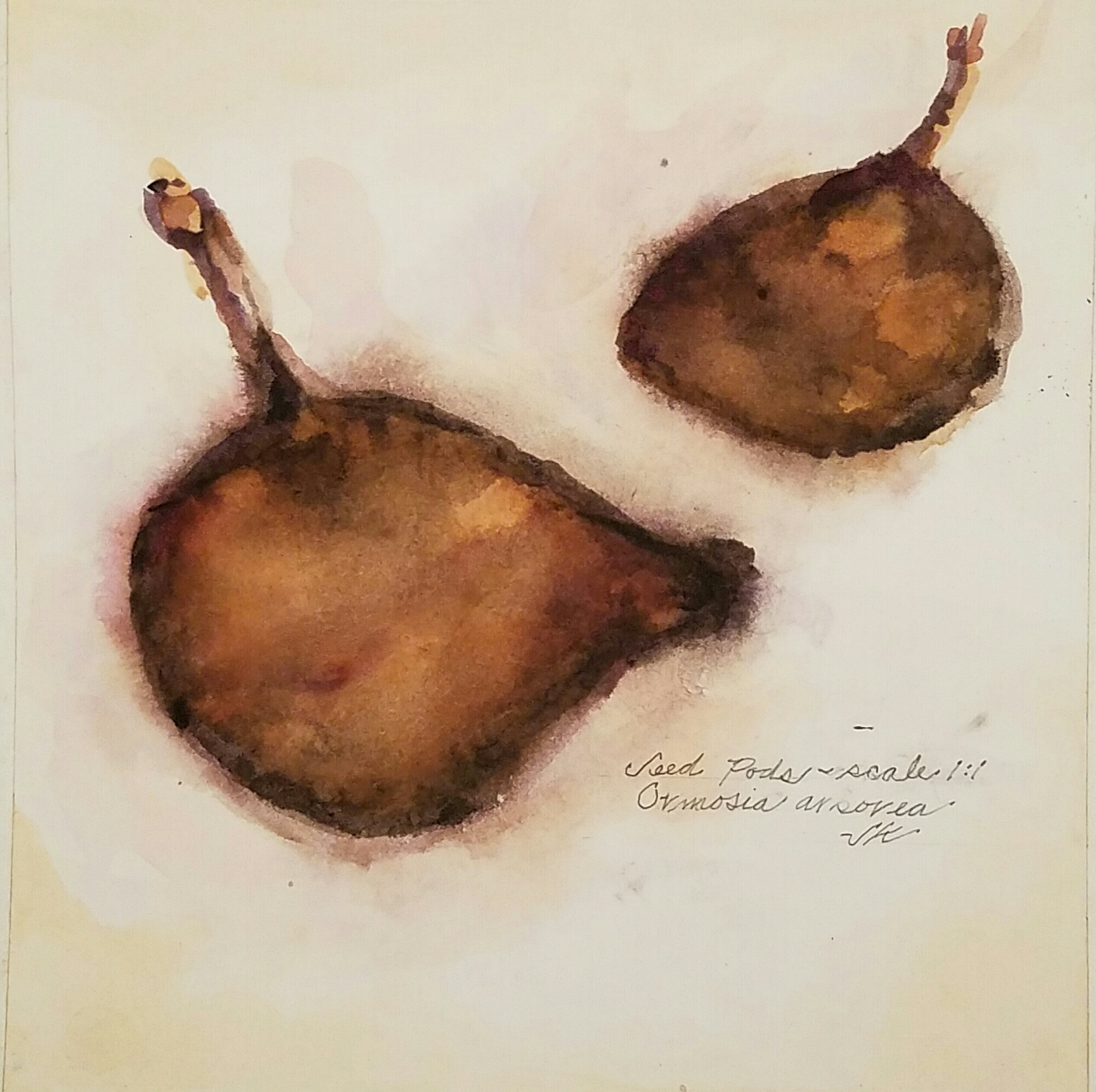
Seed Pods – Ormosia arborea, 8×8“, watercolor, 2016
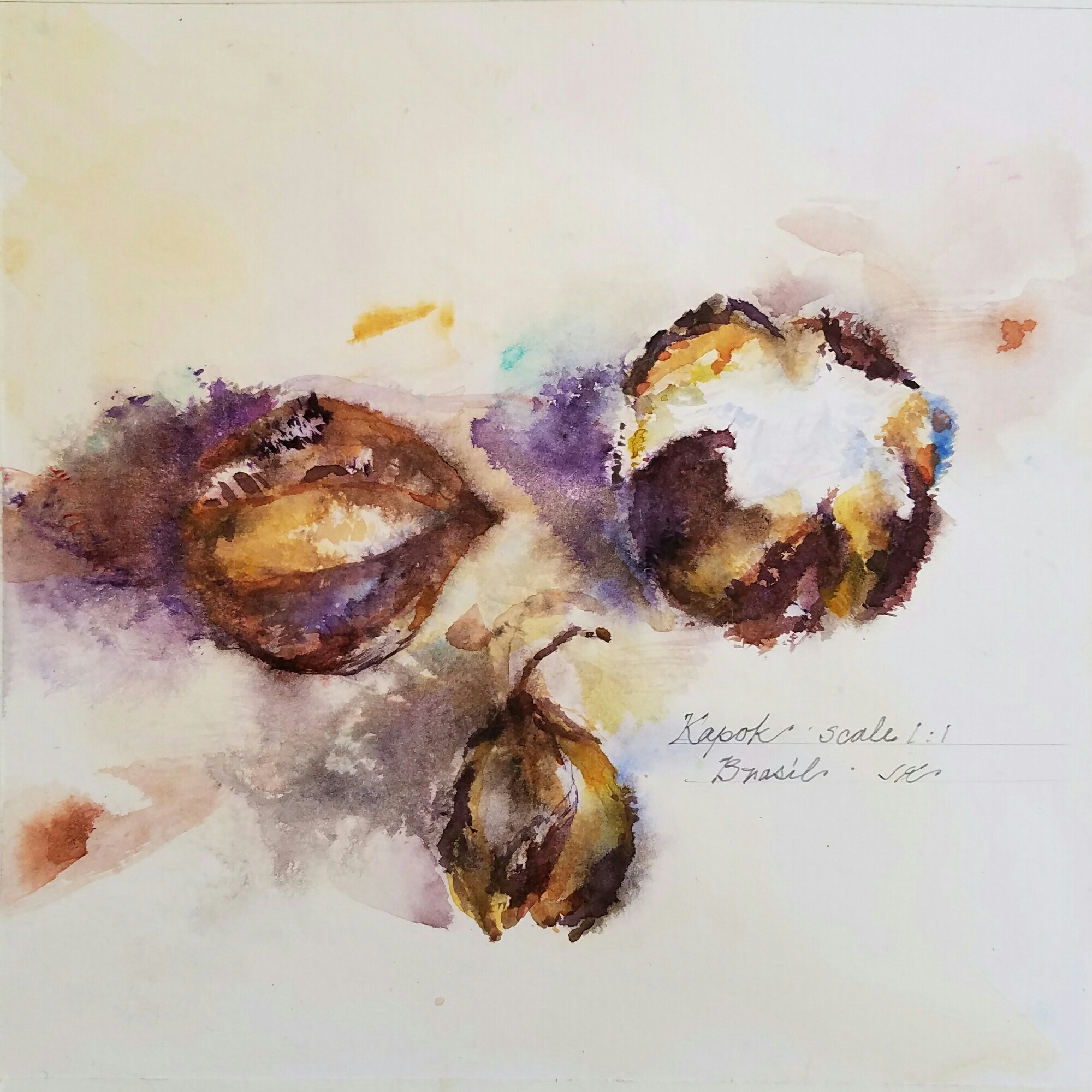
Cochlospermum gillvraei Benth., 8×8″, watercolor, 2016
http://www.dailypaintworks.com/buy/auction/624696
These seed pods grow on a tree, Bixaceae Cochlospermum gillivaei, a yellow flowered species common in Brasil, hailing from Australia. I haven’t determined its common name yet. Not being a botanist myself, I’ll offer the caveat that the above information might be wrong.
When I see a plant that interest me I take a photo. Then I paint it. Afterwards, I look through the three botany books I bought when I got to Brasil. If I can’t find a photo that matches my painting, I head for Google and search with words, then search the ‘Images’ that result. I scroll through pics, sometimes hundreds, til a visual match shows up. I then follow links that give me the name and characteristics of the object I painted.
So… there’s plenty of room for error in my research methods. However, I have a limited amount of time to spend ferreting out info, especially when it absorbs time I might otherwise spend painting. I have a curious, not scientific, mind. My botanical paintings deal in generalities, neglecting minutia.
I’m okay with that.
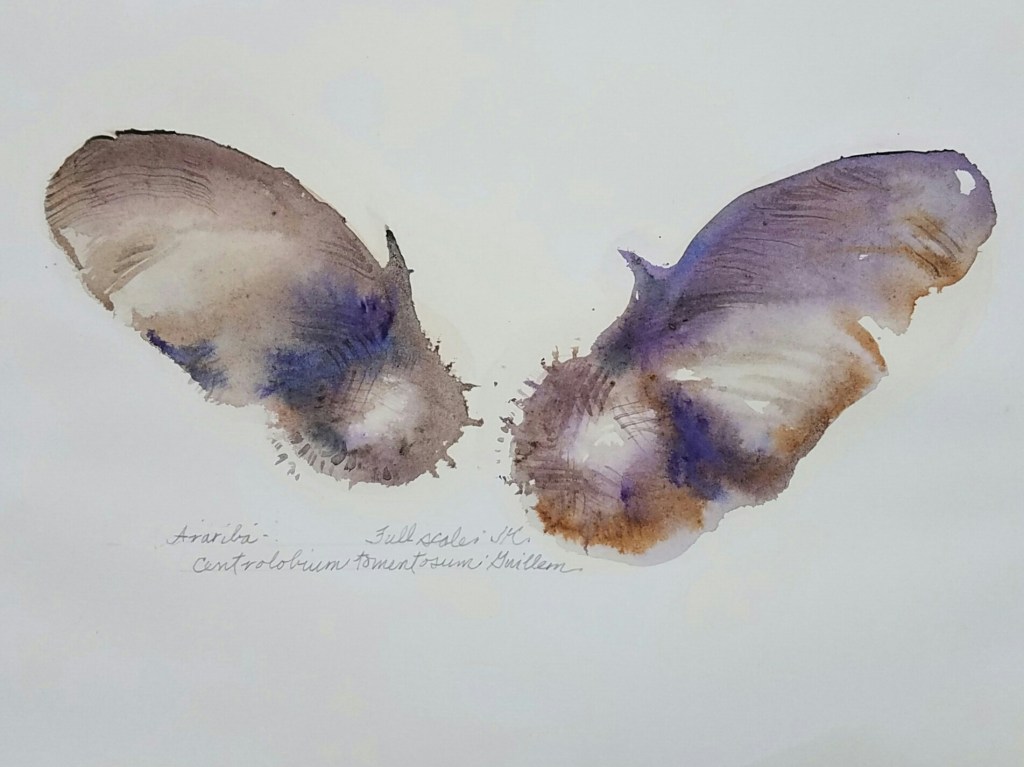
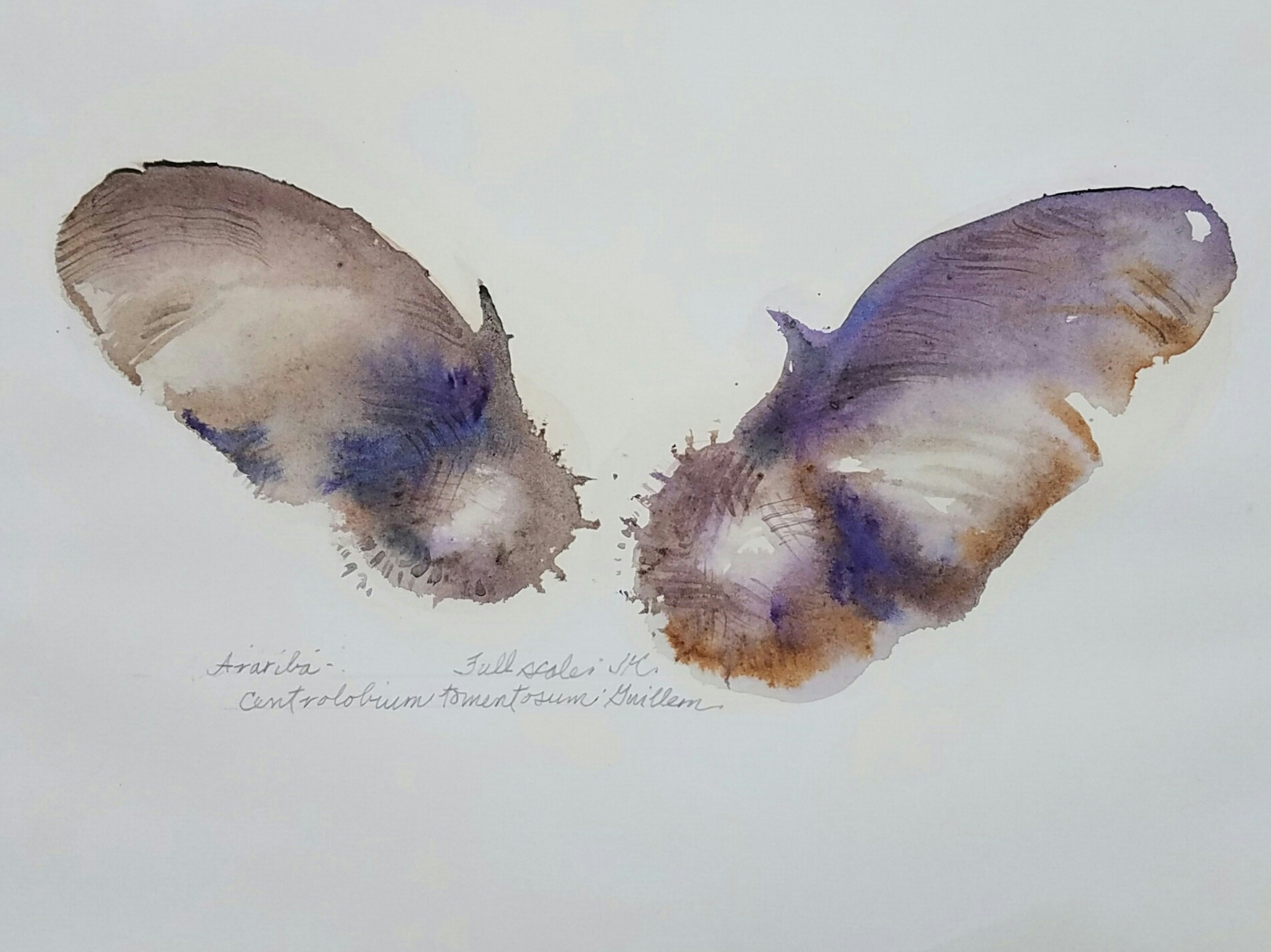
Arabiba, 12×9″, watercolor on 14O # Paper
These winged seeds come from a tree which can grow to over 100 feet in height. In Brasil the tree is used extensively in reforestation projects, urban landscaping and for its ornamental wood. The yellow flowers become really large, 4-6″ whirly-gig units which are blown far and wide. The seeds also have pickery spines that cling to fur, clothes or wherever they can get a grip. I painted these as part of an ongoig study of seeds, my interest in these being their enormous size. These are painted full scale.
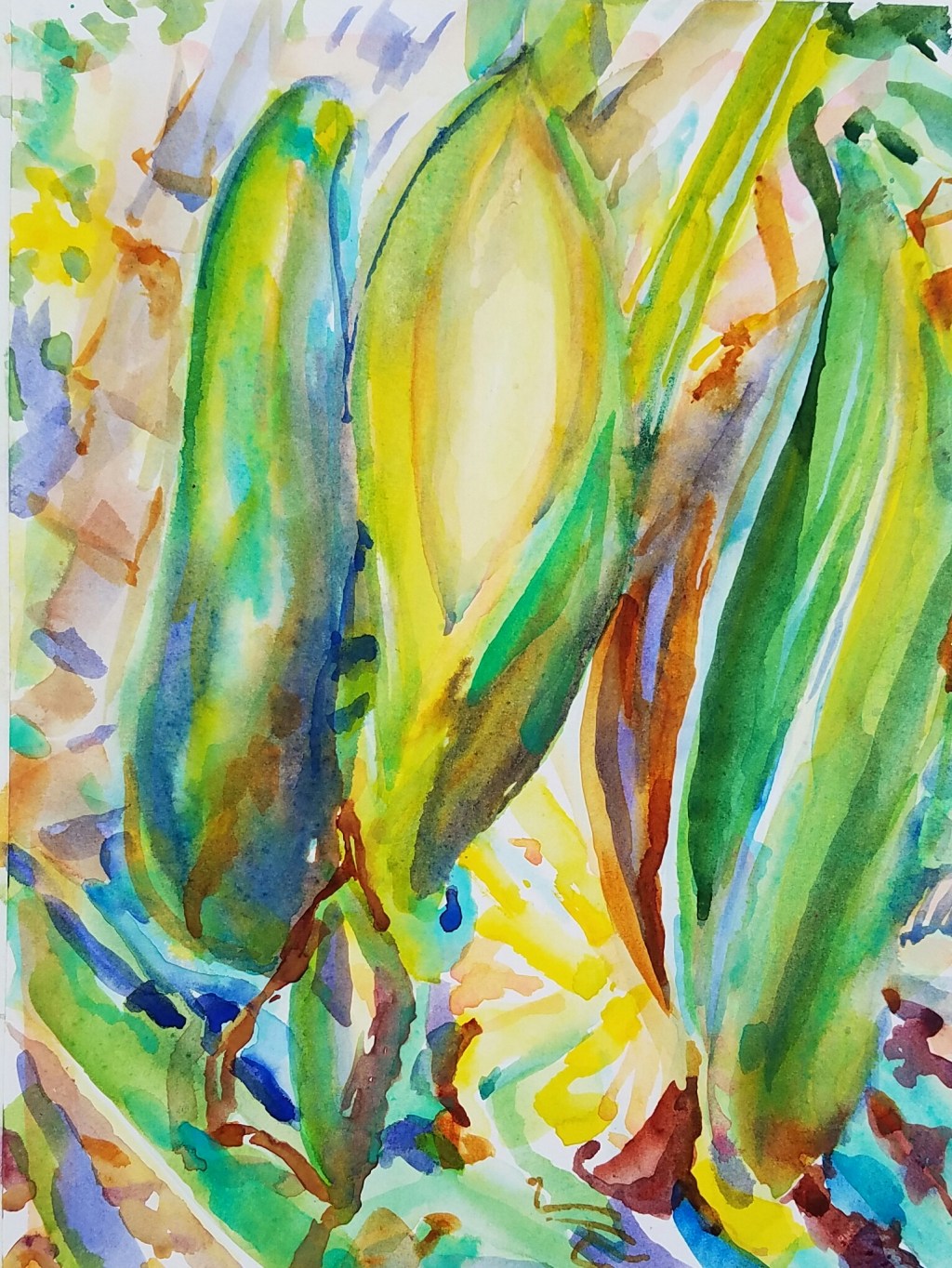
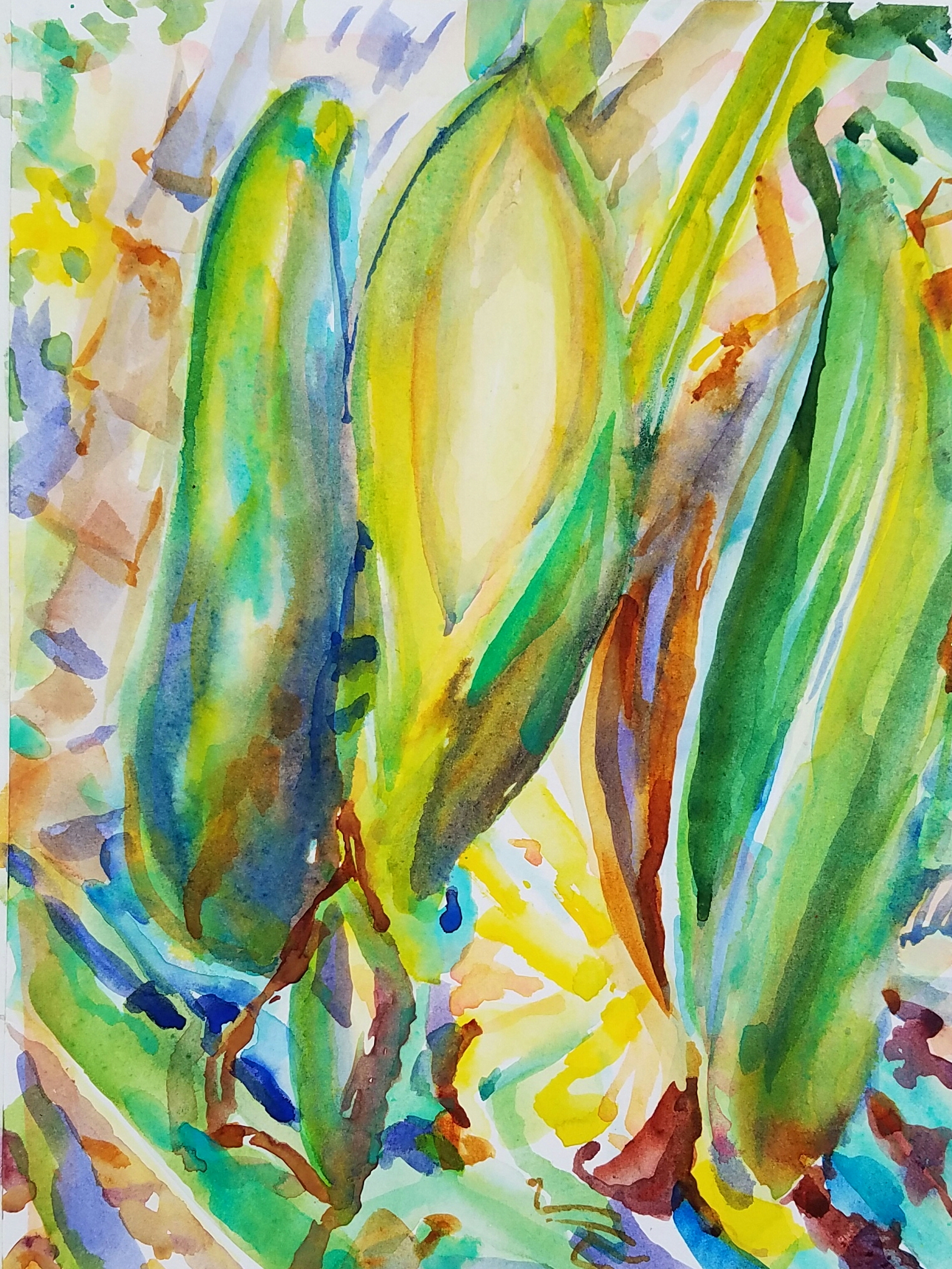
Philodendron, 12×9″, watercolor on 140# HP paper
If you are a philodendron, the Tropic of Capricorn is where you want to live, not in the upper latitudes clinging to life in an office planter, overwatered, underfed, starved for daylight.
Here the size and variety of this species is vast. Plants which are scrawny potted slips in the US are as big as a house in Brasil, co-habiting with even bigger plants as they climb, coil and wind skyward. Their closed pods are the size of a liter Thermos bottle. When the pod (blossom) opens it reveals a huge ivory anther. After fertilization the blossom closes. Why? I don’t know, yet. I walk past this philodendron daily and always look to see what’s new.
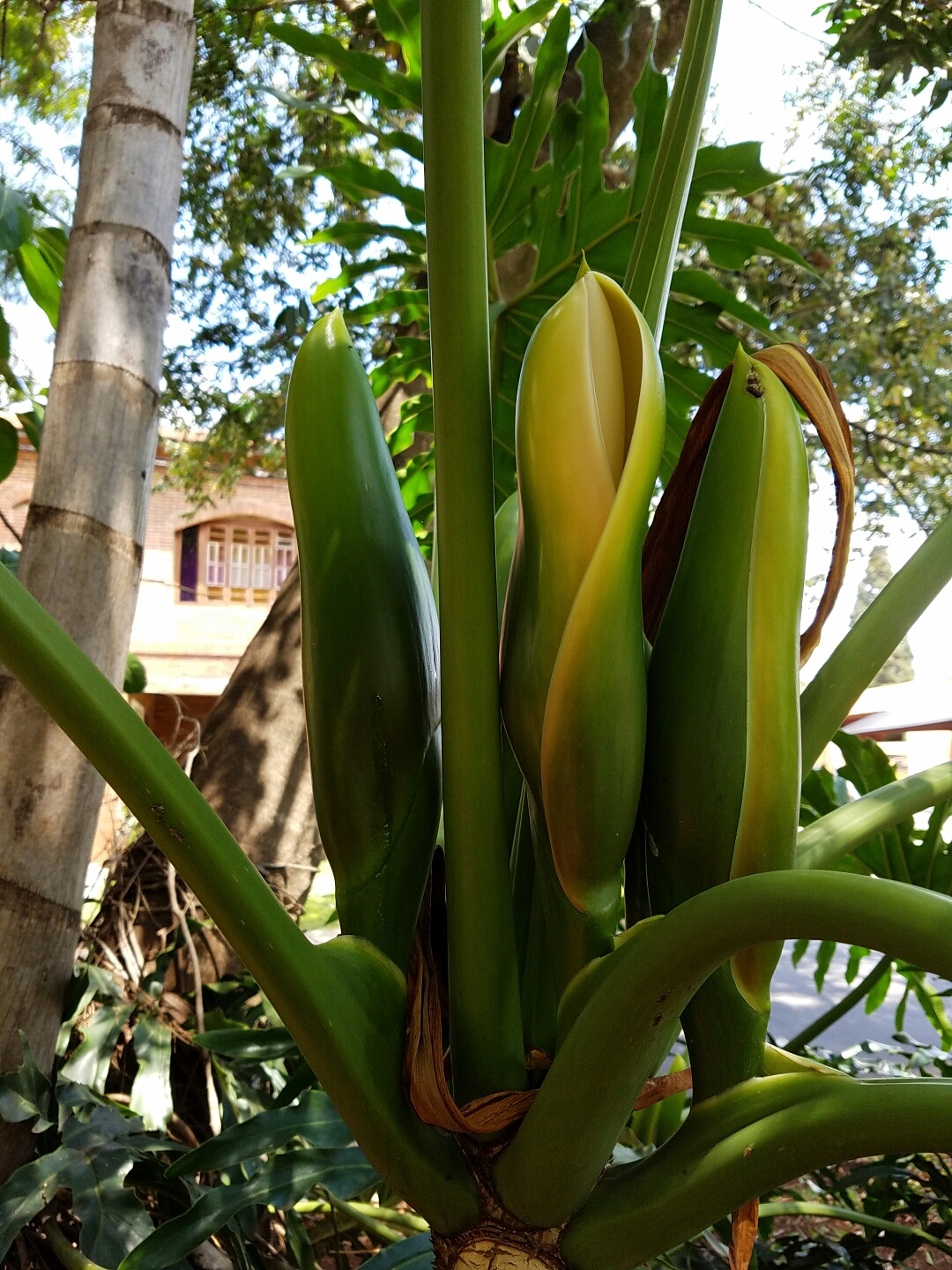
Philodendron Pods
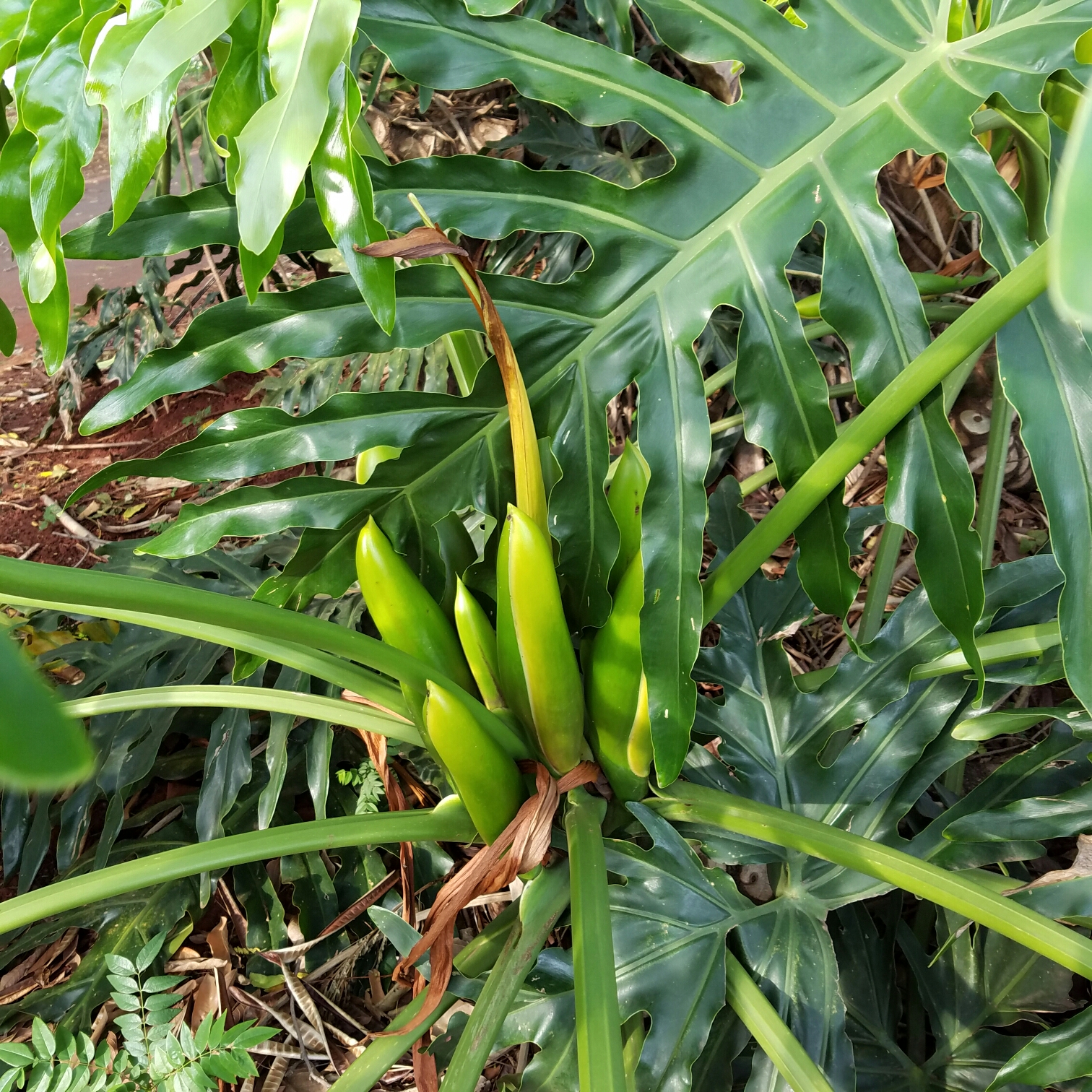
Philodendron Leaves and Pods
Tropical Depression, 20 x 14″, pastel in Arches 140# CP
Being American, being of a nature that celebrates variety and a se la vie attitude towards most matters, I must admit that I had a real sense of depression and loss with regard to the US election results. I’ve been painting this since the day of the election and it took longer than most. I couldn’t find graphic resolution to it’s design. Sorta like I can’t find emotional resolution to why the US electorate had such sorry candidates as presidential nominees.
But it’s done like this painting is done. God bless us all. It is what it is.
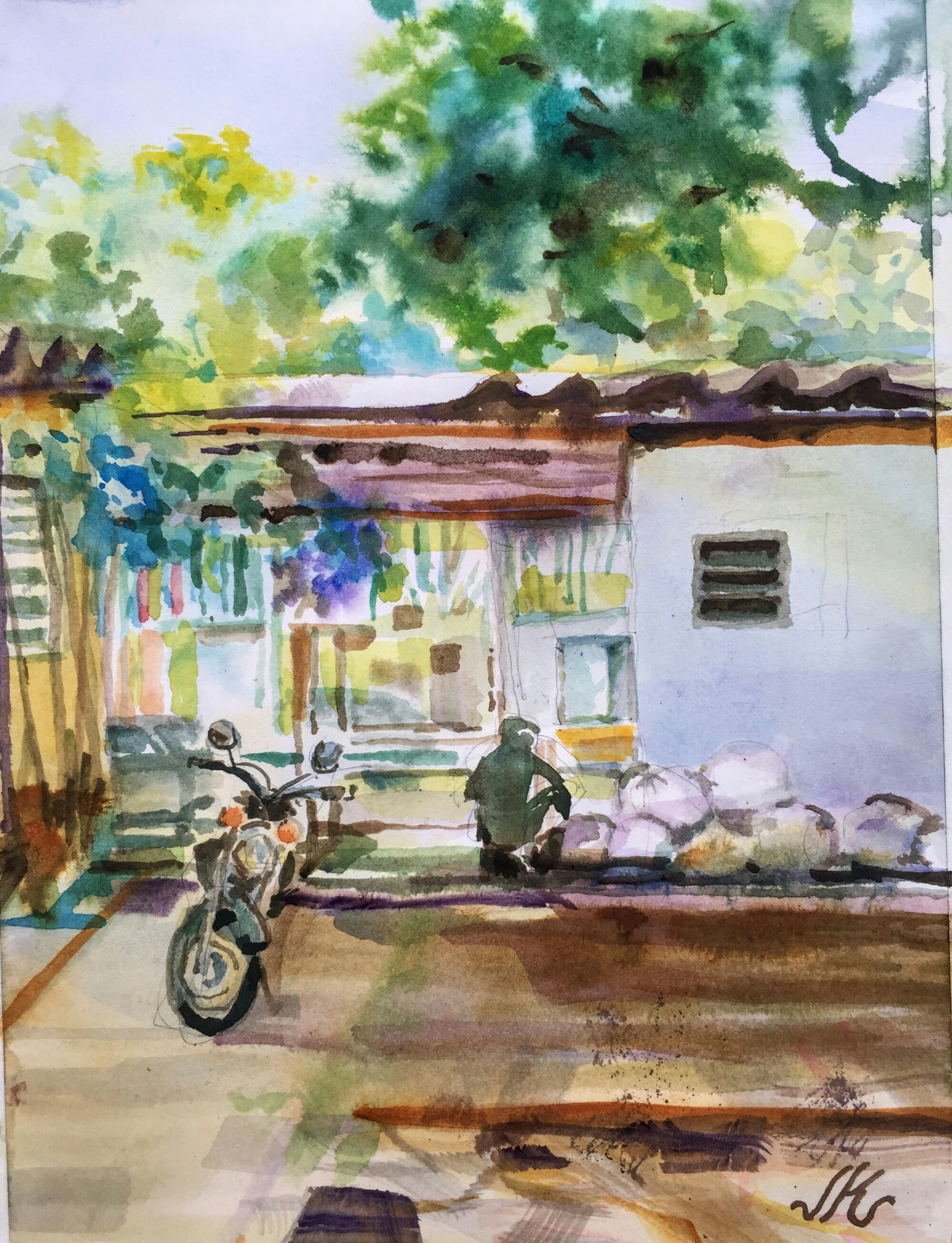
Tropical Sun and Shade, 140# h0t press watercolor paper
A couple years ago when I decided to paint with watercolors I found a book by Tom Hoffaman, Watercolor Painting, 2012, http://hoffmannwatercolors.com. I got a digital copy of it and refer to it frequently. Tom put out a post today about his upcoming teaching schedule for this and next year so I checked out his blog. Reading it led to the painting above.
Tom is very clear-headed in his approach to painting, suggesting that all paintings initially be directed by identifying the value, wetness, composition and color of the topic at hand and then consciously proceeding with these attributes as guides for subsequent painting. He says to place each brushstroke with purpose. That advice has resonance with me. I did a lot of architectural drawing at one point in my zigzag career and remember I well that an architectural drawing has NO superfluous marks, that every line must mean something.
Thinking on this, I did today’s painting and am pretty happy with it. Remaining mindful and attentive to each movement of the brush, how much paint and water to apply and keeping the total design in mind works way better than letting it rip in any ole direction.
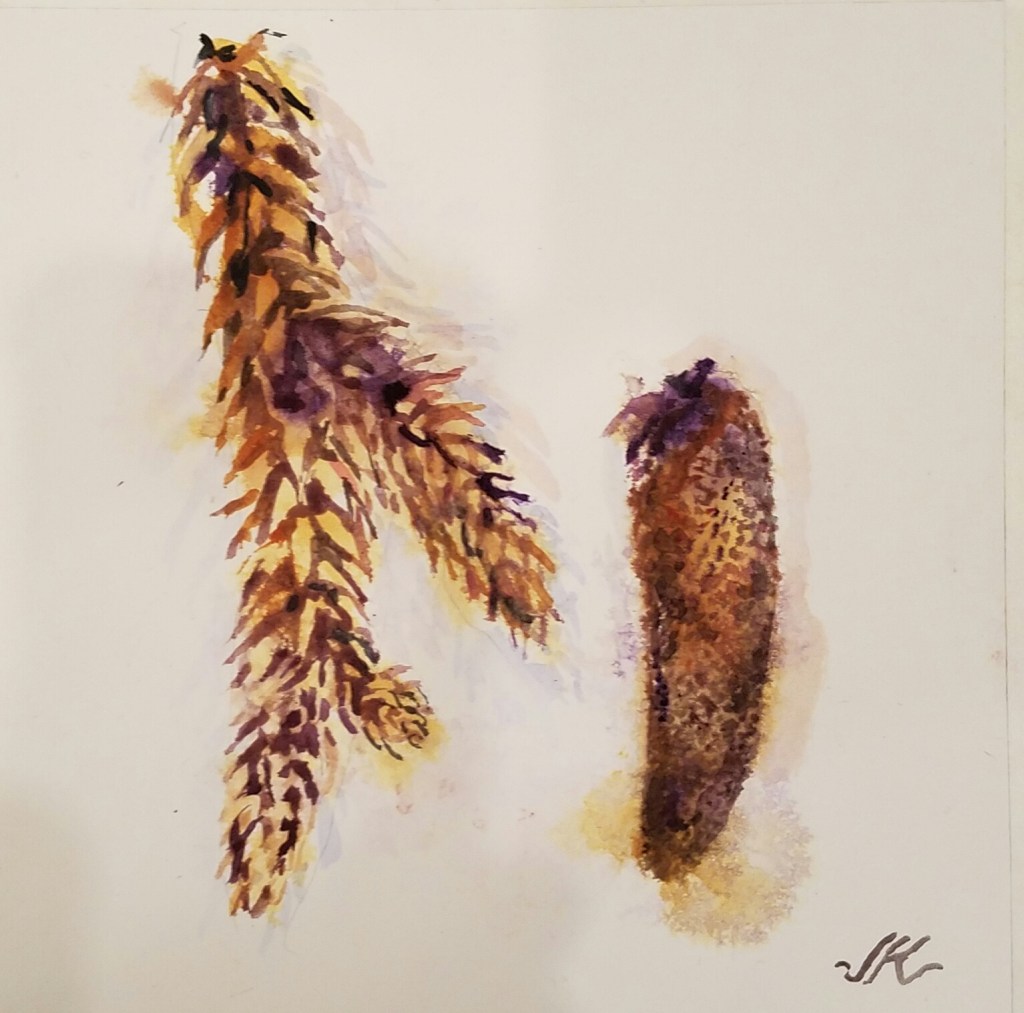
Humidity is often high along the imaginary circular line which is the Tropic of Capricorn . As I write it is 86% humidity in Campinas, Brazil. In Phoenix, AZ, where I was a week ago humidity is just 27%. Why should I notice or care about the difference?
I notice and care because the paper I paint on, that being Fluid 300 140# hot press, behaves much differently between locations. Here in Campinas it retains water longer and seems to diffuse into smaller, finer capillaries. Also, the pigment stays workable longer because it dries slower. The paper feels a bit moist to the touch even when ‘dry’ and this makes the colors appear brighter than in, say, Arizona, USA. Perhaps the paint will dry and lighten when back in the US but for now I’m thrilled with the look of higher humidity.
As for the more visible capillary diffusion, that effect will remain in drier climates, I think. I like the delicacy of it. Here are two examples of the difference in pigment diffusion as well as yesterday’s painting, a study of a conifer branch and cone of a variety I’ve never seen before.
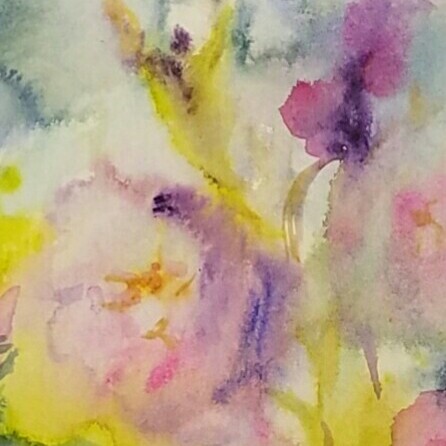
Diffusion of pigment at low humidity
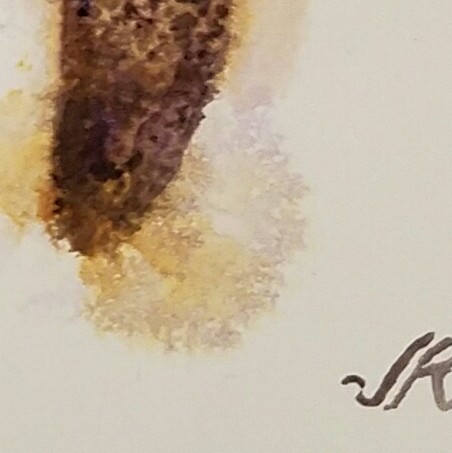
Diffusion of pigment at high humidity
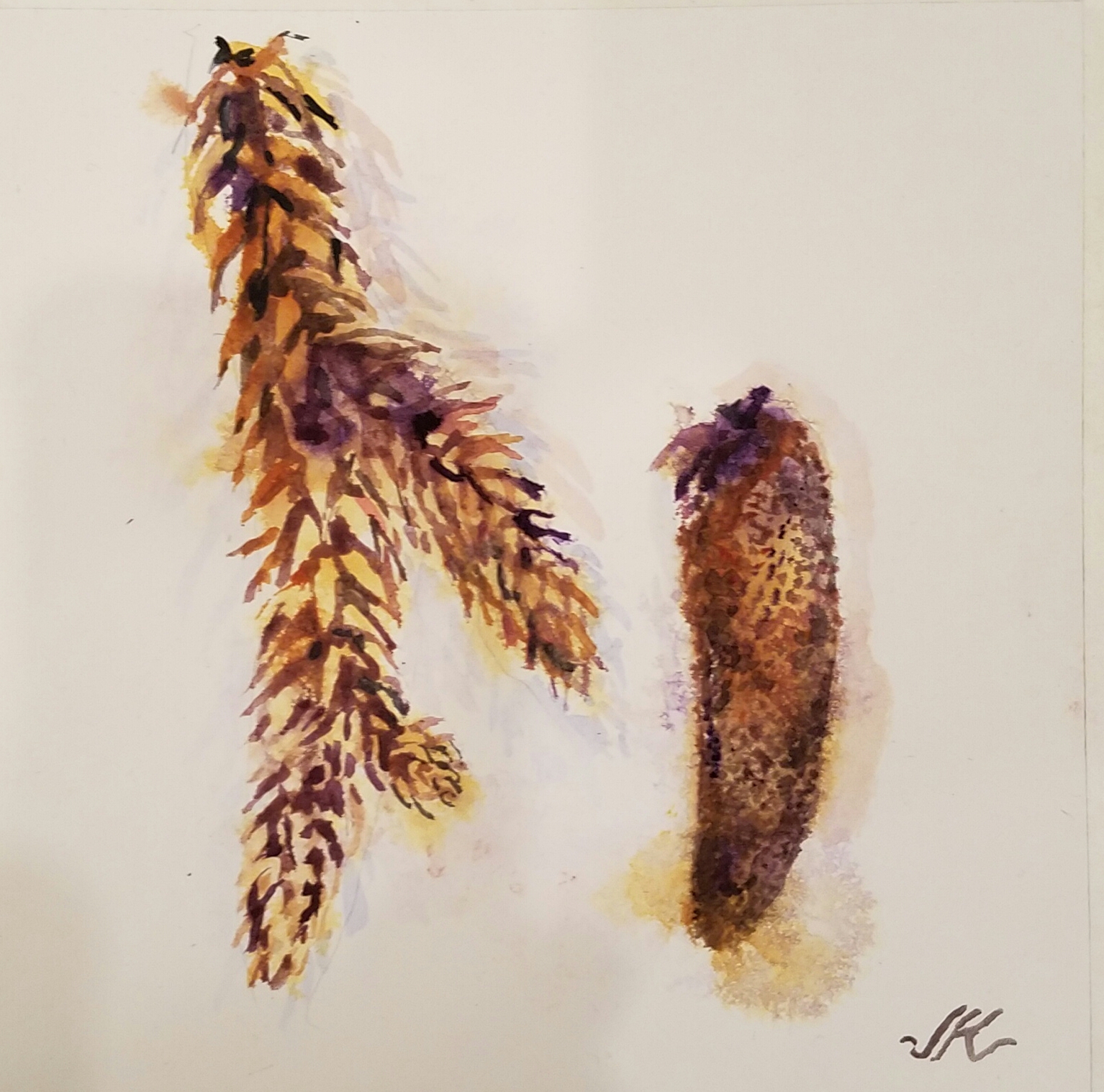
Conifer, 8 x 8″, 140# hot press watercolor paper
Most folks probably know this already but the Tropic of Capricorn (TofC) moves about 15 meters north every blessed year, just when I’d started to think some things are constant. This fact has something to do with earth’s tilt as it orbits the sun…it’s really far beyond my reckoning.
These seeds and pods were on the ground close to the yet unknown (by me) tree from which they fell. I want to identify the tree and paint more info w/re to it. I like the wavey visual movement of the pods and the seeds are too tidy to be true.
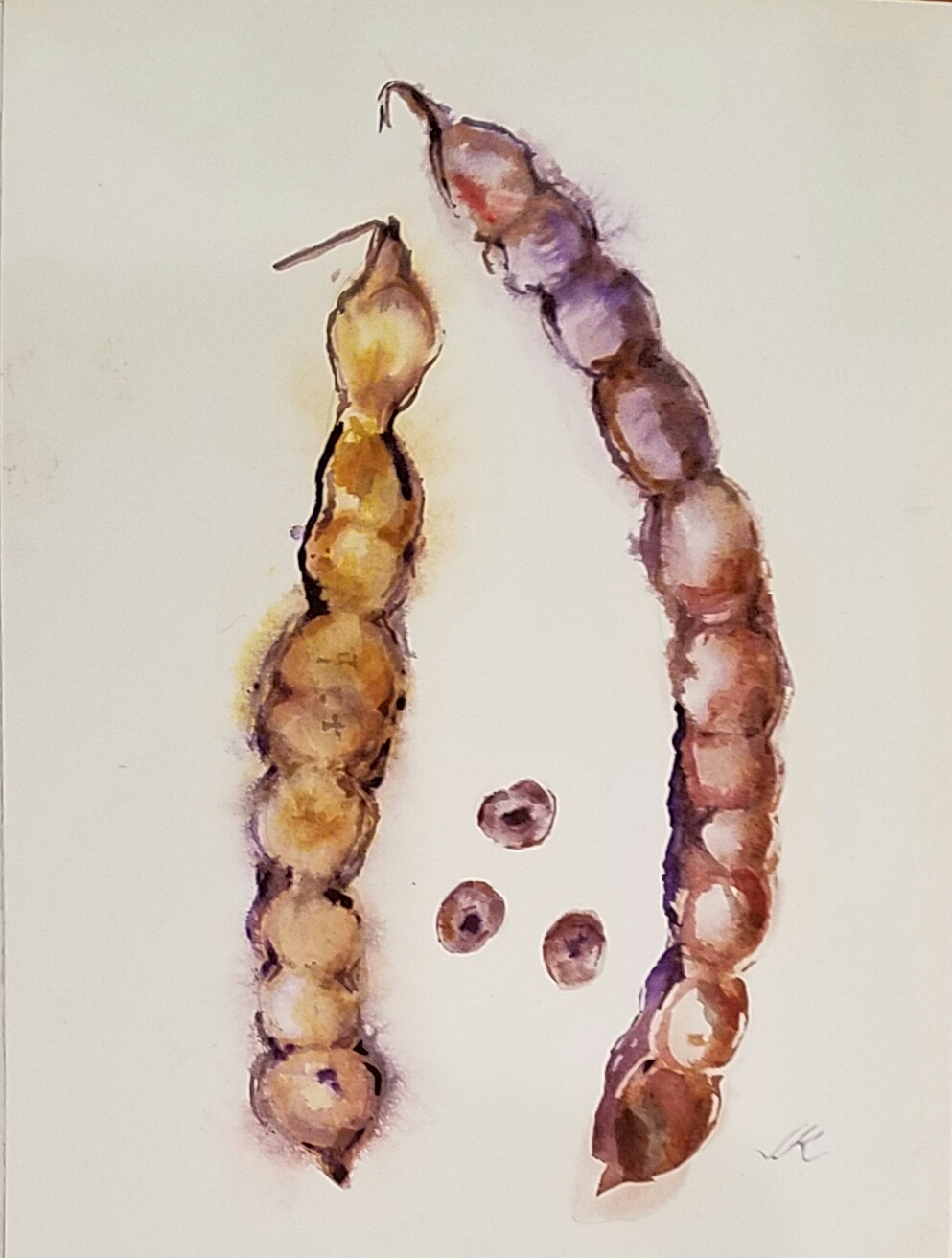
Seeds and Pods, 12×9″, watercolor on 140# HP watercolor paper


 Jean Krueger Fine Art