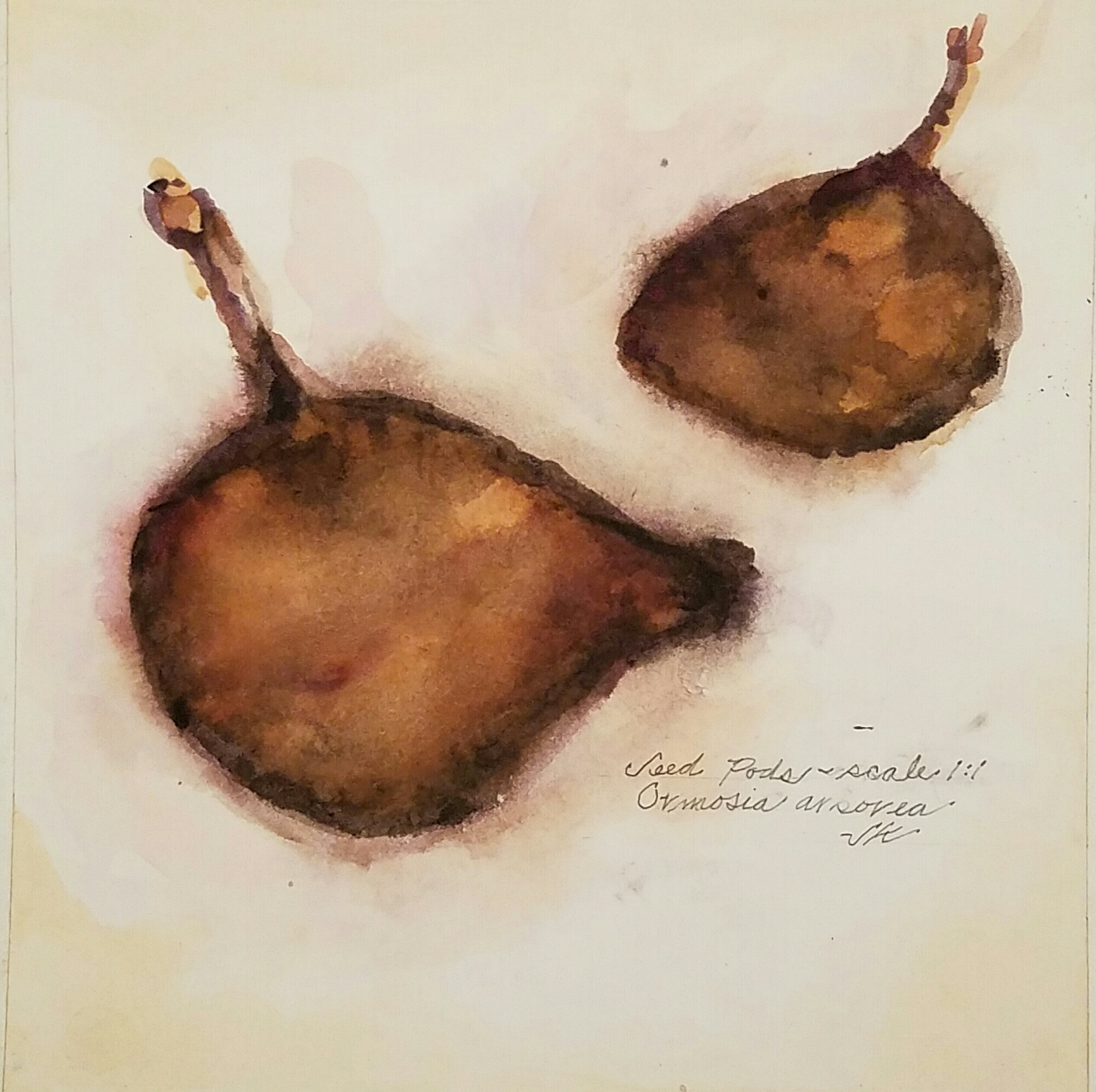
Seed Pods – Ormosia arborea, 8×8“, watercolor, 2016
Seed Pods – Ormosia arborea, 8×8“, watercolor, 2016
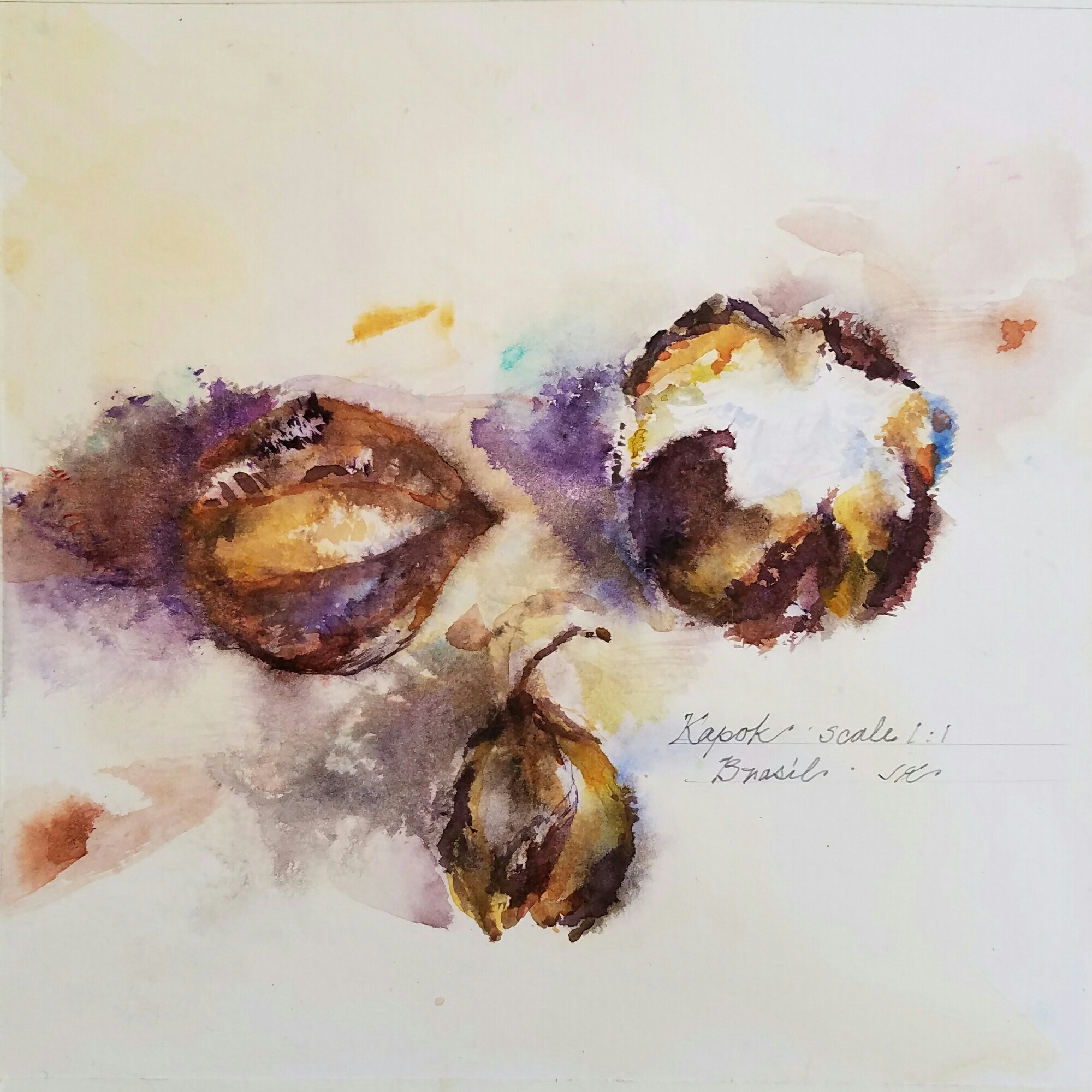
Cochlospermum gillvraei Benth., 8×8″, watercolor, 2016
http://www.dailypaintworks.com/buy/auction/624696
These seed pods grow on a tree, Bixaceae Cochlospermum gillivaei, a yellow flowered species common in Brasil, hailing from Australia. I haven’t determined its common name yet. Not being a botanist myself, I’ll offer the caveat that the above information might be wrong.
When I see a plant that interest me I take a photo. Then I paint it. Afterwards, I look through the three botany books I bought when I got to Brasil. If I can’t find a photo that matches my painting, I head for Google and search with words, then search the ‘Images’ that result. I scroll through pics, sometimes hundreds, til a visual match shows up. I then follow links that give me the name and characteristics of the object I painted.
So… there’s plenty of room for error in my research methods. However, I have a limited amount of time to spend ferreting out info, especially when it absorbs time I might otherwise spend painting. I have a curious, not scientific, mind. My botanical paintings deal in generalities, neglecting minutia.
I’m okay with that.
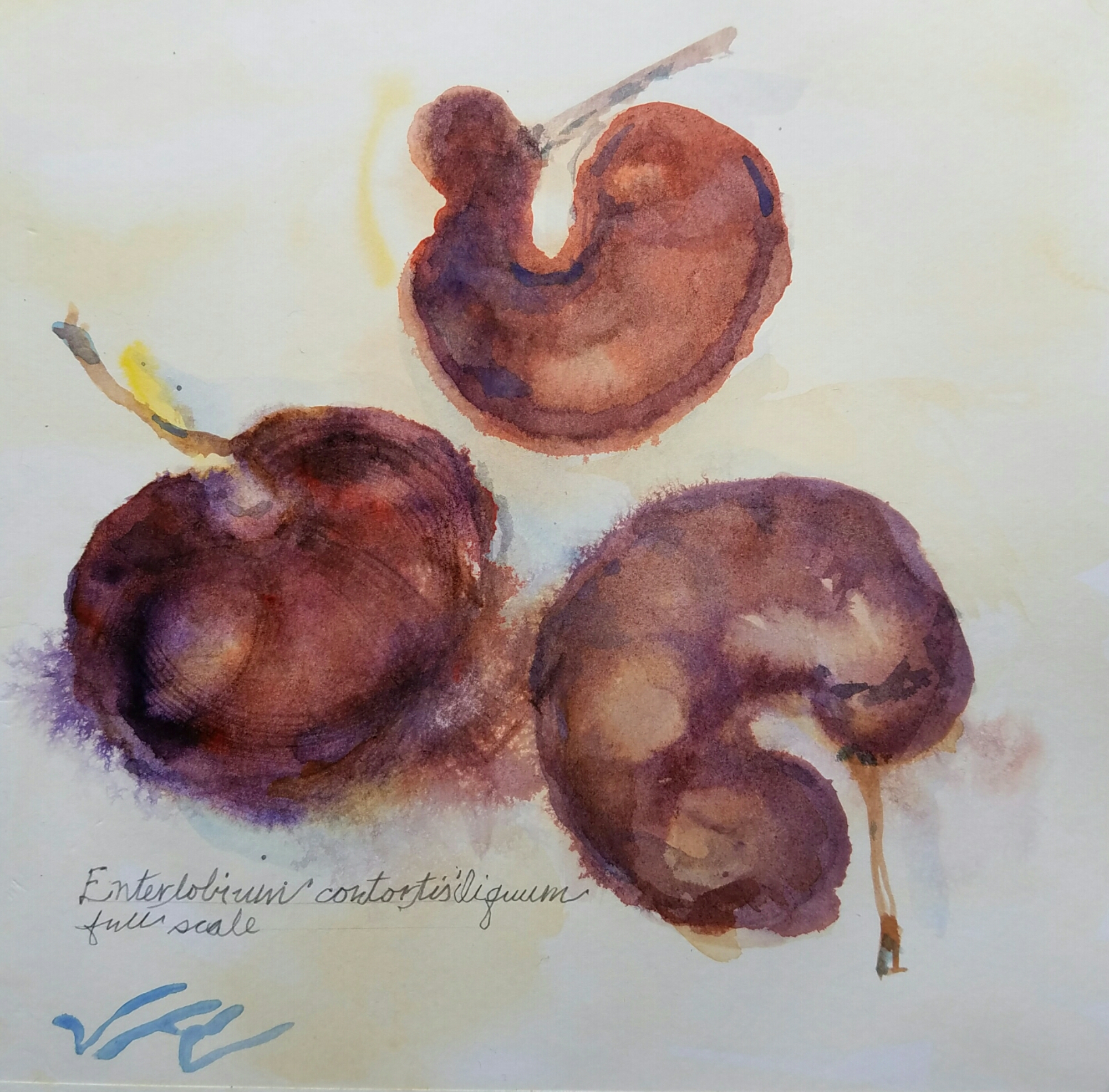
Tamboril, 8×8″, watercolor on 140# HP paper
The tamboil tree goes by many names, most of which are associated with its ear shaped seed pods. Scientifically it belongs to the Fabaceae family and is named Enterolobium contortisiliquum. They’re native to Brasil. They can reach 20-40 meters in height giving welcome shade. The wood is used for furnishings, the bark which is high in tannin is used in learher industries.
The seed pods have a wonderful, pouchy shade with a have a rattle when jiggled!
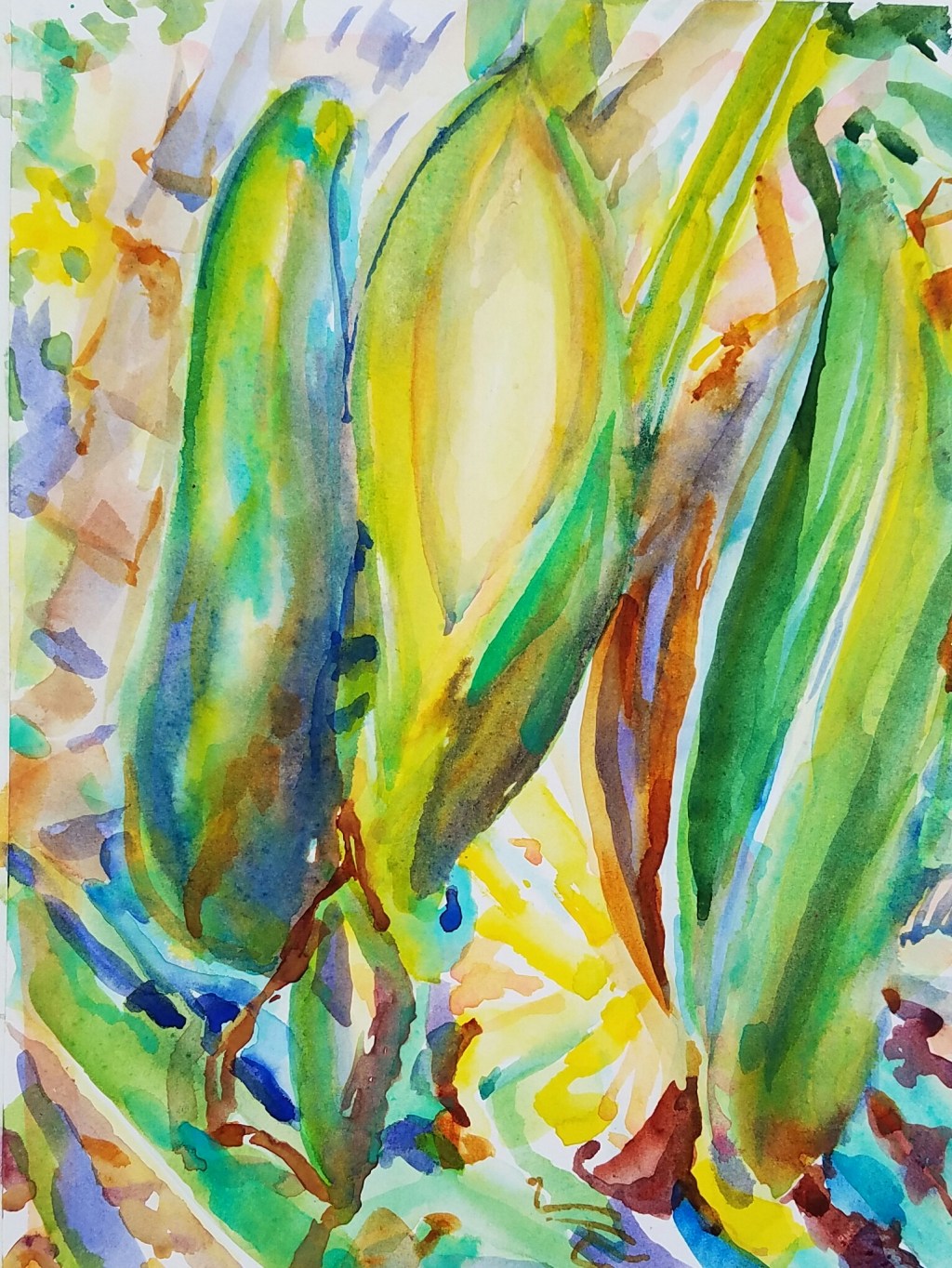
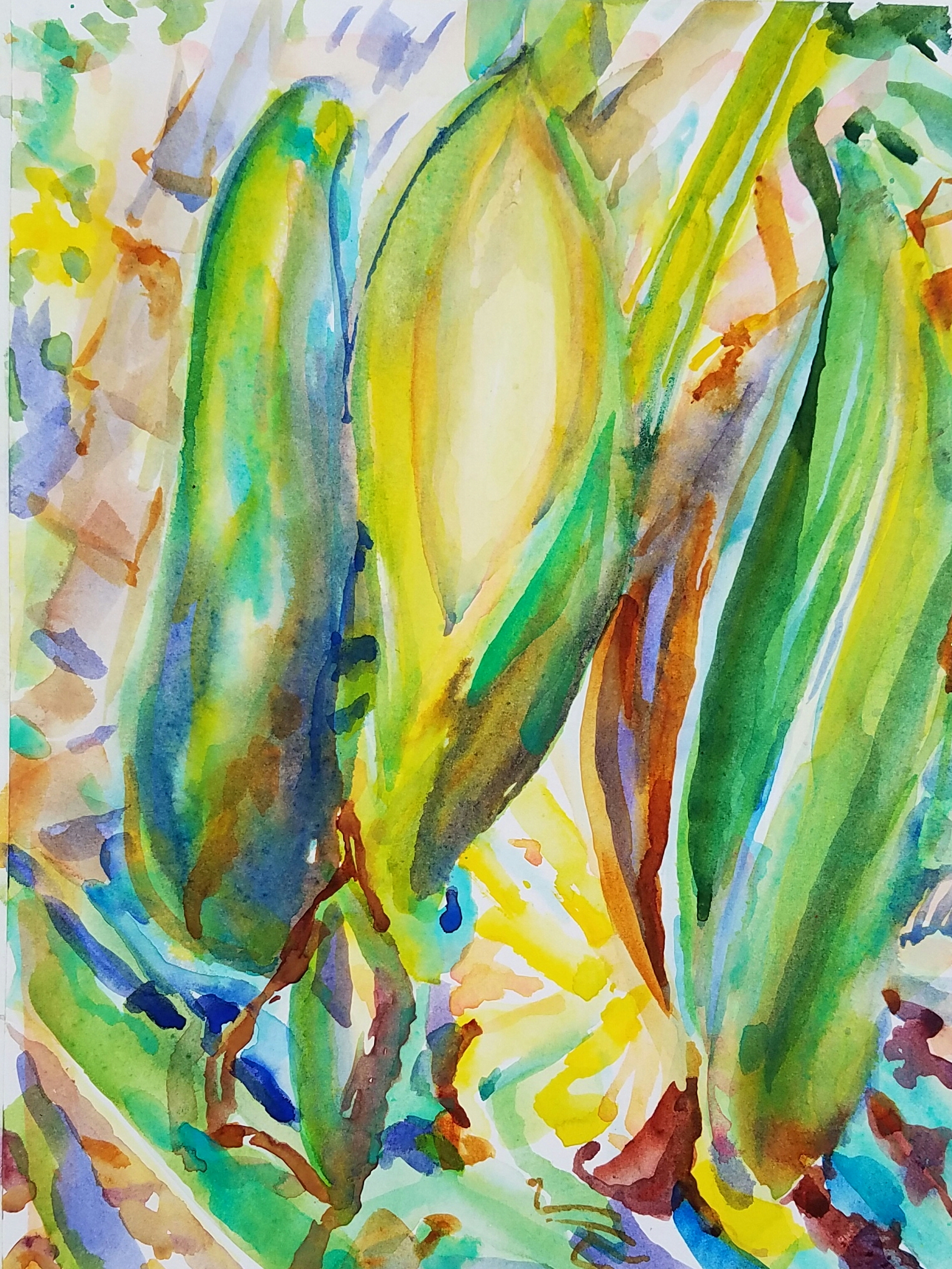
Philodendron, 12×9″, watercolor on 140# HP paper
If you are a philodendron, the Tropic of Capricorn is where you want to live, not in the upper latitudes clinging to life in an office planter, overwatered, underfed, starved for daylight.
Here the size and variety of this species is vast. Plants which are scrawny potted slips in the US are as big as a house in Brasil, co-habiting with even bigger plants as they climb, coil and wind skyward. Their closed pods are the size of a liter Thermos bottle. When the pod (blossom) opens it reveals a huge ivory anther. After fertilization the blossom closes. Why? I don’t know, yet. I walk past this philodendron daily and always look to see what’s new.
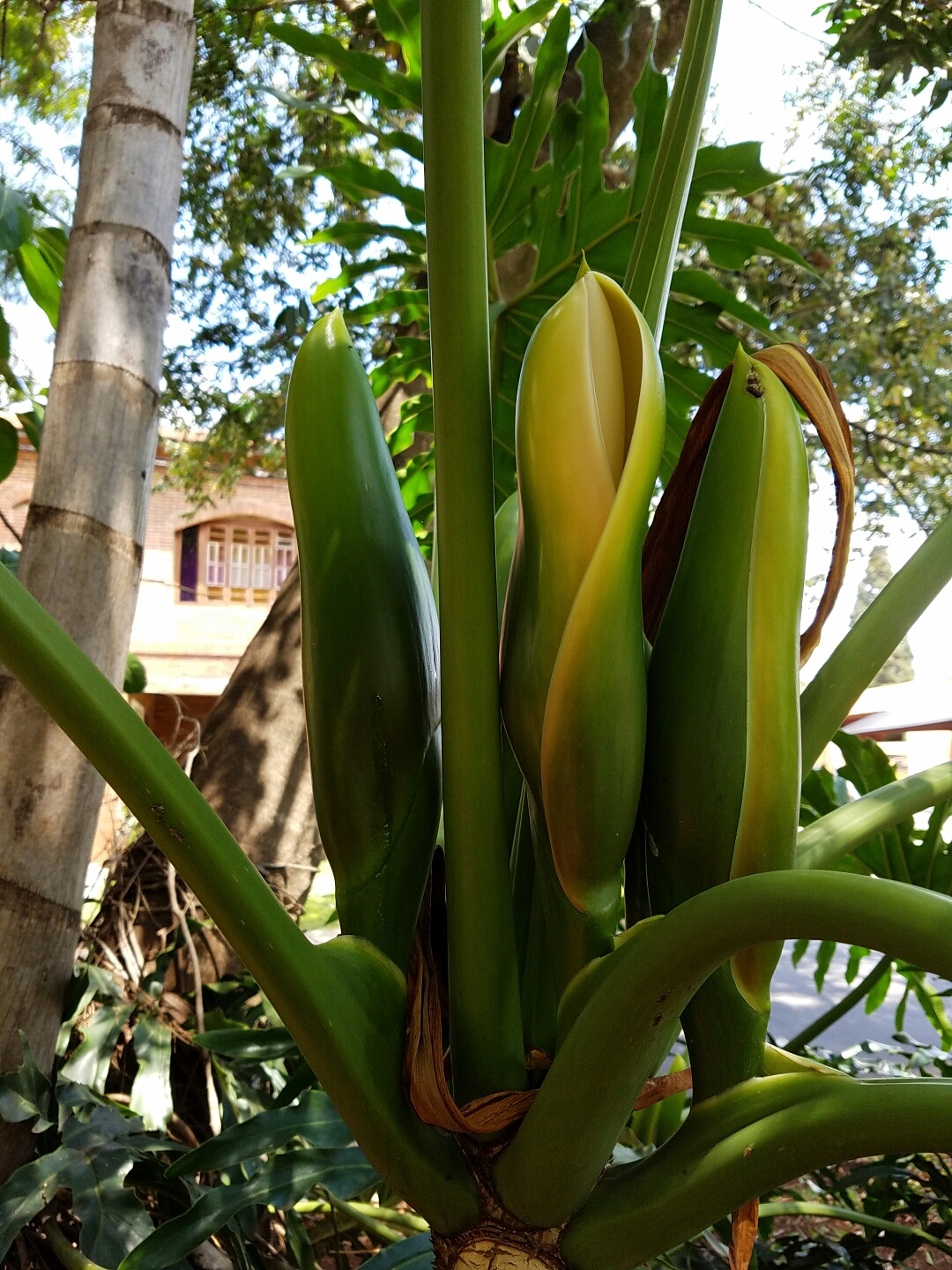
Philodendron Pods
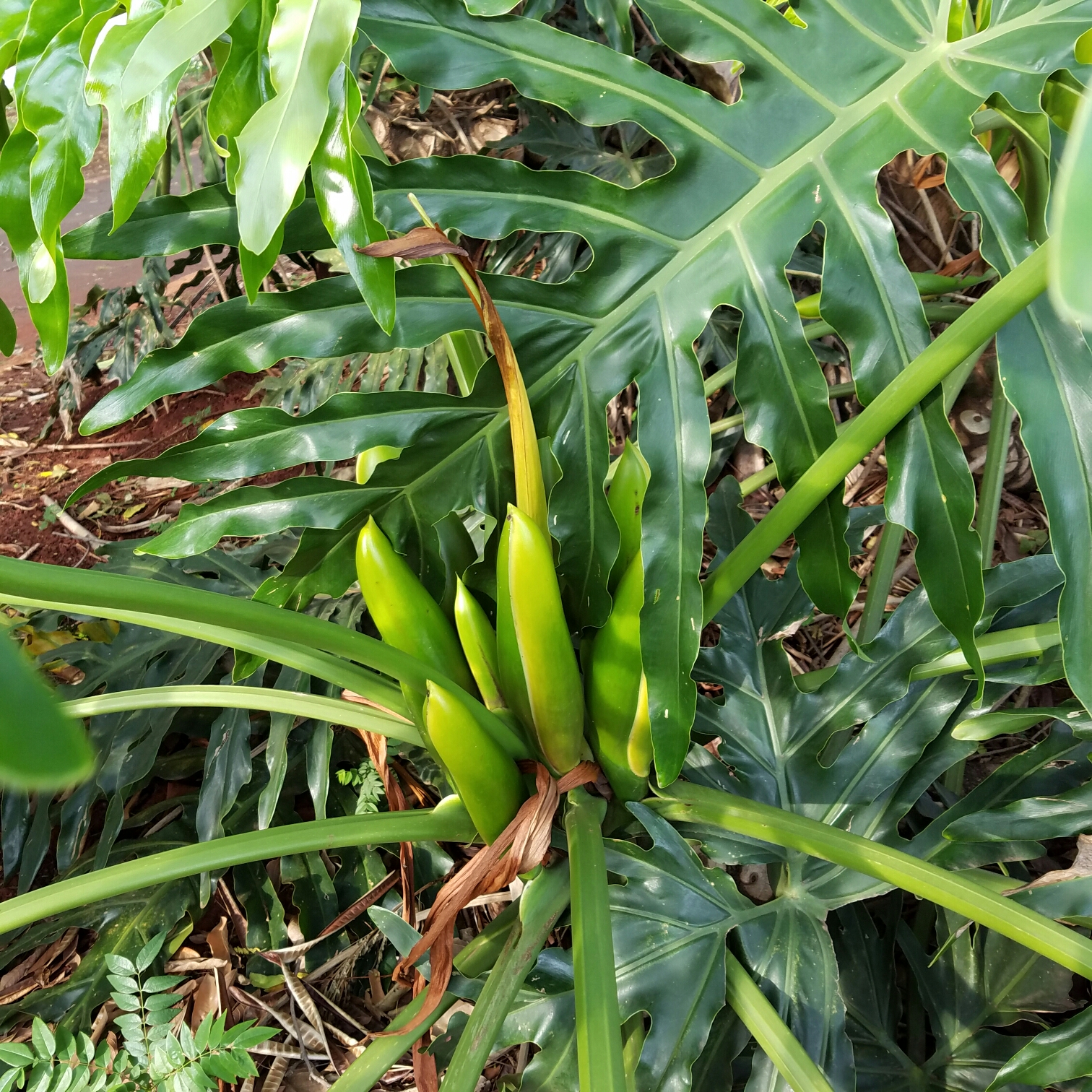
Philodendron Leaves and Pods

Goose Preening, Campinas, Brasil, 12×9″, watercolor on Arches 140# CP
http://www.dailypaintworks.com/buy/auction/619131
Tropical Depression, 20 x 14″, pastel in Arches 140# CP
Being American, being of a nature that celebrates variety and a se la vie attitude towards most matters, I must admit that I had a real sense of depression and loss with regard to the US election results. I’ve been painting this since the day of the election and it took longer than most. I couldn’t find graphic resolution to it’s design. Sorta like I can’t find emotional resolution to why the US electorate had such sorry candidates as presidential nominees.
But it’s done like this painting is done. God bless us all. It is what it is.

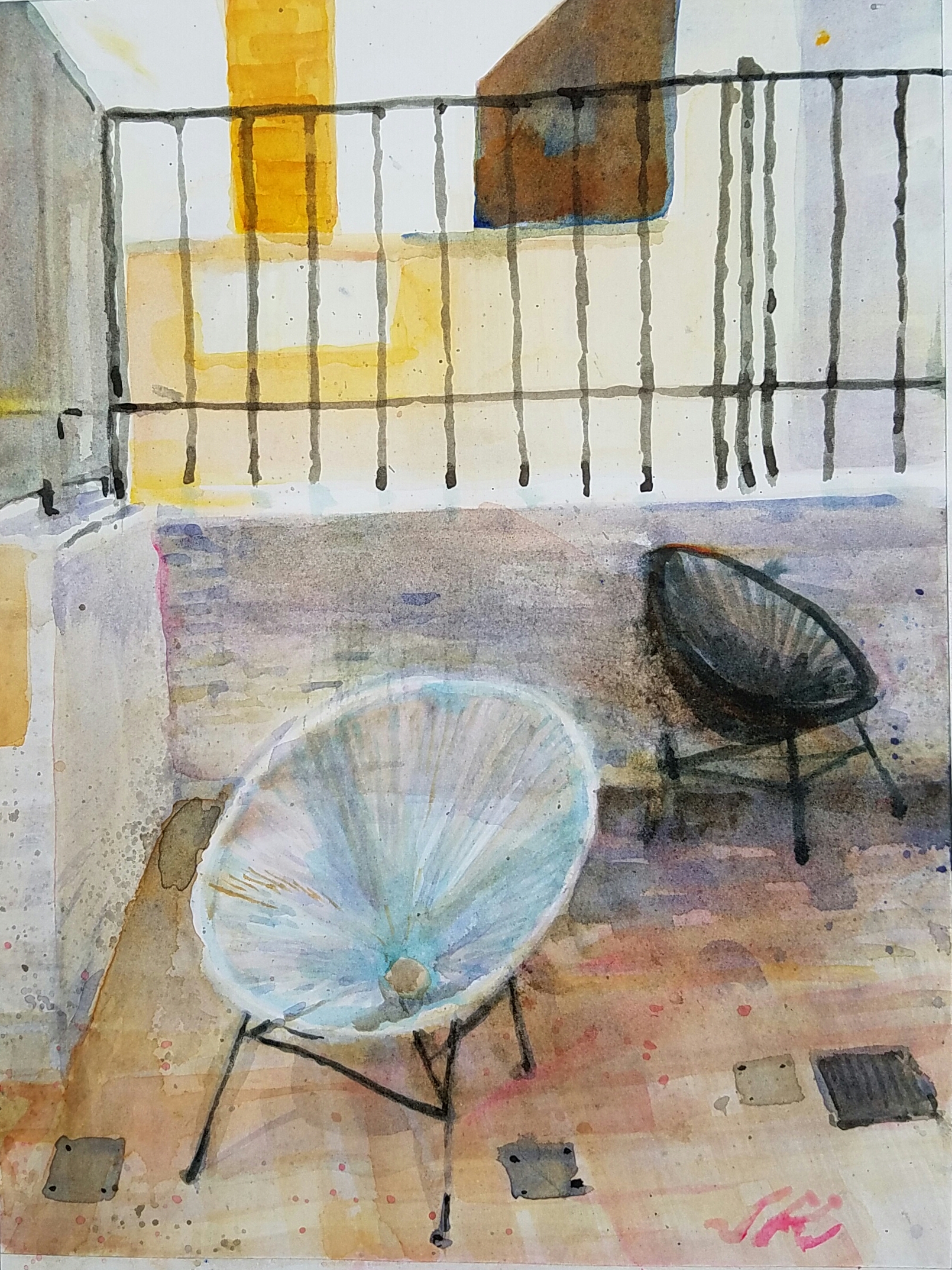
Edwardo’s Patio, 12×9″, watercolor, 2016
Edwardo invited us to dinner last weekend. He has a highrise apartment in downtown Campinas, Brasil. The view’s great from the seventeenth floor and his deck is enormous and totally private. I was caught by the combination of geometry and airy openess and painted it in tribute to built spaces.
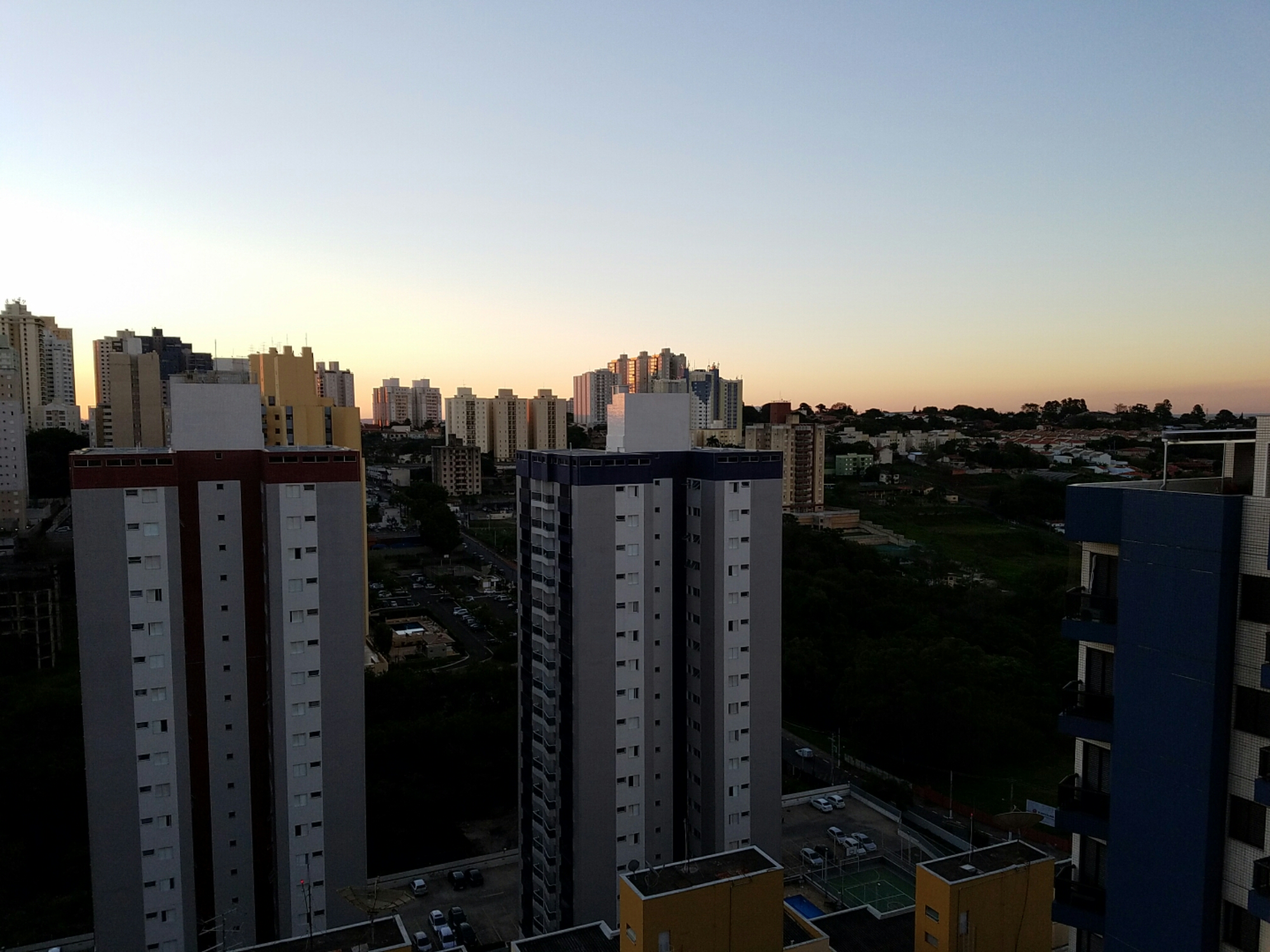
Downtown Campinas, SP, Brasil, looking northwest
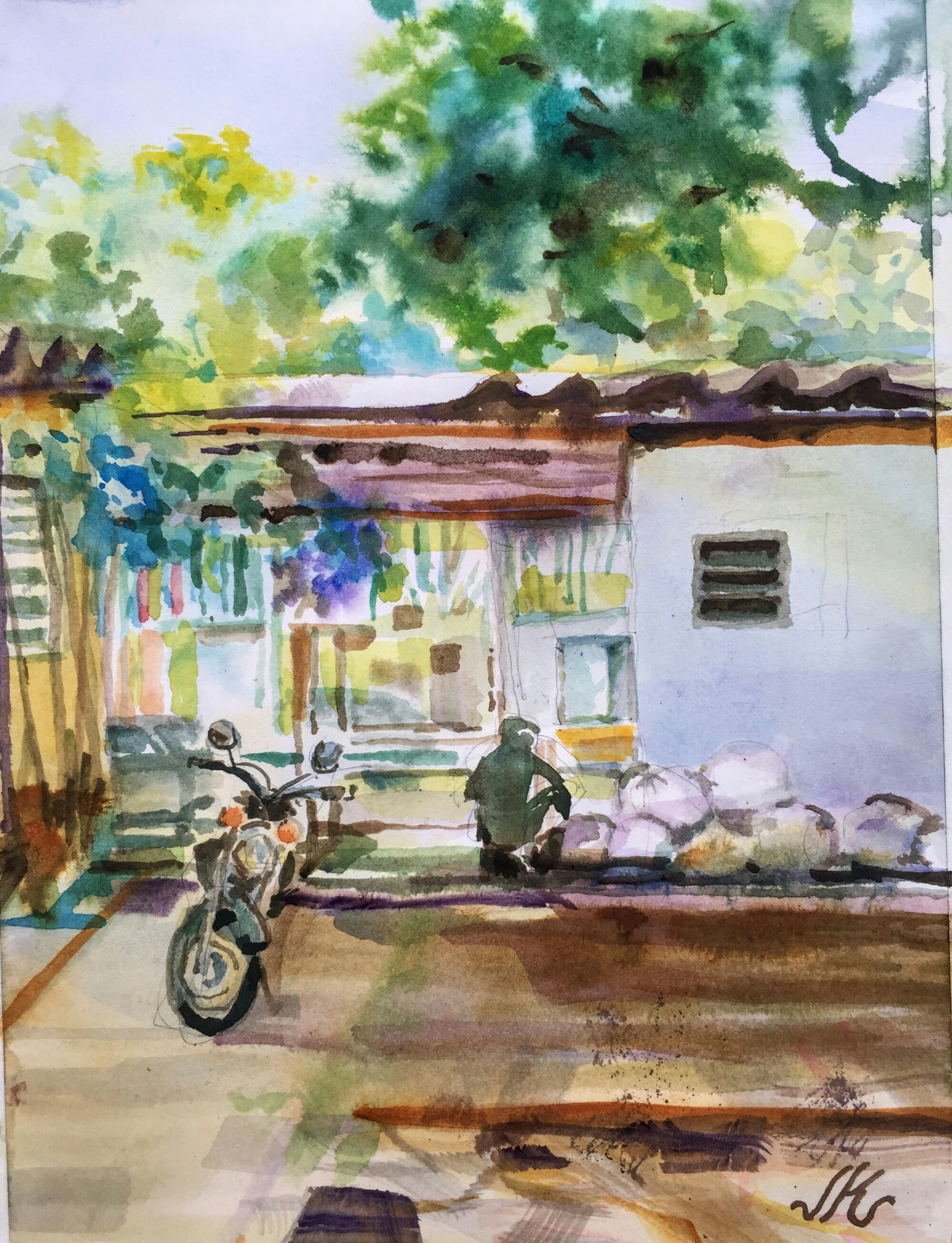
Tropical Sun and Shade, 140# h0t press watercolor paper
A couple years ago when I decided to paint with watercolors I found a book by Tom Hoffaman, Watercolor Painting, 2012, http://hoffmannwatercolors.com. I got a digital copy of it and refer to it frequently. Tom put out a post today about his upcoming teaching schedule for this and next year so I checked out his blog. Reading it led to the painting above.
Tom is very clear-headed in his approach to painting, suggesting that all paintings initially be directed by identifying the value, wetness, composition and color of the topic at hand and then consciously proceeding with these attributes as guides for subsequent painting. He says to place each brushstroke with purpose. That advice has resonance with me. I did a lot of architectural drawing at one point in my zigzag career and remember I well that an architectural drawing has NO superfluous marks, that every line must mean something.
Thinking on this, I did today’s painting and am pretty happy with it. Remaining mindful and attentive to each movement of the brush, how much paint and water to apply and keeping the total design in mind works way better than letting it rip in any ole direction.


 Jean Krueger Fine Art