
copyrighted with all rights reserved by Jean Krueger
https://www.dailypaintworks.com/buy/auction/1280625
Buck the Cat looks askance.
Buck the Cat looks askance.

The San Pedro Cactus is a gorgeous plant. They grow tall and wide and have straight regular columns or can be quite gnarly and contorted, depending on the growing environment and genetic mutations. The one I’ve painted is of the gnarly type. It grows at altitudes of 2-3,000 ft and is a known hallucinogen. What’s not to love.
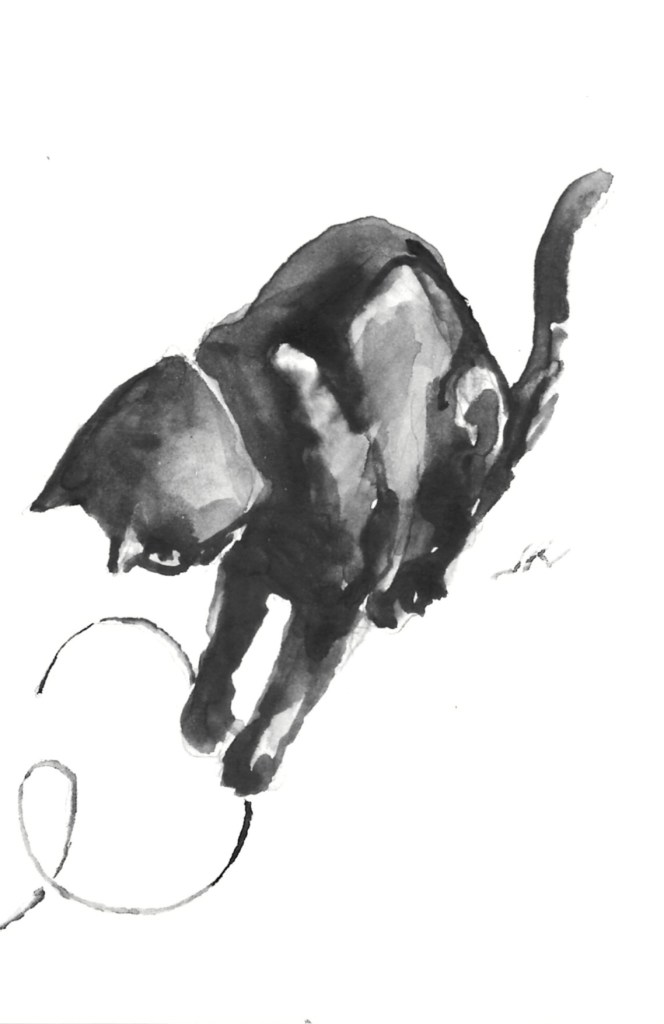
Buck the Cat is almost always busy. Meow.
The Eastern Bracken Fern is found in the Adirondacks of New York State. It’s a deciduous rhizome that appears in spring, lives and spreads in the summer, looses its fronds in the fall, winters underground and then starts it all again when the earth thaws. This painting shows the fern in early spring.
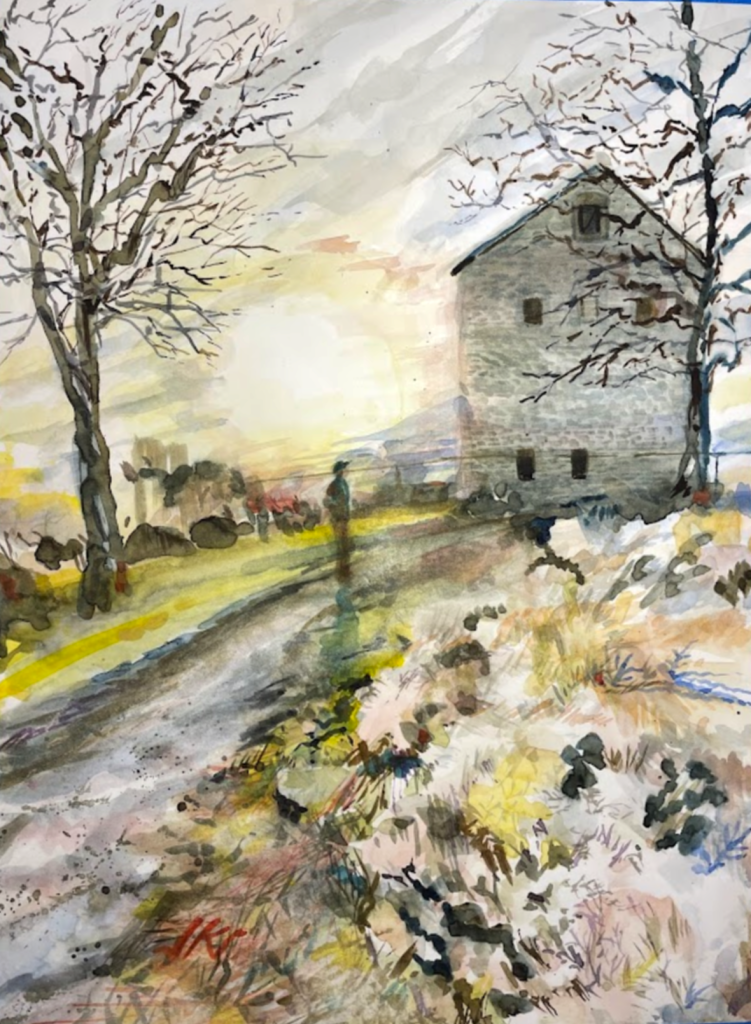
Autumn is upon Valley Forge. The stone barn shown here was built and added to in the 19th c. It has the remnants of a Palladian window in the wall below the ridge, dating it to the Federalist era of architecture.
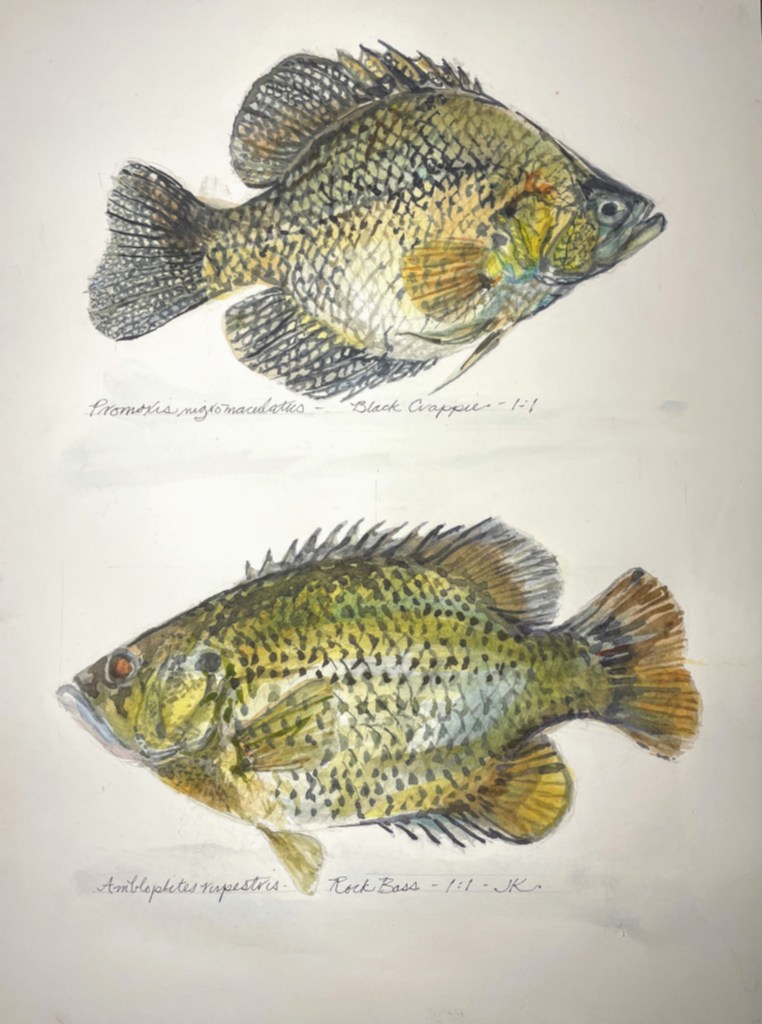
The Black Crappie and the Rock Bass are closely related, both ranging throughout the United States. These were caught in Upstate New York. They are painted true to size.
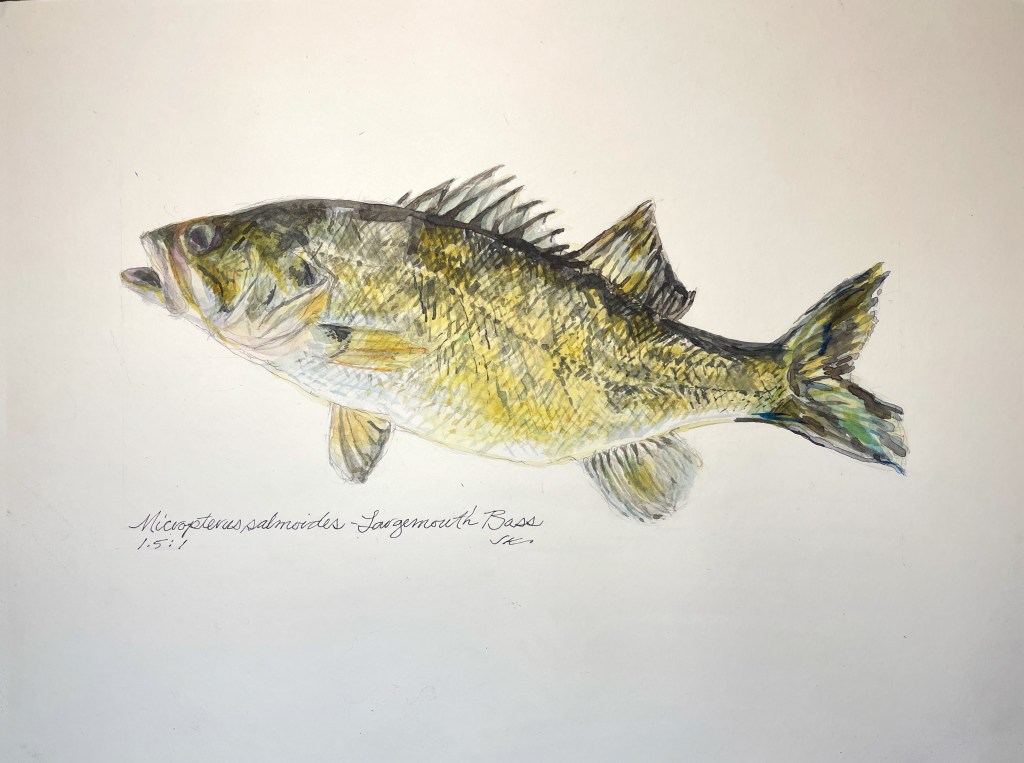
This large mouth bass is painted at a scale of 1.5:1 which means the live one was bigger by half. They can grow really big and don’t like to be caught, putting up a strong fight. The husband caught him, I photoed him and he was released back into the Upstate New York Lake from which he came. Now he’s immortalized in this highly desirable painting.Watercolor, 16×12″, 2021, $265.https://www.dailypaintworks.com/buy/auction/1249639
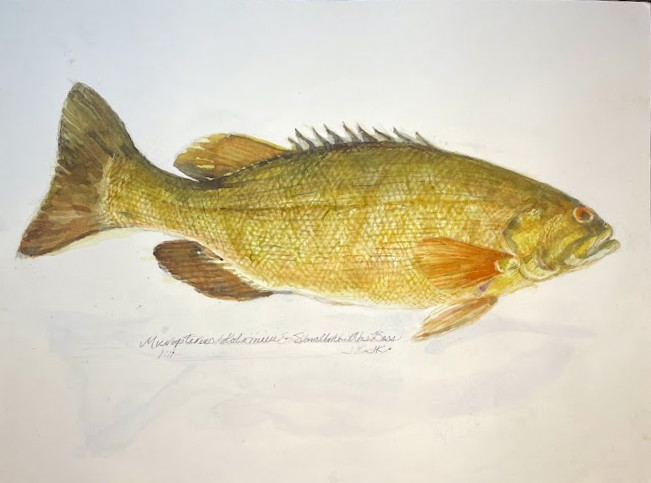
Small Mouth Bass are found in waters of the US, north to south East to west. The fish shown here was caught in the Adirondack Park in New York. It’s a little unusual in that it was a yellow ocher color. Most are in the green grey range. Perhaps the anomaly can be explained by the fishes diet.
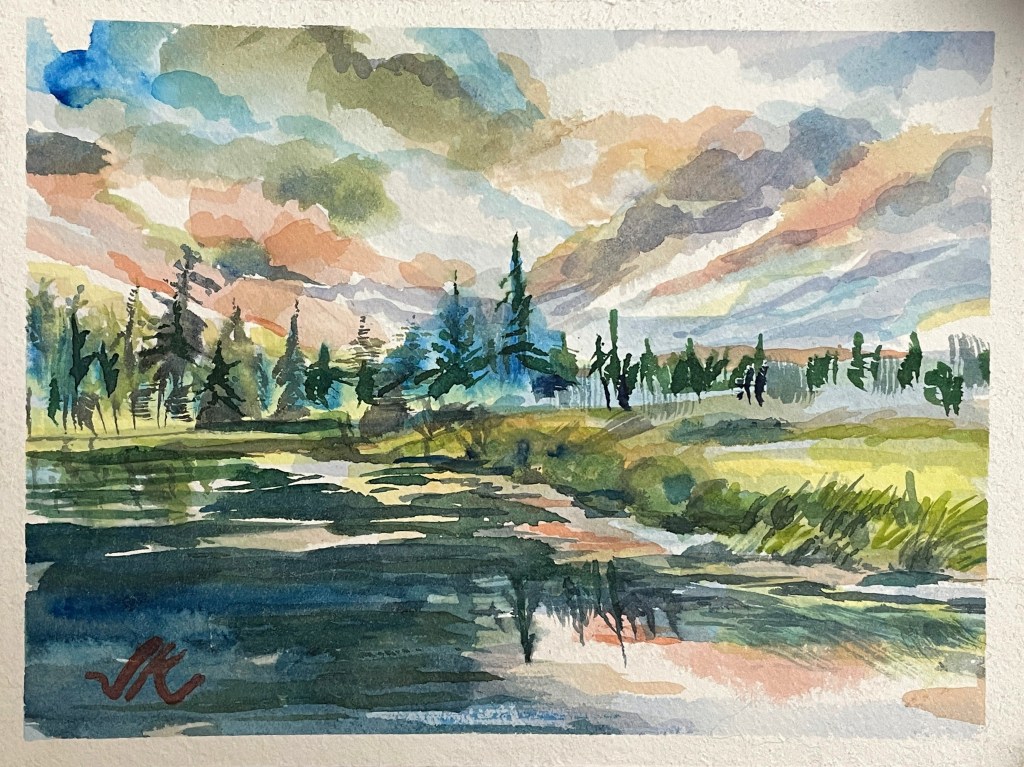
The sun’s asettin’ and we’re still fishing, catching large mouth bass.
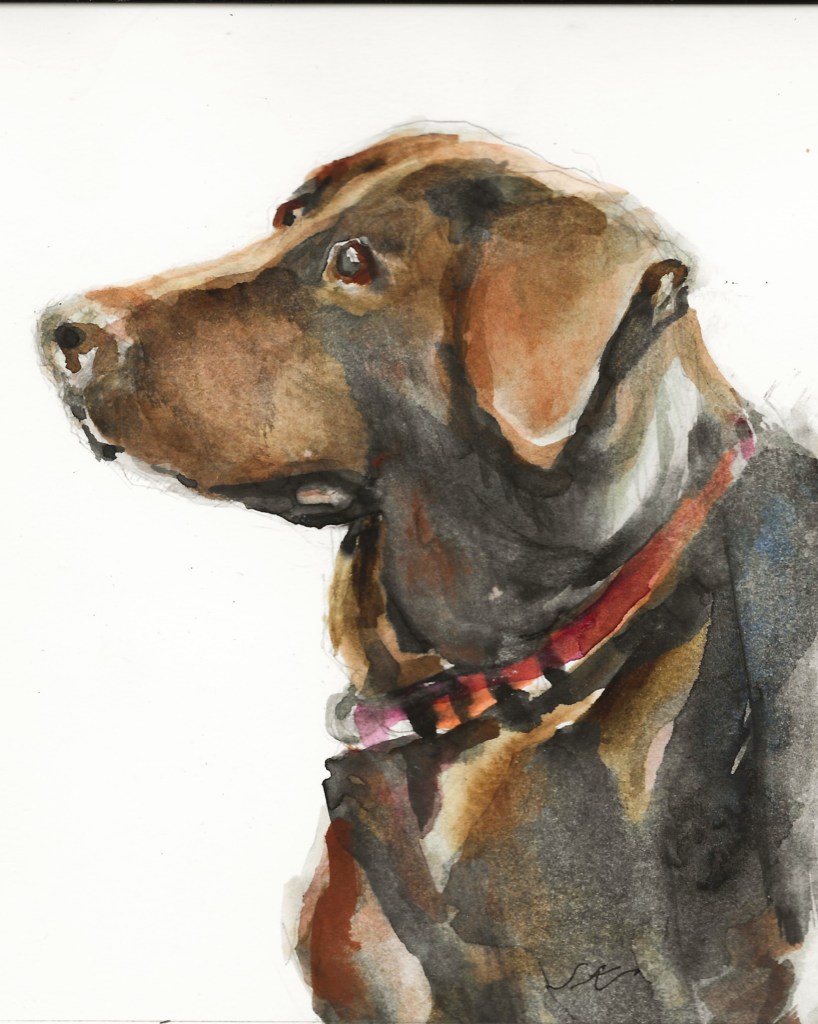
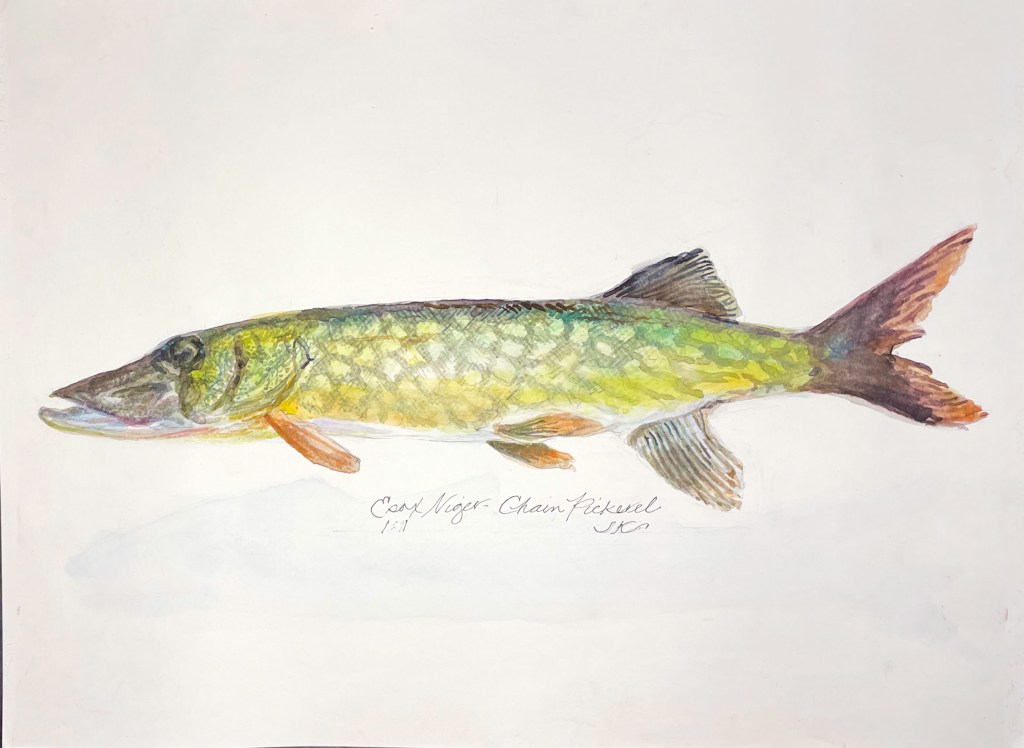
This fish is found in the New York Adirondacks as well as a lot of other waters throughout the US. The one I painted is represented full size although it’s a small example. Ted caught it, I took its picture and then he returned to the cold water to swim again, hopefully a wiser fish but probably not. They live to eat, not thinking much about the possiblility of being eaten.

I painted a masonite board with QOR watercolor ground which allows me to paint on a surface that, untreated, will not absorb the watercolor pigments. After an under painting of watercolor, I filled in shading and detail with casein, a more durable water media. Usually I use 140 or 300# watercolor paper. Comparing the hardboard ground to paper, I like the masonite a lot as and alternative. I can frame this without a mat or glass and still have a perfectly displayable watercolor. I may add a semi-gloss coat after the painting dries or gently buff the surface for dull shine,
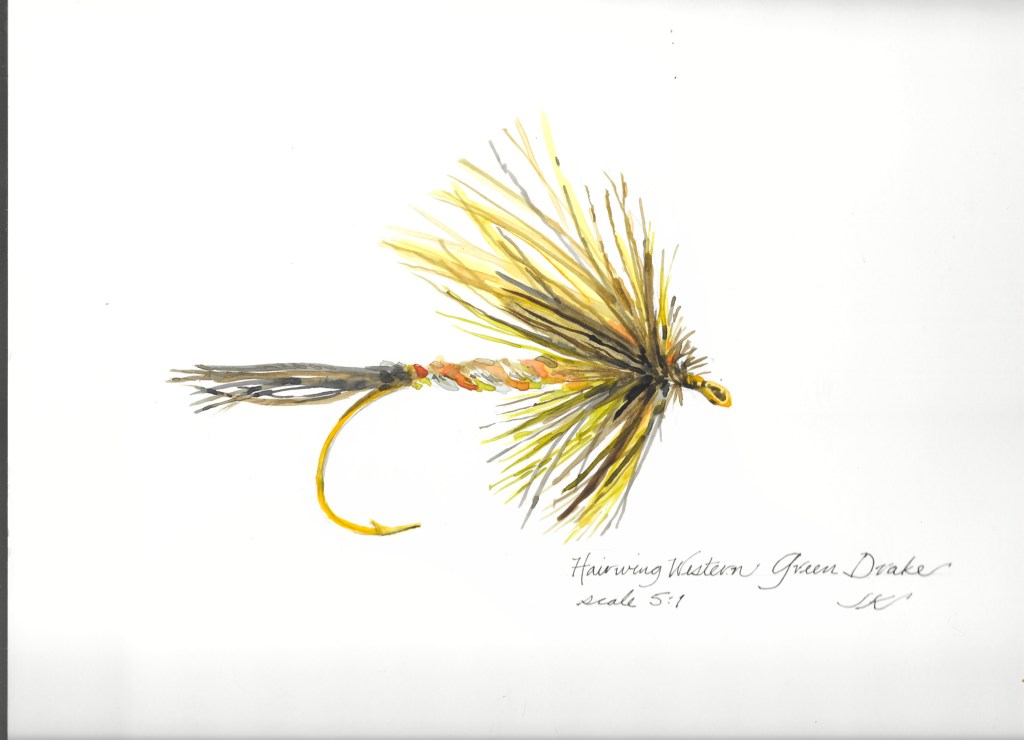
The internet says that this fishing lure was ‘created by Rene Harrop in the 1980’s.’ It’s used in the summer when insects are hatching and fish are eatin’ ’em. I prefer chips and salsa…
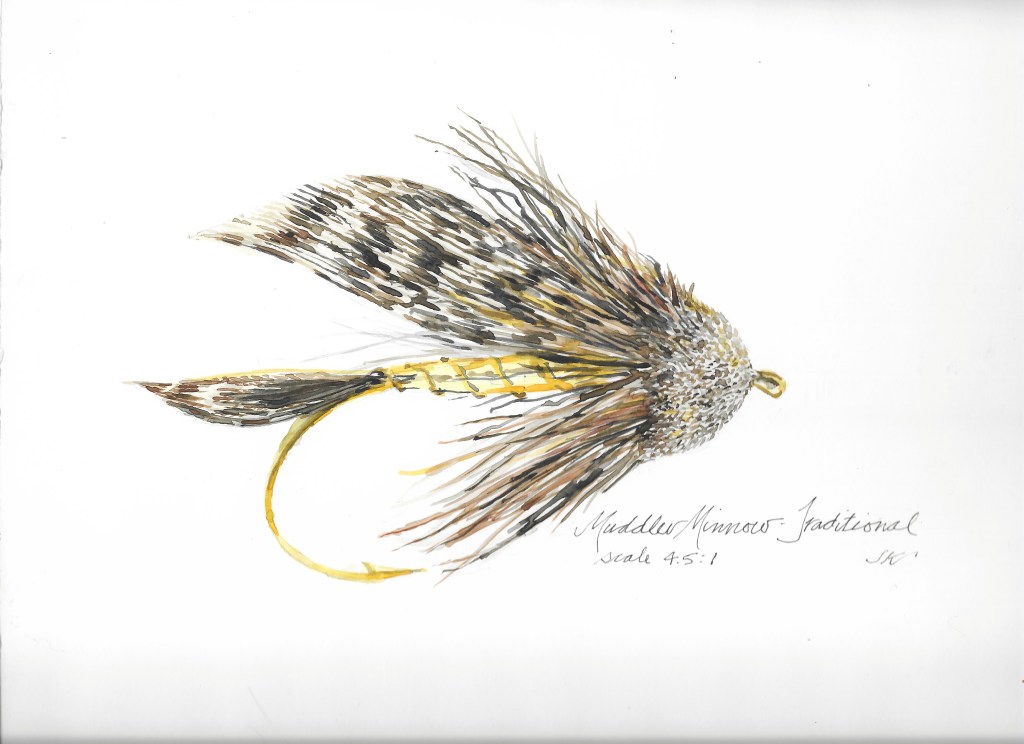
The Muddler Minnow was first tied in 1936 by a guy from Minnisota, Don Gapen by name. It imitates a sculpin and is of the ‘streamer’ body type. It’s a very popular pattern, tied by many with a lot of variations. The one shown here is basic and traditional. My husband says the nose cone should be longer, but I prefer the look of this model.
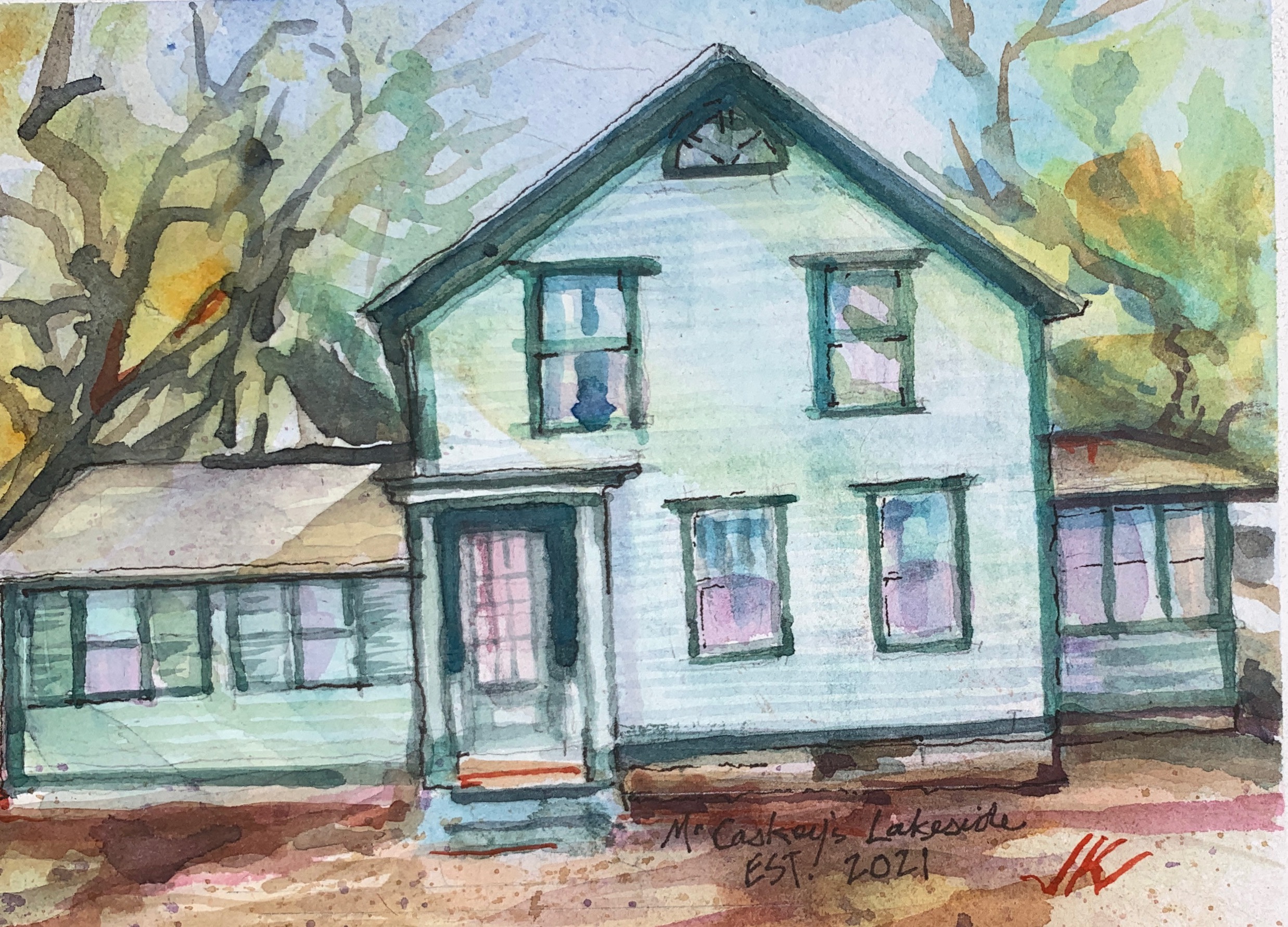
This is a small, quick painting requested by my sister. It’s located in central Wisconsin, USA.

A couple months ago, I got a bunch of Sea Holly from Trader Joe’s with the intention of painting the whole thing. Time went by, the flowers dried, wilted and I threw them out, saving this one blossom to paint. Here it is, still thistley blue, green and grey. I planted these in the yard in New York last fall and will find out if they survived the winter when we return this spring.
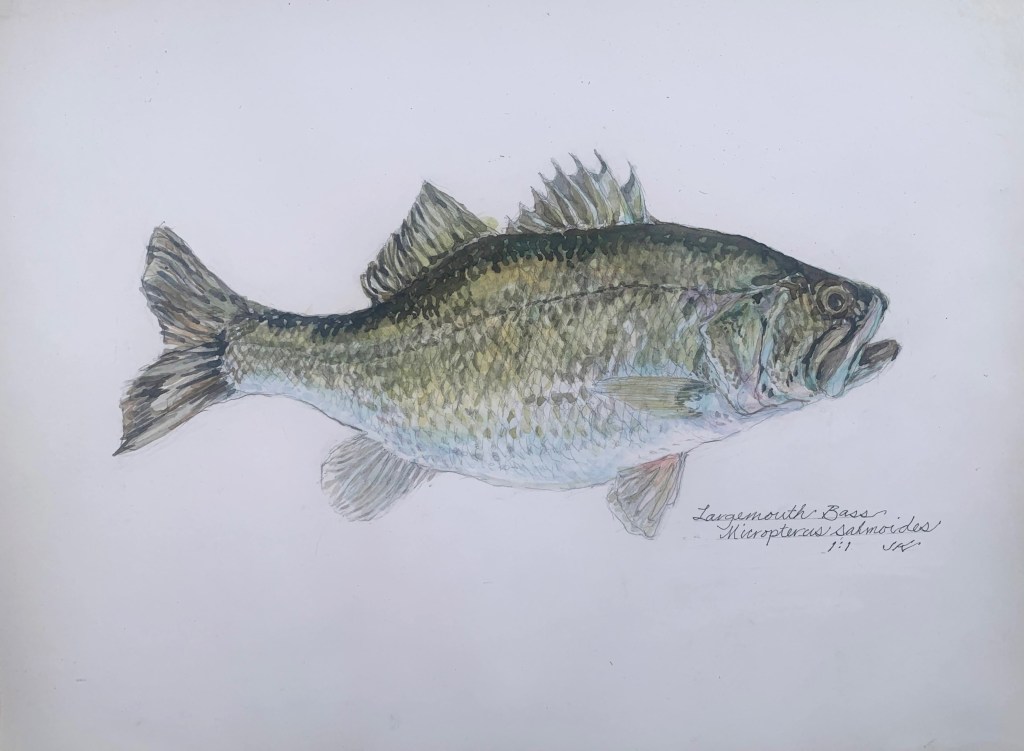
Caught in Arizona, this bass bass looks a lot different in color than those we’ve taken in New York. Other features such as the dorsal fins are atypical of what is found in Largemouth Bass. Perhaps this is a hybrid. At any rate, it was caught in Lake Pleasant, AZ. We’ll have to see if we can catch anymore like these.

Plein aire while Ted, Kirk and Tyler fished.

 Jean Krueger Fine Art