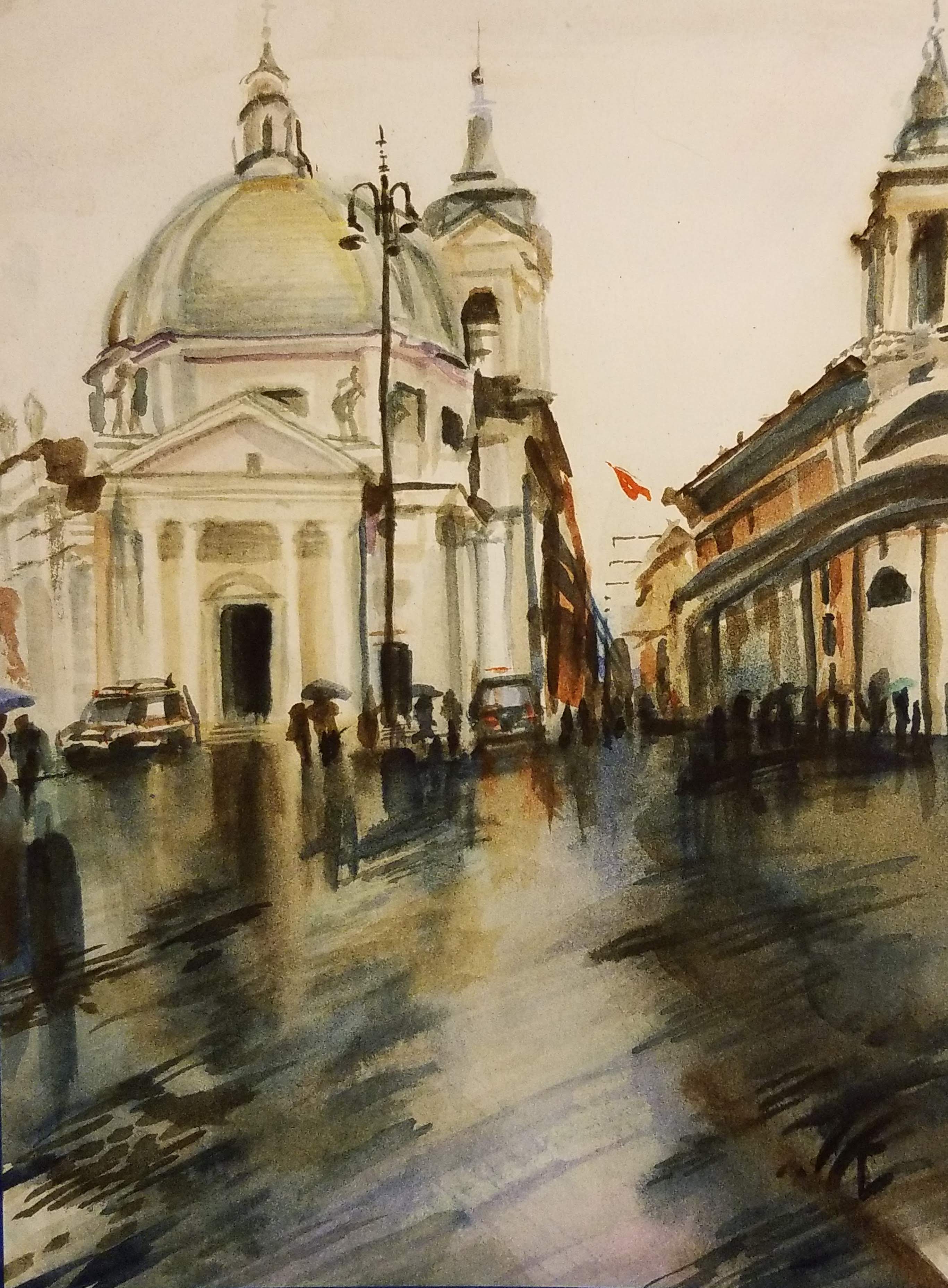
 Sometimes It Rained in Rome – Piazza del Popolo, 2018, professional watercolors on 140# hot press watercolor paper, masked border, copyrighted with all rights reserved by Jean Krueger
Gray day, long ago, Eternal City.
Sometimes It Rained in Rome – Piazza del Popolo, 2018, professional watercolors on 140# hot press watercolor paper, masked border, copyrighted with all rights reserved by Jean Krueger
Gray day, long ago, Eternal City.
Buck the Cat, Original Watercolor, 8×6″, 2018, copyrighted with all rights reserved by Jean Krueger
Buck is the family cat. He’ll be a year old at the end of May so he’s still technically a kitten. We really love him. Meow.
https://www.dailypaintworks.com/fineart/jean-krueger/buck-the-cat/658852
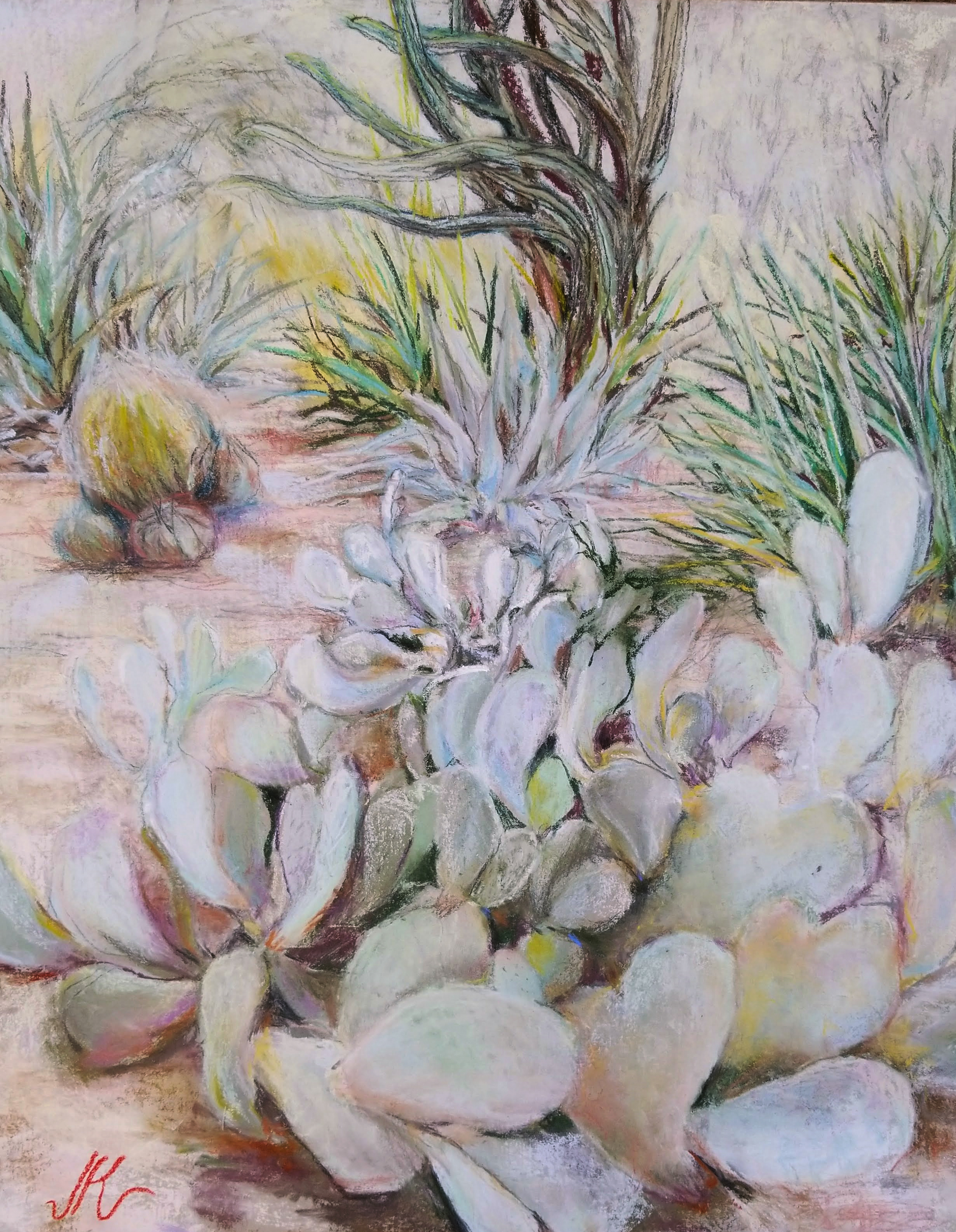 Beaver Tail Prickly Pear, pastel on textured board, 20×16″, 2018, by Jean Krueger, copyrighted with all rights reserved
I’m a fool for the subject matter (botany of the desert) which can be found at the Phoenix, AZ, Desert Botanical Garden. I’m a frequent visitor there. The geometry for this painting begins with paisley patterns, ending up with swirling movement from the background to the foreground.

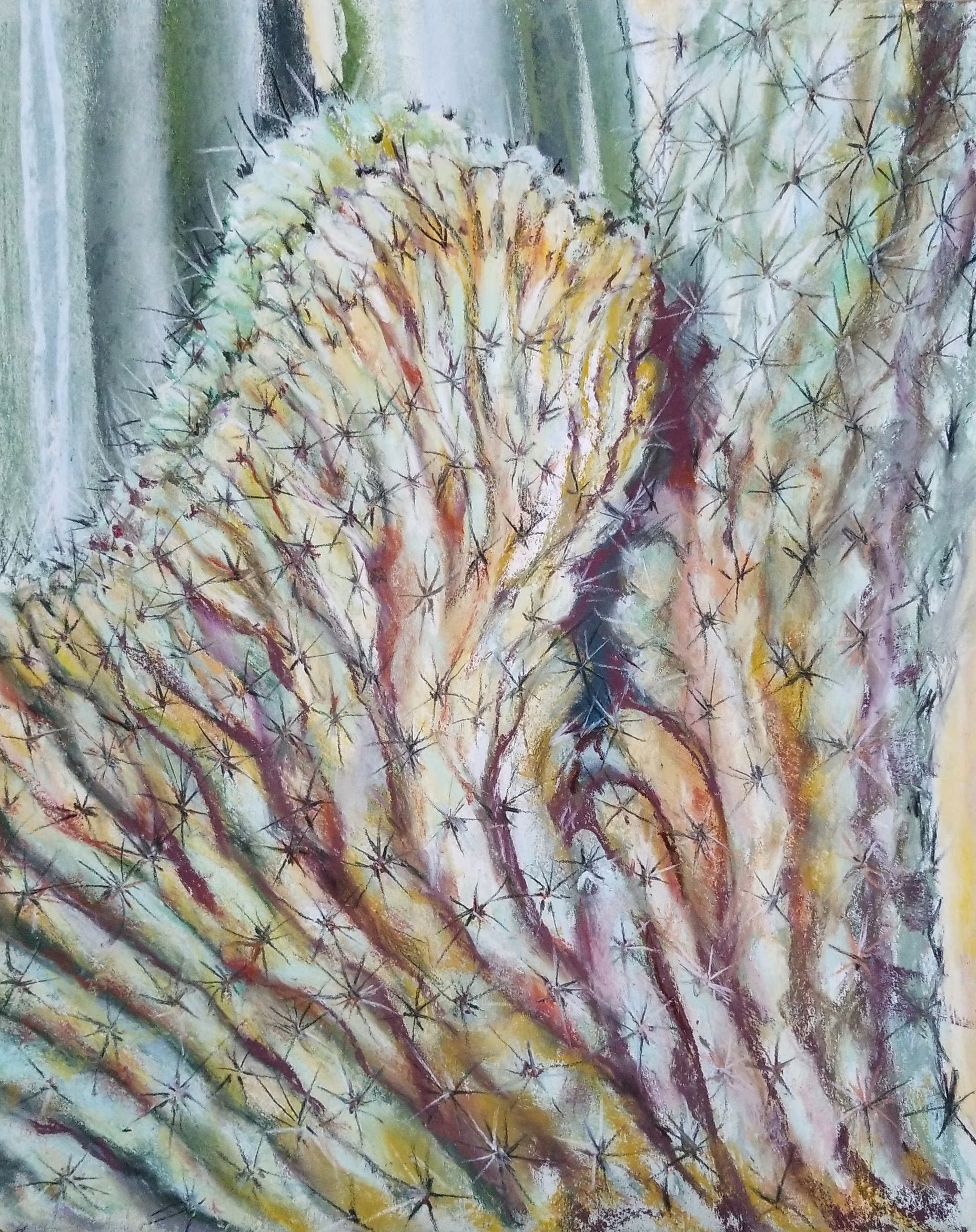 Crested Saguaro, soft pastel on archival board, 20×16″, 2018, by Jean Krueger, copyrighted with all rights reserved
Saguaro, the ubiquitous cactus of the Sonoran desert, mutate from time to time. When they do, they may form an intricately folded fan-like shape at the end of one or more branches. The fan may start to form when the cactus is dozens of years old (saguaros can live a couple hundred years). Other varieties of cactus are able to mutate in this way. To date, there is no explanation for why these plants decide to up and do this…they just do.
 Brook Trout – Salvelinus fontinalis, watercolor on paper, 12×9″, 2018, by Jean Krueger, copyrighted with all rights reserved
Brook Trout or Brookies or Salvelinus fontinalis are the ubiquitous American fish. They are native to this continent and thrive where water is cold and fast or cold and deep. They’re a favorite fish for the US Forest Service to plant as they have great sport fishing value, not too hard to catch. This guy painted here is full scale about 7-8 inches and is shown at full scale.
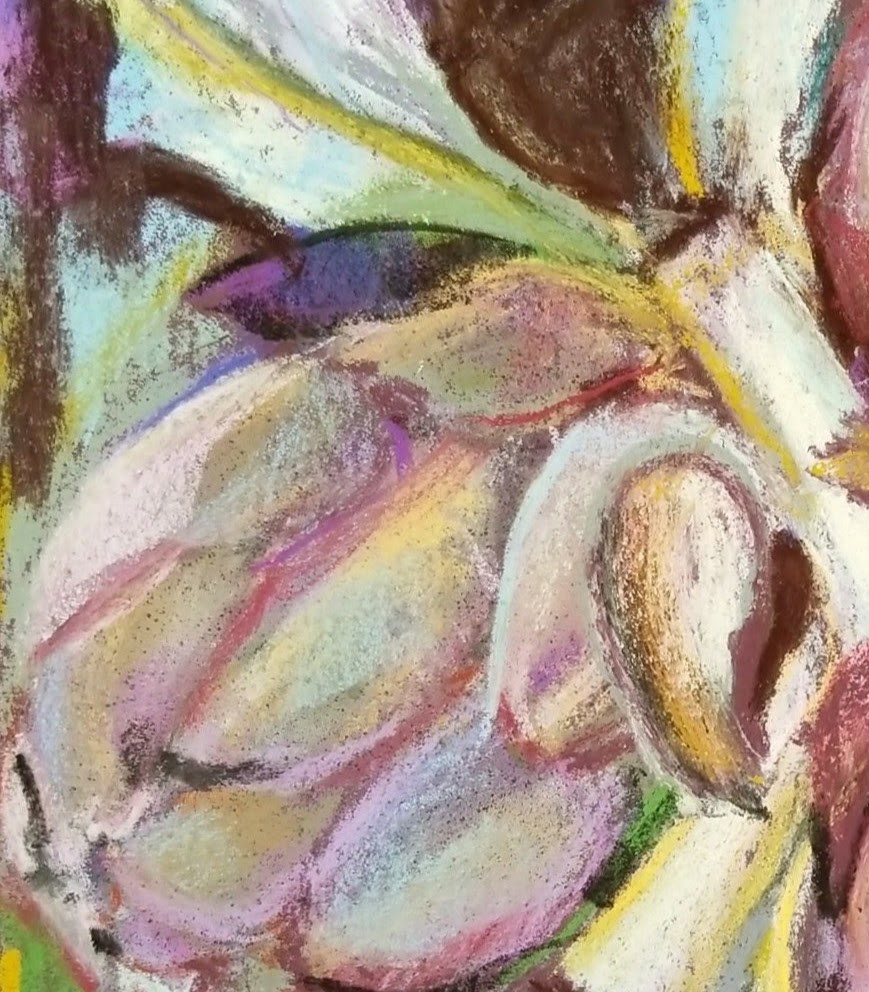
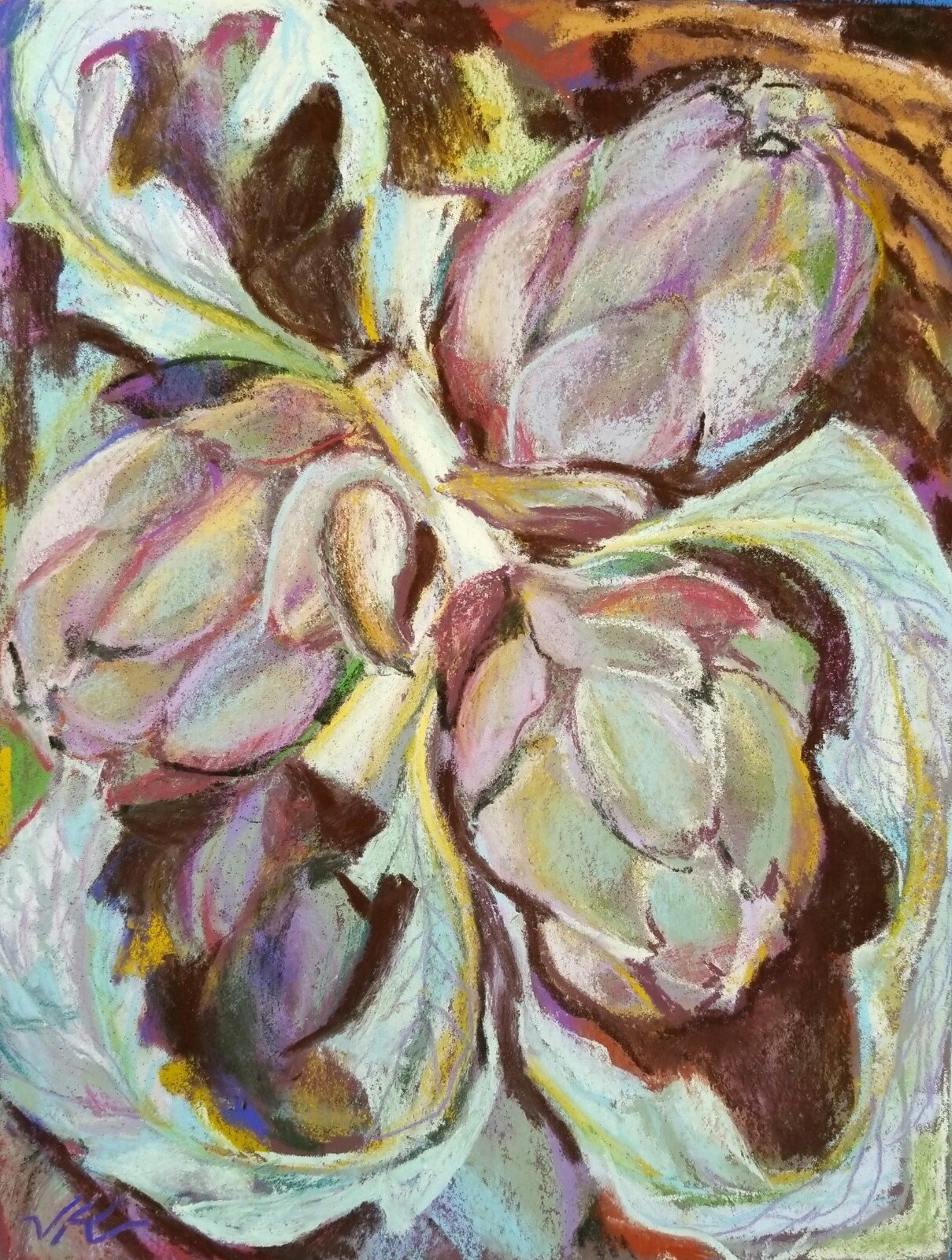 Artichokes, Pastel on Sanded, 12×9″, 2017 by Jean Kruegercopyrighted with all rights reserved
These artichokes are from Rome.
https://www.dailypaintworks.com/fineart/jean-krueger/artichokes/641284
 Trout Fly – Naked Mermaid, Sugar Pine Cone, Watercolor, 9X12″, 2017 by Jean Krueger copyrighted with all rights reserved
This trout lure is a bait used with a fly rod. It’s a wet fly which is to say that it floats beneath the surface of the water rather than on top. It is is designed and tied by Ted Krueger of Troy, NY, and is painted at three times it’s actual size.
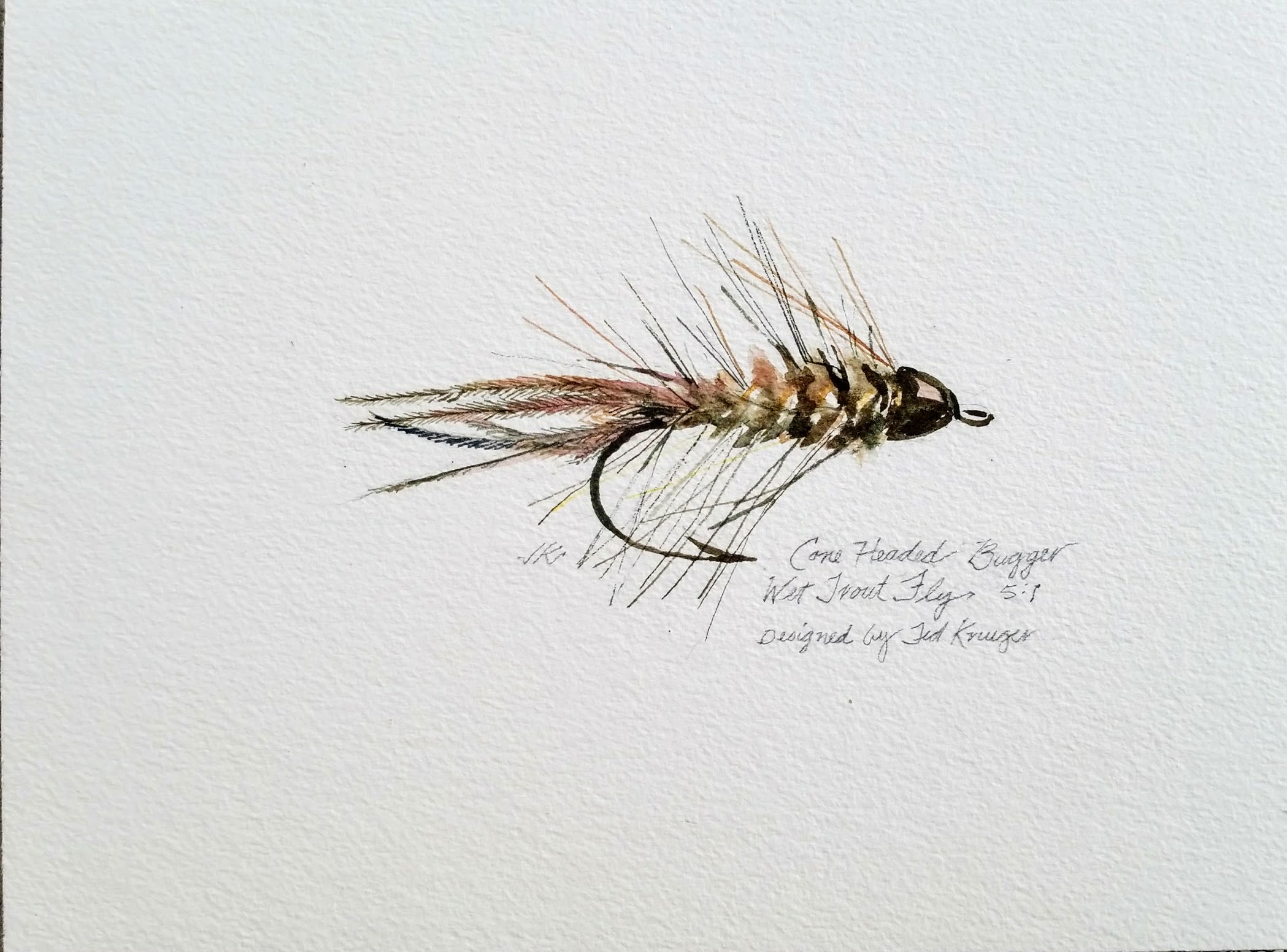 Trout Fly – Cone Headed Bugger, Watercolor, 9X12″, 2017 by Jean Krueger copyrighted with all rights reserved
Ted Krueger designed and ties this fly. He says it’s killer. It’s somewhat large for a trout fly (uses a 6 hook), and is a wet fly, that is sinks below the water. The cone head acts as a weight to keep it submerged.
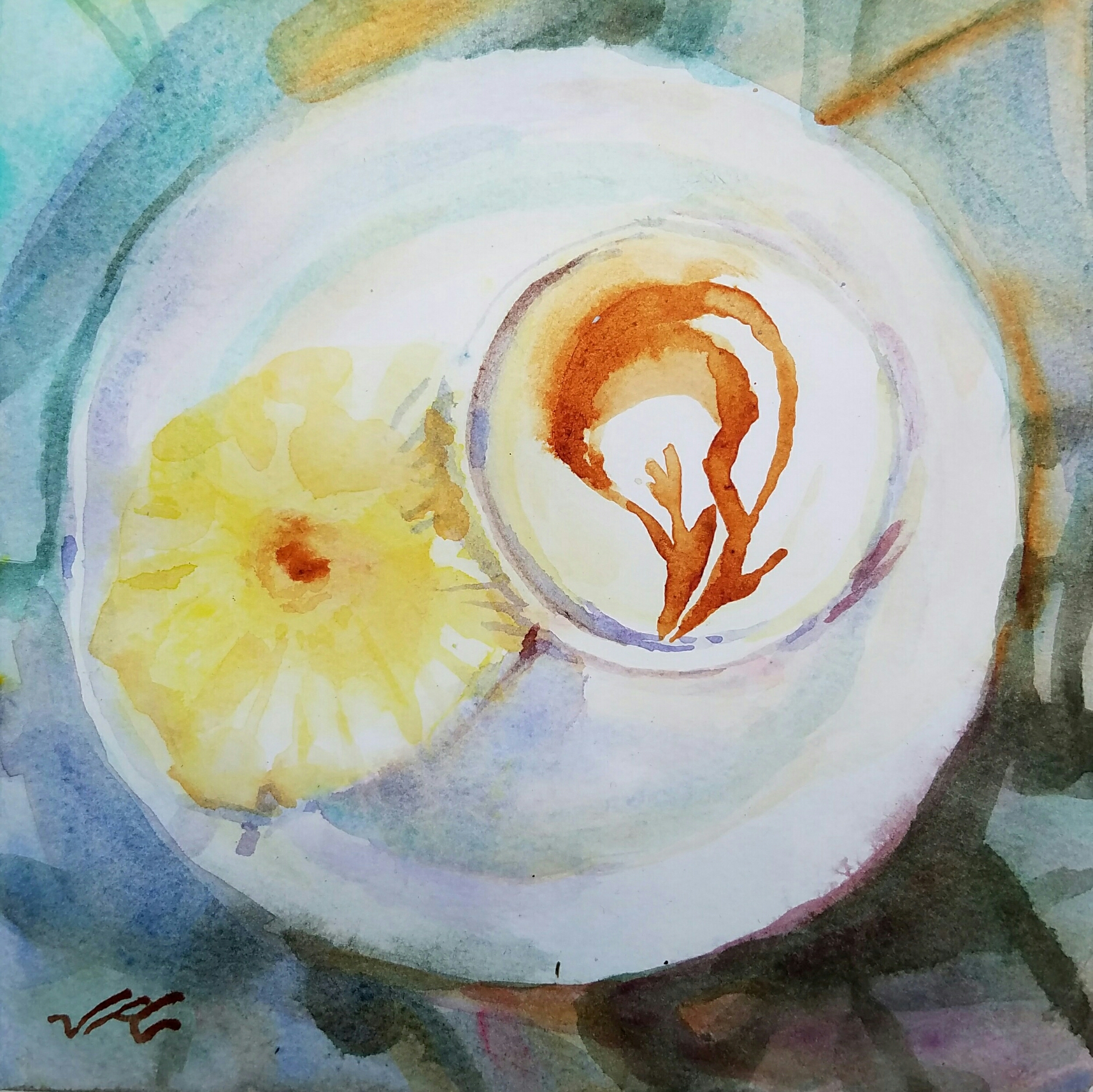
Pineapple and Yogurt with Honey, 8×8“, watercolor, 2016
We’re on the road in Brasil and stayed the past 3 nights in Paraty on the coast. Each morning I drank an ample amount of coffee and steamed milk and ate a bowl, sometimes 2, of plain yogurt and honey with pineapple slices. This painting commemorates those happy occasions.
http://www.dailypaintworks.com/buy/auction/630684

Allamanda, 8×8″, watercolor, 2016
http://www.dailypaintworks.com/buy/auction/626783
In Sara’s garden grows the Allamanda. The blooms are chromium yellow. I searched Wikipedia for it, https://googleweblight.com/?lite_url=https://en.m.wikipedia.org/wiki/Allamanda&lite_escape=&fs=, and there you’ll find a lot more info.
The Allamanda is grown commonly in yards but is also naturalized appearing along sunny roadsides by the edges of dense vegitation. The soil it lives in must always remain moist.
In Sara’s garden it burgeons, competing for attention with its neighbor the Croton. It climbs high challenging the top of the 3 metered stuccoed masonry garden wall.
While in Campinas, I spent many hours painting in the shade of the veranda that looks upon this wide and sunny garden. There I am as content as any human can be.

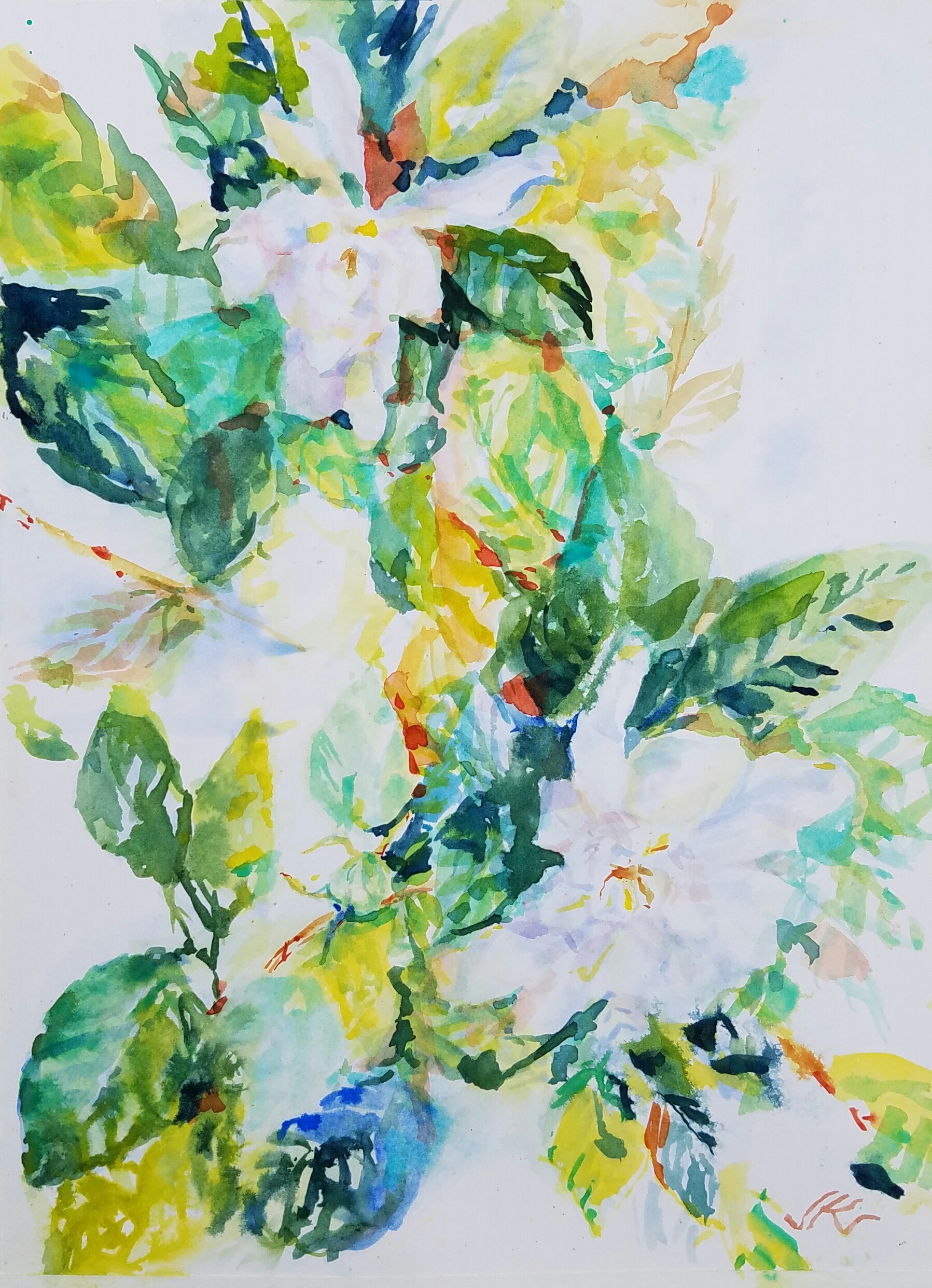
Gardenias, 12×9″, watercolor, 2016
Walking here in Campinas, SP, Brasil, I’m occasionally stopped dead in my tracks by the fragrance of the gardenias. The smell is for me euphoria. I just stand happy to be present in the joyous perfume forever.
When I was a kid we had gardenias in the backyard that scented the warm and moist air of California mornings. I accepted them as part of everyday reality and held a belief that all the world smells like that as day begins.
Well, it doesn’t. But memories linger and, now that I’m reminded, I carry the sweet sweet scent with me as a natural universal truth to draw upon as needed.
https://en.wikipedia.org/wiki/Gardenia_jasminoides?wprov=sfla1
http://www.dailypaintworks.com/buy/auction/627410
More about Gardenias.
https://en.wikipedia.org/wiki/Gardenia_jasminoides?wprov=sfla1
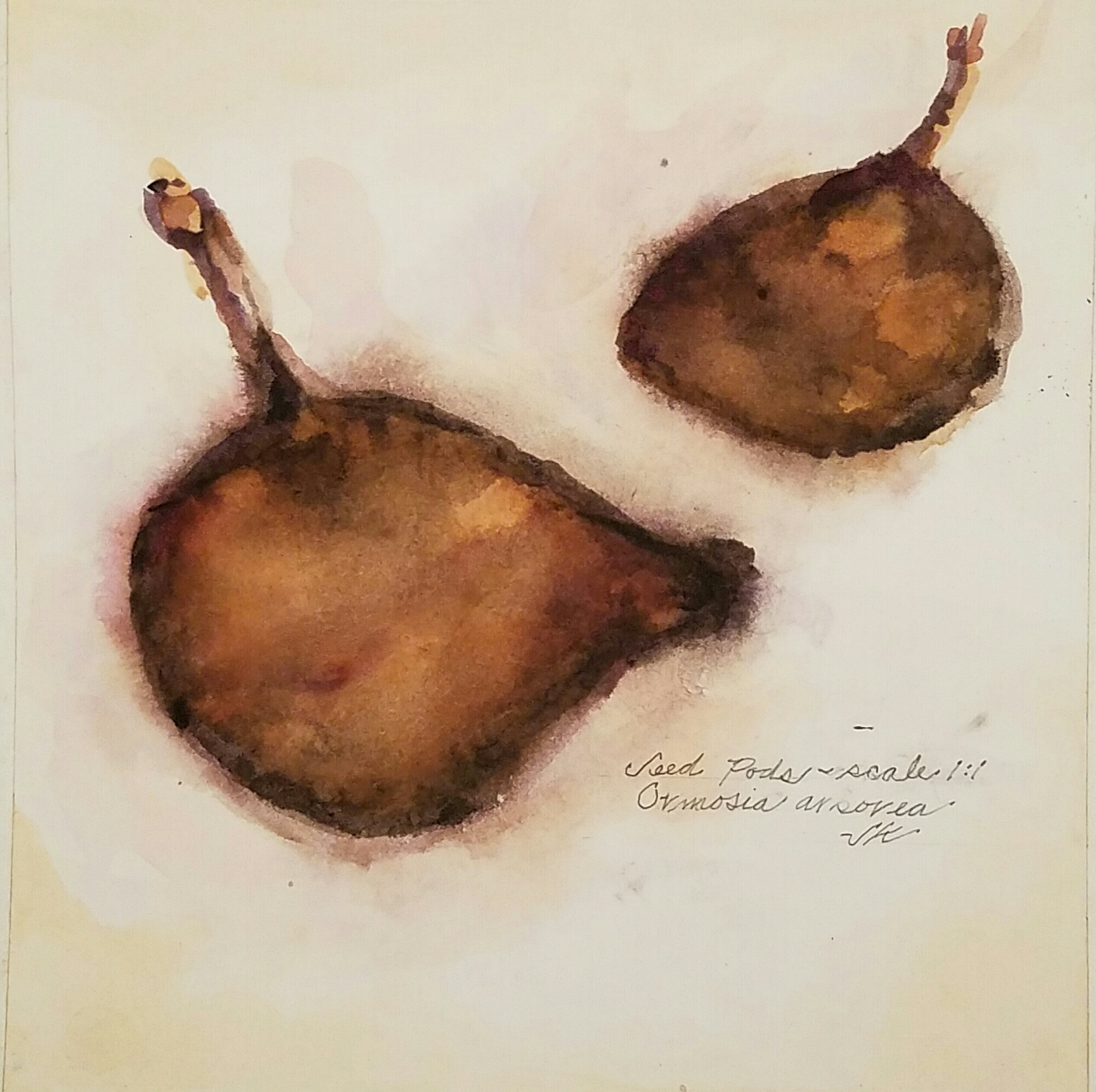
Seed Pods – Ormosia arborea, 8×8“, watercolor, 2016
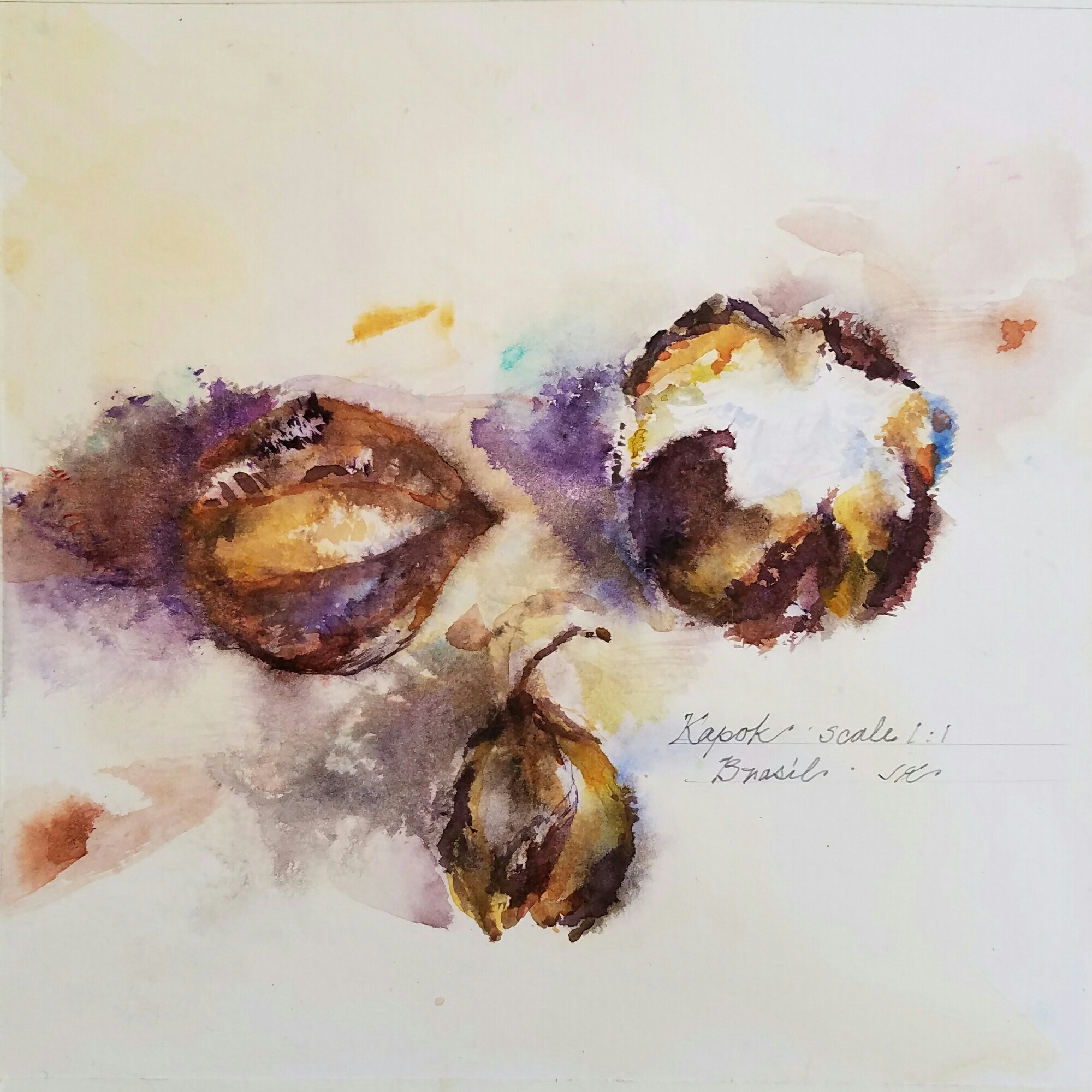
Cochlospermum gillvraei Benth., 8×8″, watercolor, 2016
http://www.dailypaintworks.com/buy/auction/624696
These seed pods grow on a tree, Bixaceae Cochlospermum gillivaei, a yellow flowered species common in Brasil, hailing from Australia. I haven’t determined its common name yet. Not being a botanist myself, I’ll offer the caveat that the above information might be wrong.
When I see a plant that interest me I take a photo. Then I paint it. Afterwards, I look through the three botany books I bought when I got to Brasil. If I can’t find a photo that matches my painting, I head for Google and search with words, then search the ‘Images’ that result. I scroll through pics, sometimes hundreds, til a visual match shows up. I then follow links that give me the name and characteristics of the object I painted.
So… there’s plenty of room for error in my research methods. However, I have a limited amount of time to spend ferreting out info, especially when it absorbs time I might otherwise spend painting. I have a curious, not scientific, mind. My botanical paintings deal in generalities, neglecting minutia.
I’m okay with that.
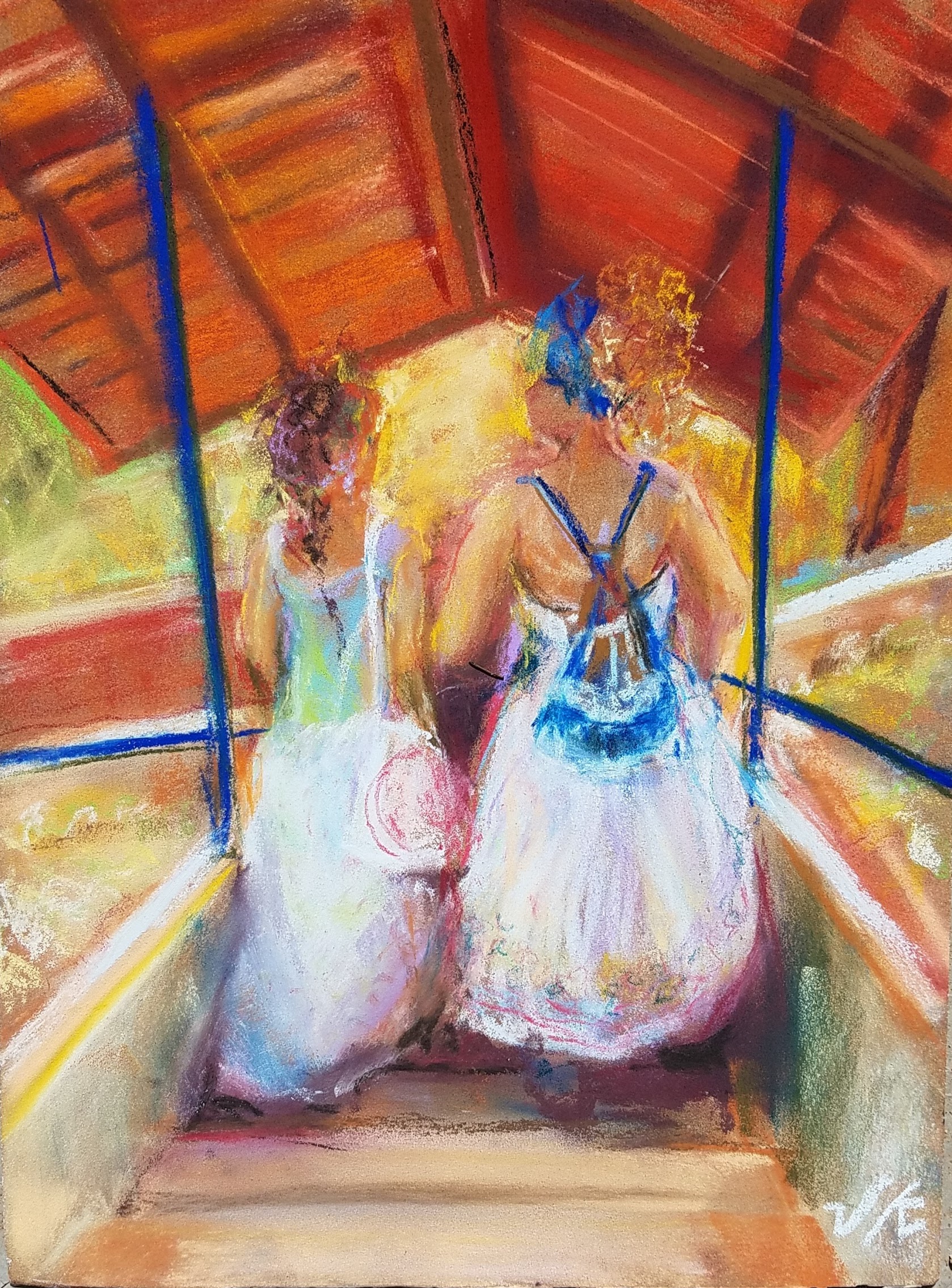
Mulheres do Trópico de Capricorn, 12×9″, pastel
The sunlight in the Tropic of Capricorn is blinding, saturating all it settles upon. There’s a lot of ambient environmental red and orange from the tawny clay earth to the baked tile roofs. Trees and plants scream green and yellow, the sky vibrates blue and indigo. It’s astoundingly opulent.
And it’s hot, best to wear light, loose cotton that billows and cools in the breezes. The women in the painting are students at Unicamp in Campinas, SP, Brasil, going to class. Much of the campus has covered walkways protecting from sun and frequent rain.
So the blinding sun, all the red and orange, the sheltered paths and young women in flowy white pastel garments is the reason for this painting. That’s reason enough, no need to go deeper.
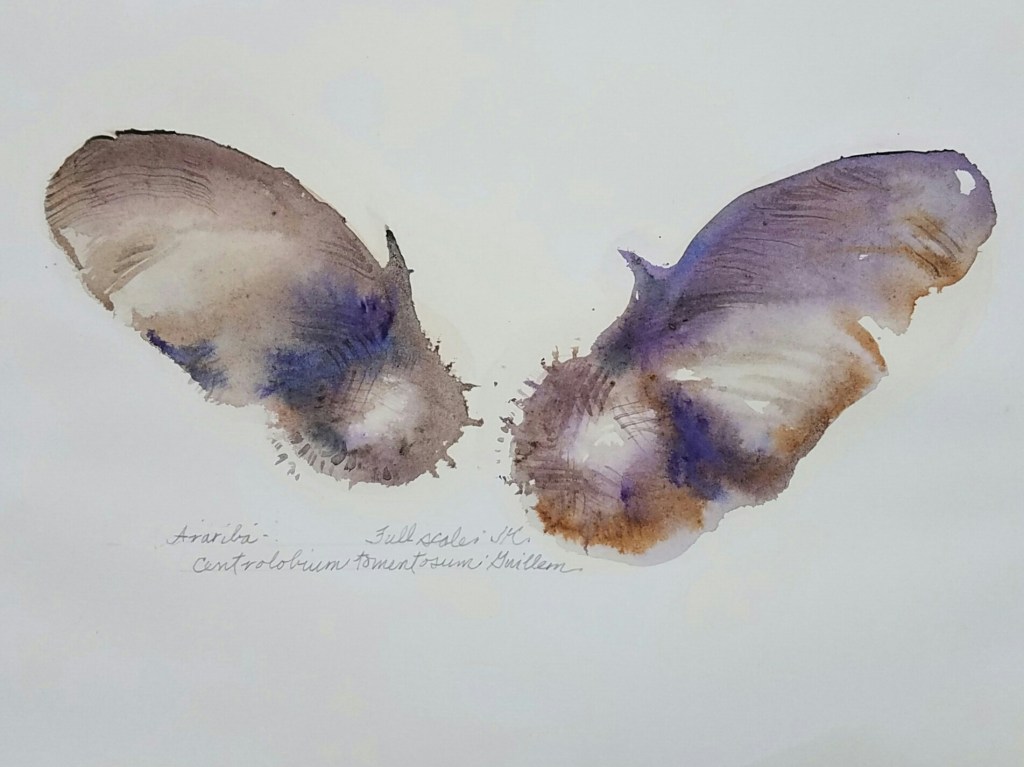
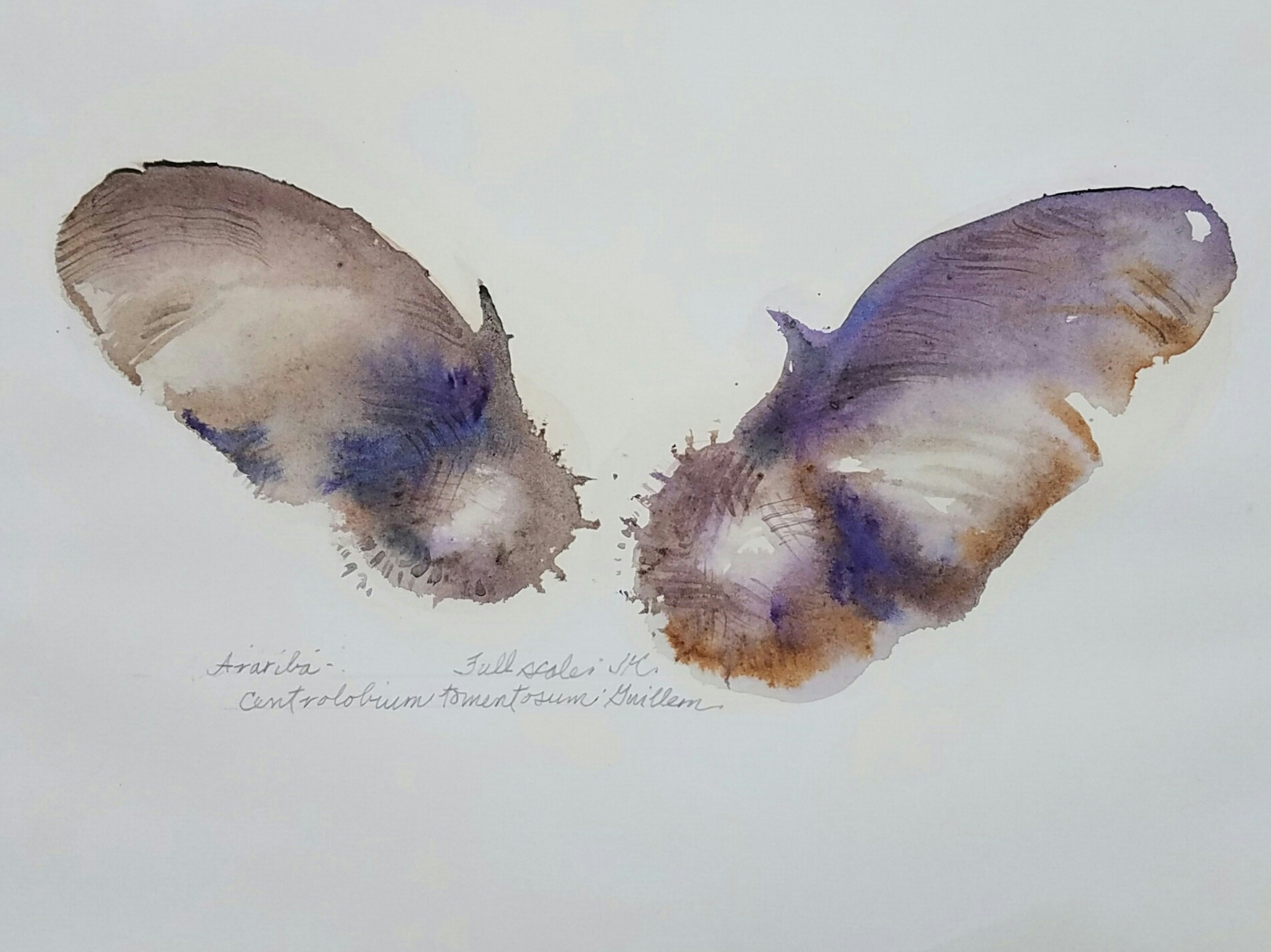
Arabiba, 12×9″, watercolor on 14O # Paper
These winged seeds come from a tree which can grow to over 100 feet in height. In Brasil the tree is used extensively in reforestation projects, urban landscaping and for its ornamental wood. The yellow flowers become really large, 4-6″ whirly-gig units which are blown far and wide. The seeds also have pickery spines that cling to fur, clothes or wherever they can get a grip. I painted these as part of an ongoig study of seeds, my interest in these being their enormous size. These are painted full scale.
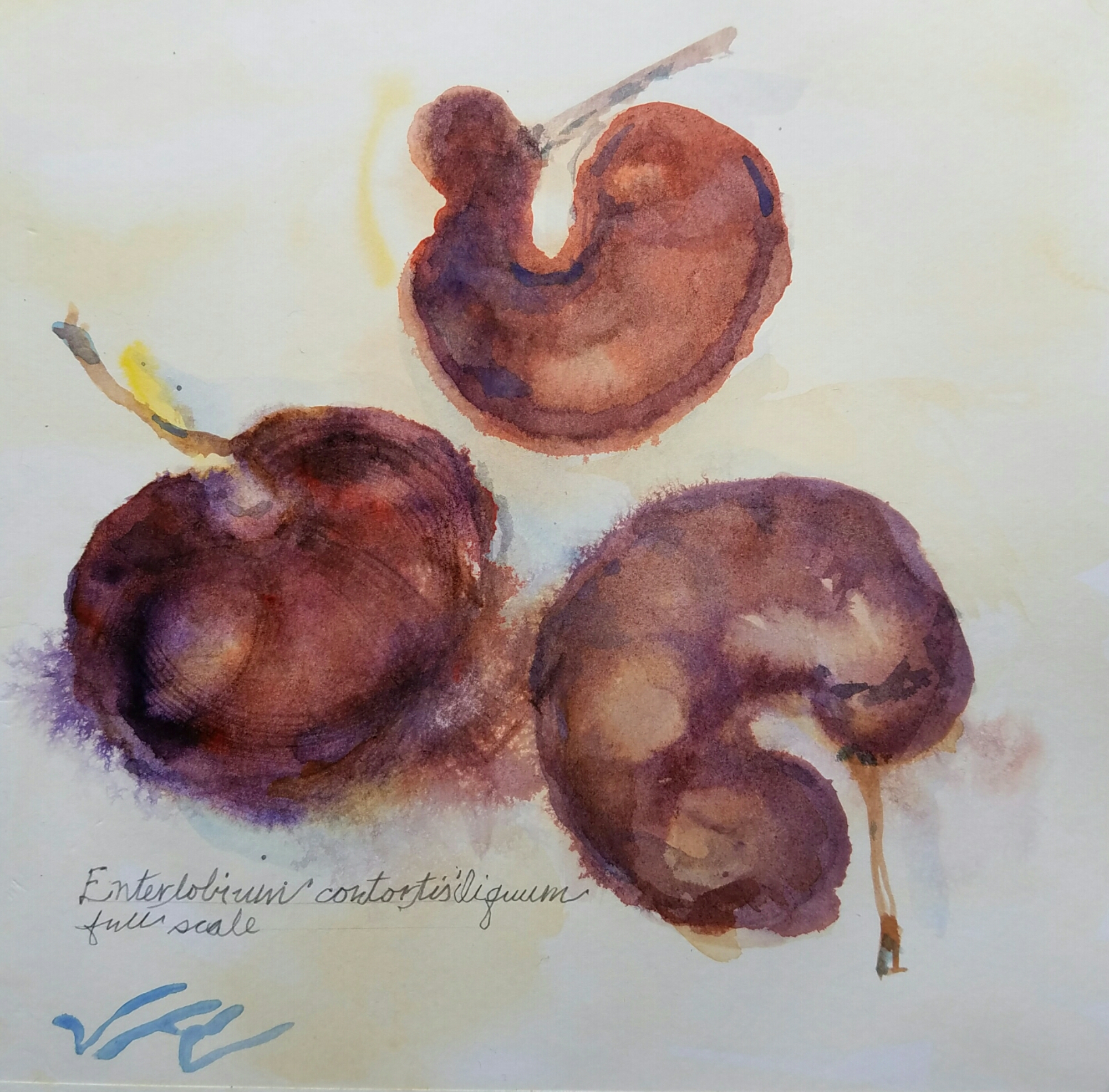
Tamboril, 8×8″, watercolor on 140# HP paper
The tamboil tree goes by many names, most of which are associated with its ear shaped seed pods. Scientifically it belongs to the Fabaceae family and is named Enterolobium contortisiliquum. They’re native to Brasil. They can reach 20-40 meters in height giving welcome shade. The wood is used for furnishings, the bark which is high in tannin is used in learher industries.
The seed pods have a wonderful, pouchy shade with a have a rattle when jiggled!
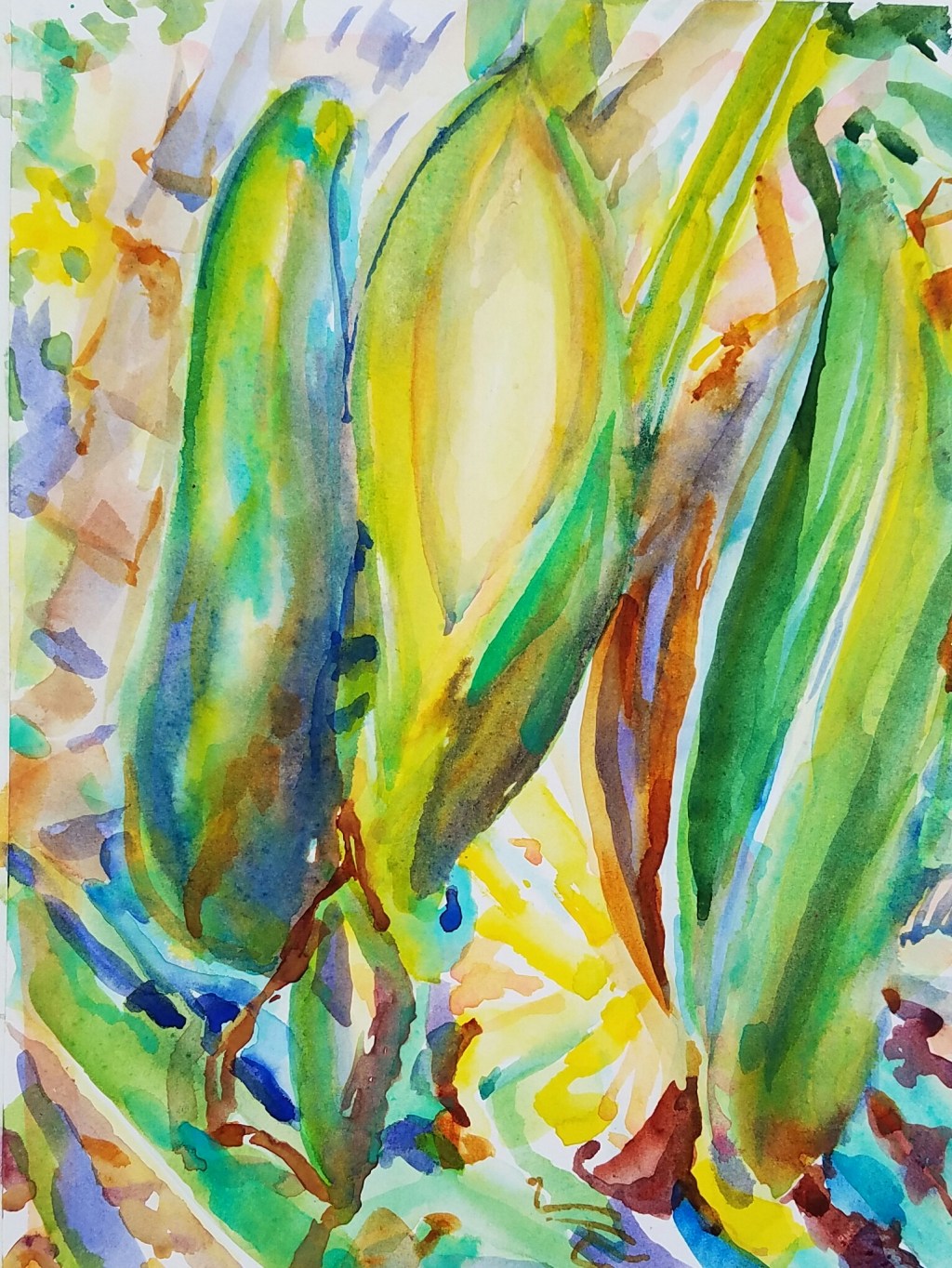
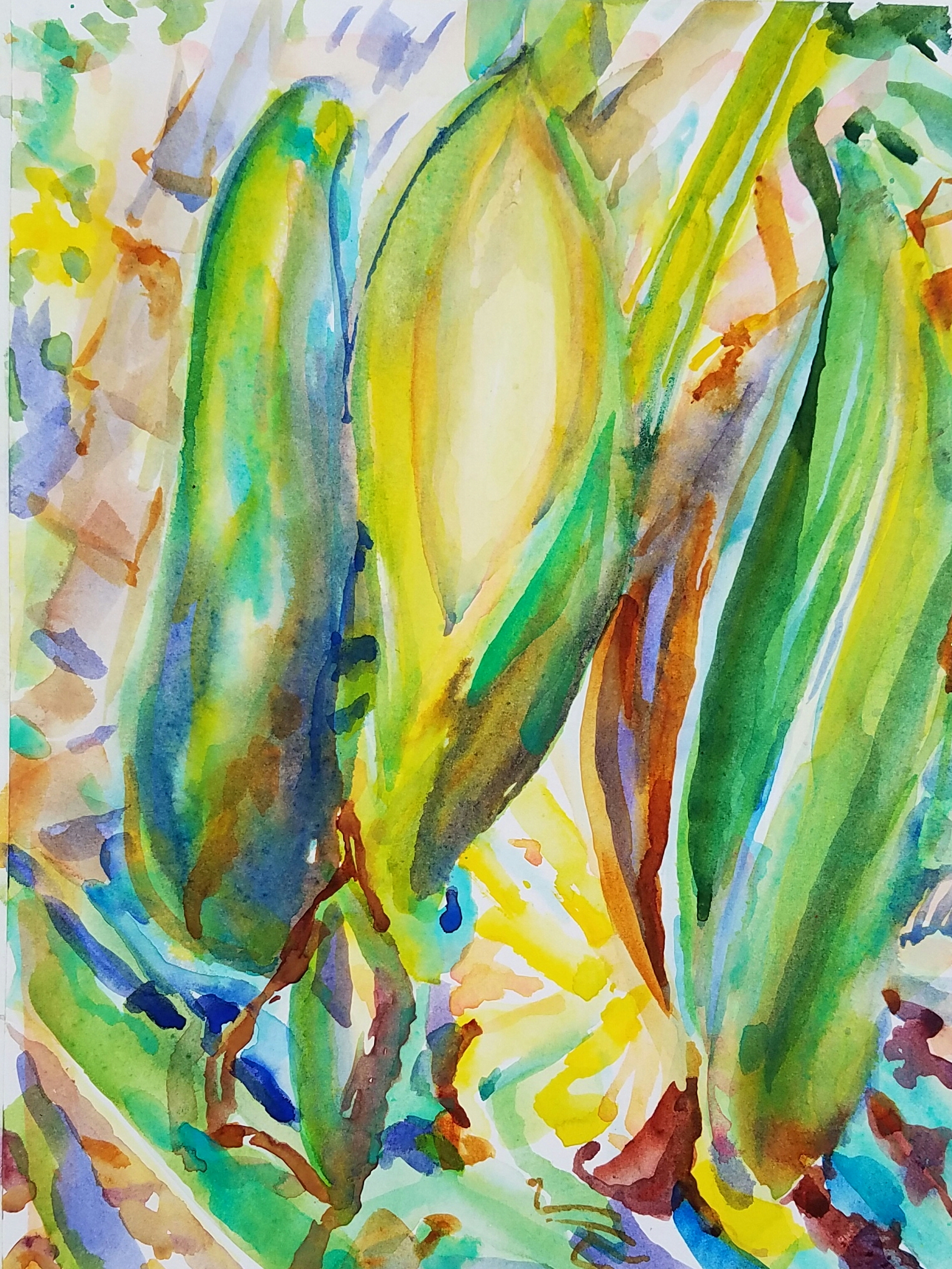
Philodendron, 12×9″, watercolor on 140# HP paper
If you are a philodendron, the Tropic of Capricorn is where you want to live, not in the upper latitudes clinging to life in an office planter, overwatered, underfed, starved for daylight.
Here the size and variety of this species is vast. Plants which are scrawny potted slips in the US are as big as a house in Brasil, co-habiting with even bigger plants as they climb, coil and wind skyward. Their closed pods are the size of a liter Thermos bottle. When the pod (blossom) opens it reveals a huge ivory anther. After fertilization the blossom closes. Why? I don’t know, yet. I walk past this philodendron daily and always look to see what’s new.
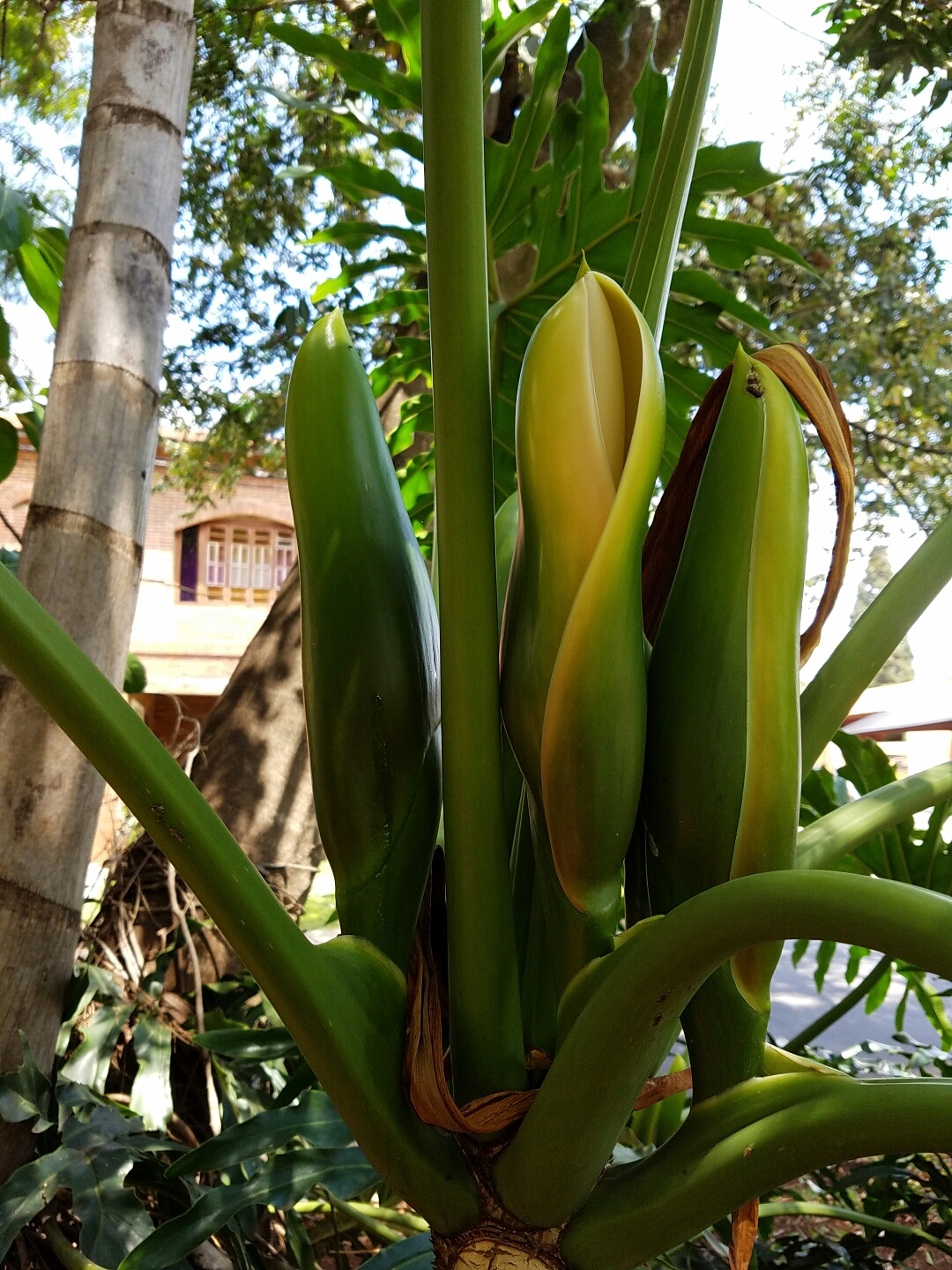
Philodendron Pods
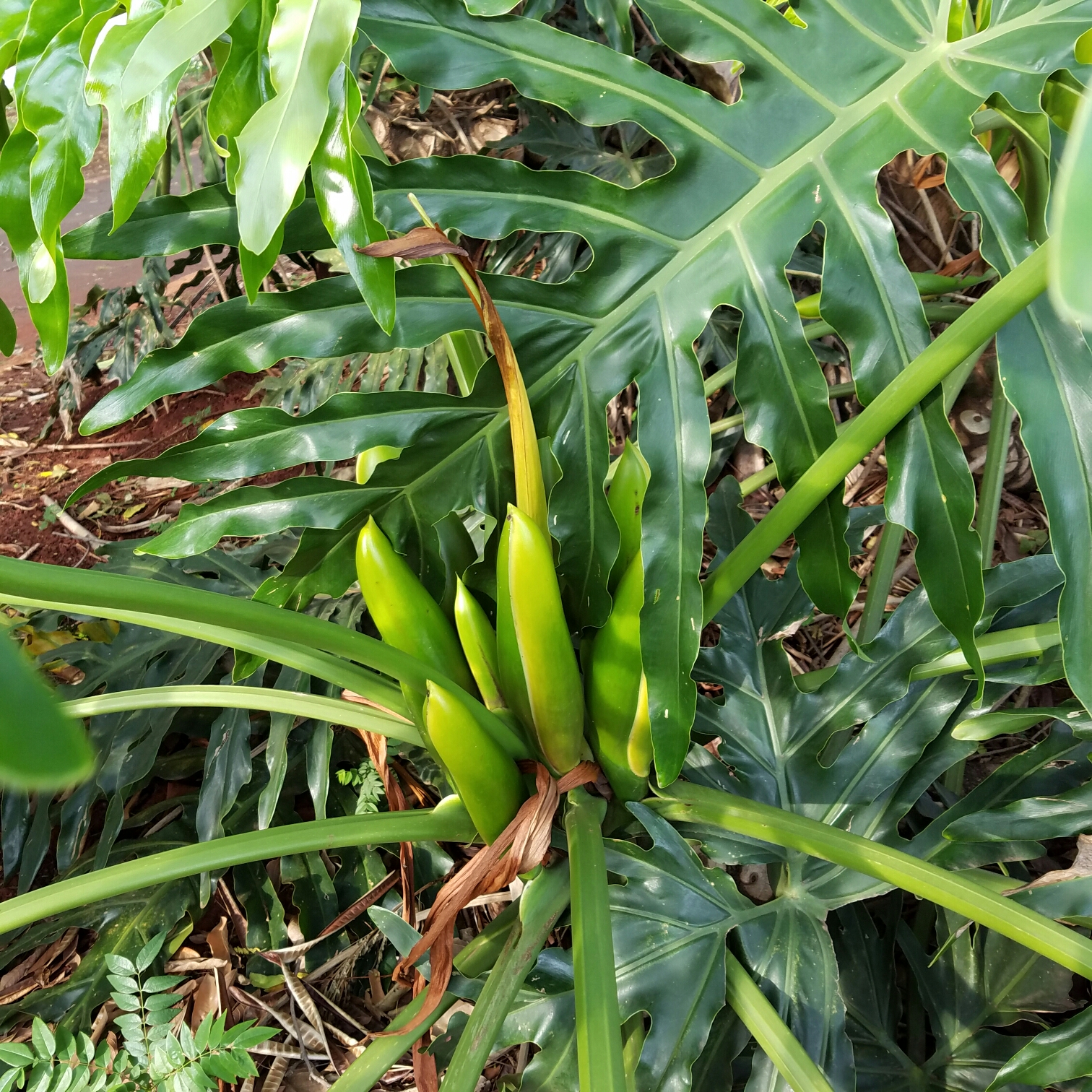
Philodendron Leaves and Pods

Goose Preening, Campinas, Brasil, 12×9″, watercolor on Arches 140# CP
http://www.dailypaintworks.com/buy/auction/619131
Tropical Depression, 20 x 14″, pastel in Arches 140# CP
Being American, being of a nature that celebrates variety and a se la vie attitude towards most matters, I must admit that I had a real sense of depression and loss with regard to the US election results. I’ve been painting this since the day of the election and it took longer than most. I couldn’t find graphic resolution to it’s design. Sorta like I can’t find emotional resolution to why the US electorate had such sorry candidates as presidential nominees.
But it’s done like this painting is done. God bless us all. It is what it is.


 Jean Krueger Fine Art