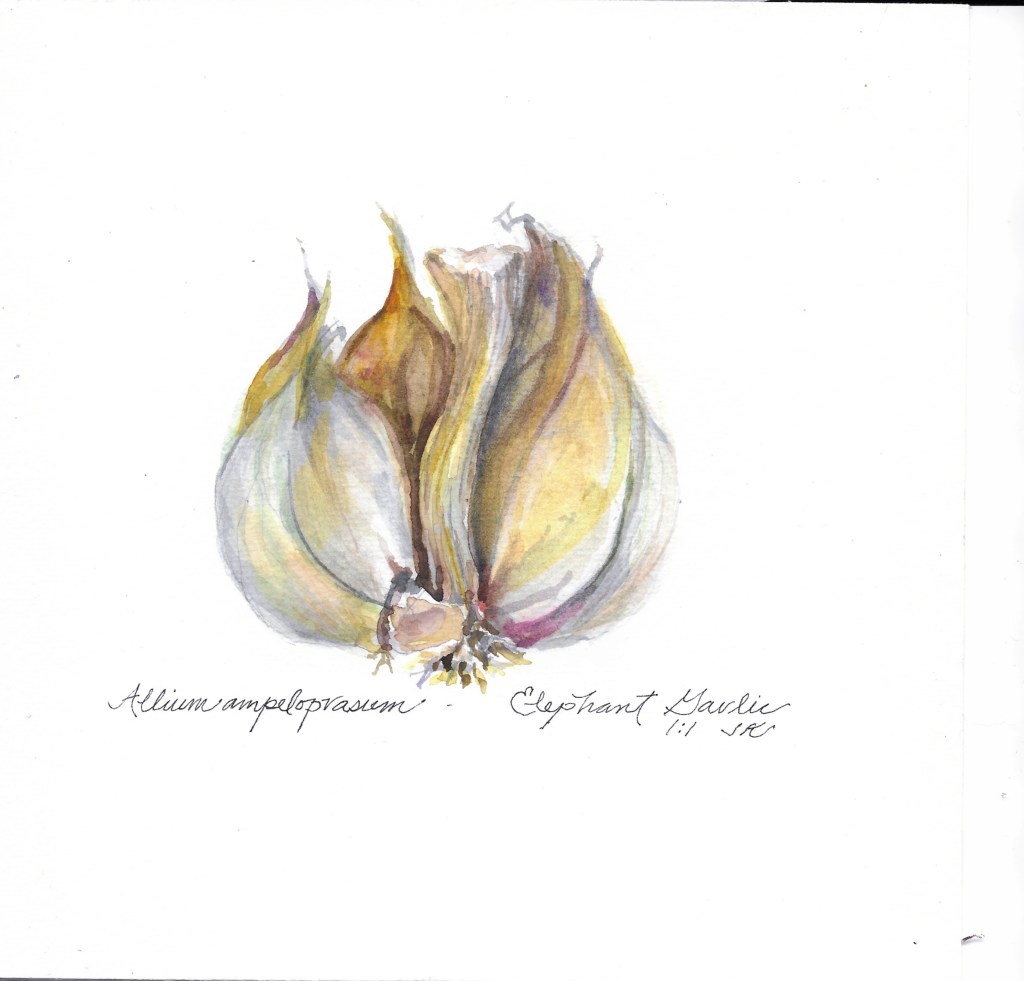
Allium ampeloprasum – Elephant Garlic, Watercolor, 8×8″, 2021, $55USD, copyrighted with all rights reserved by Jean Krueger
The genus Allium is a fabulous species. It includes the garlics, notably the Elephant Garlic as celebrated by this painting. When in bloom they are showy beyond words, when roasted with olive oil and on sour dough, well, you’d think you’d died and gone to heaven. Enjoy!
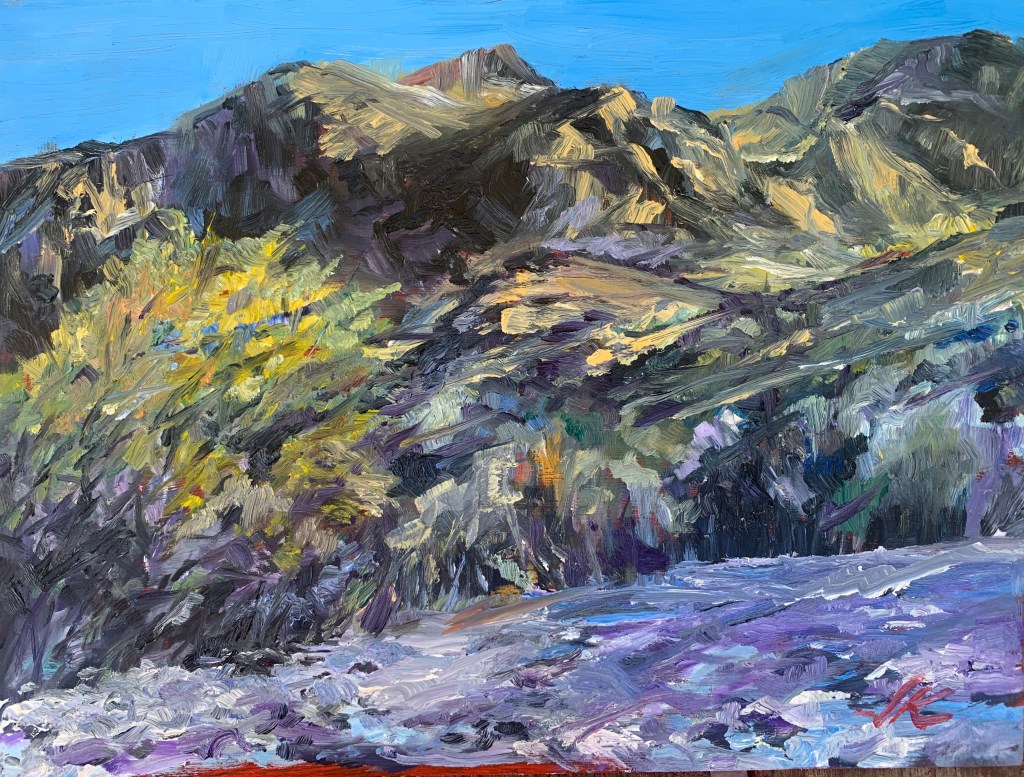
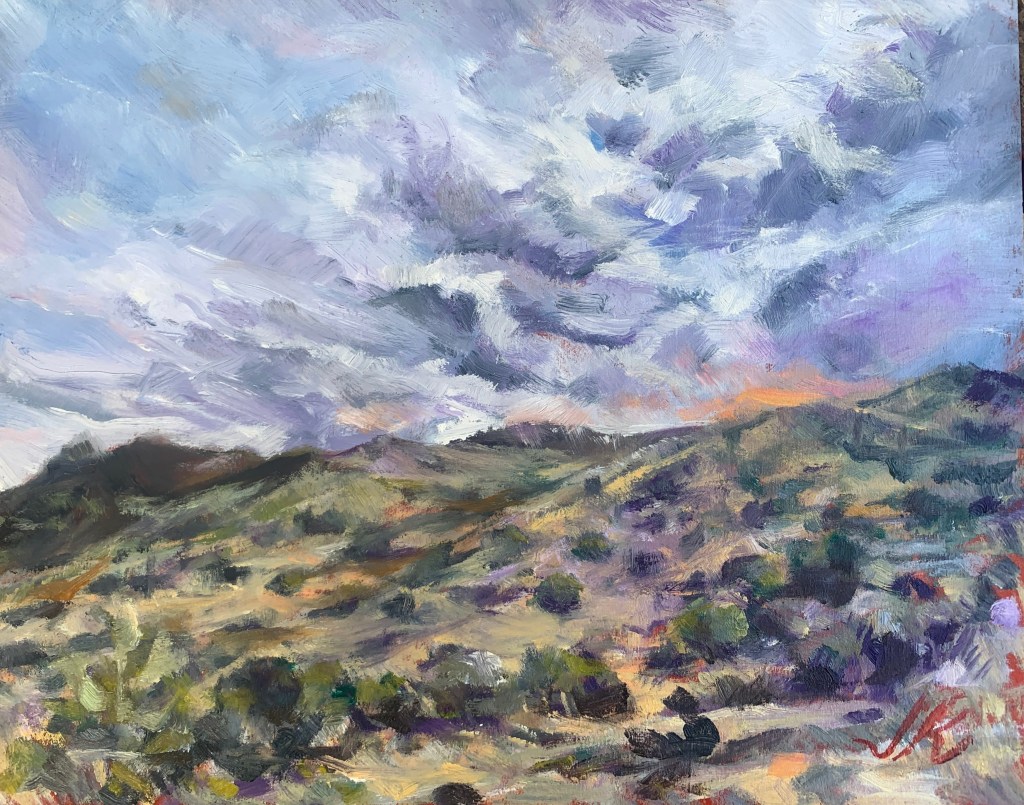
This is an end-of-day scene looking east. We’d been fishing down in the Salt River, fish weren’t biting, the sun’s sinking and it’s getting cold on the desert. Nothing left to do but walk back to the car and start the hour’s drive home.
Salt River Wash, Arizona, $50USD, Oil, 9×12″, 2020, copyrighted with all rights reserved by Jean Krueger
This part of the Salt River runs through Tonto National Forest in central Arizona. When the monsoons come, the rocky bed in the foreground is raging with water which will flow west where the Verde River will join it.
Wild horses, mustangs, roam freely through this park in large herds.
Chiricahua National Monument in southern Arizona is other-worldly. Have you been there? I think it rivals, even surpasses, Utah’s Arches National Park. Chiricahua feels intimate yet has a scale of grandeur. I had never heard of this place before we visited it over the New Year holiday. We hiked isolated trails, took lots of pictures and quit at sunset. See America first, we have so many wonders to behold.
It’s difficult to travel more than a few block in Sun City, Maricopa County, Arizona, before encountering a golf course. I don’t play and they’re closed to all but paying customers. They’ve remained a huge mystery to me for the more than 60 years that I’ve been a visitor to this specialized City. The golf paths wind through lush, shaded and watered landscapes that disappear in the far distance, forbidden to non-golfing mortals such as I so I’m very curious as to what lies beyond. Nonetheless, the courses are lovely and I don’t begrudge those who are to allowed to amble the greens from dawn to dusk. After dark the greens belong to coyotes, the rabbits they hunt and the birds who roost til morning. This is the order such and the way it shall be.
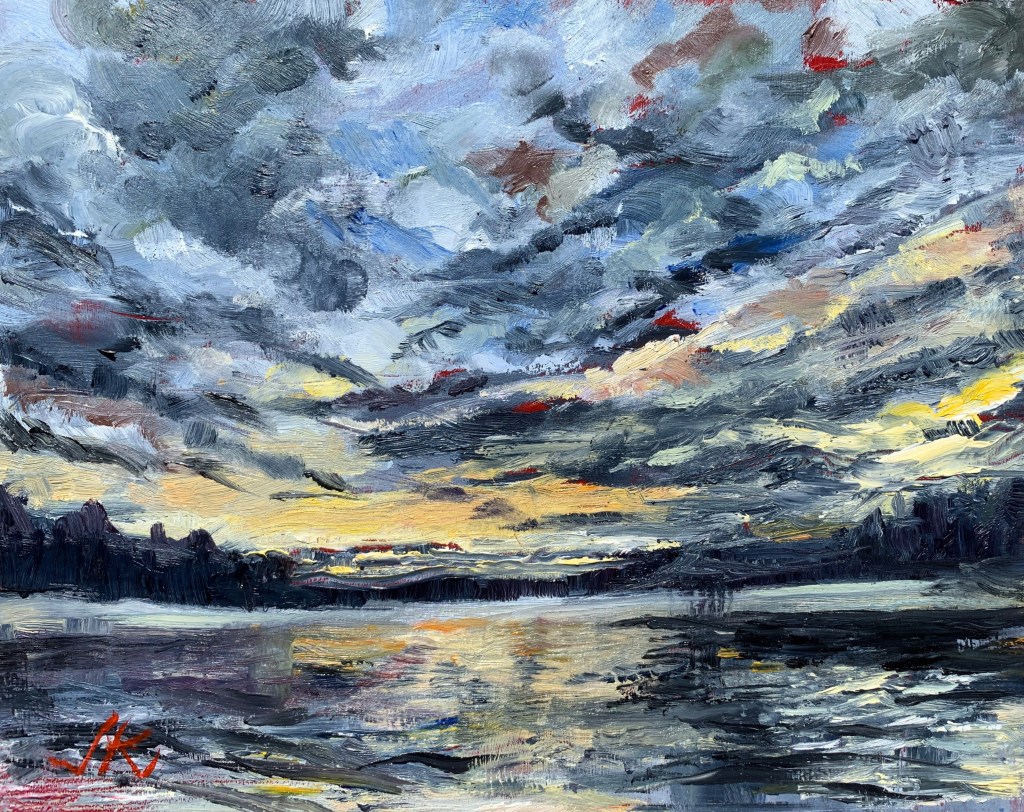
Here’s the end of the day at the end of the Summer in Upstate New York in a canoe where Ted paddles and I try to stay warm… and take photos to take my mind off how cold I am. Yeah, I’d stay warmer if I paddled, too, but I’m not a paddler. I’m a painter.
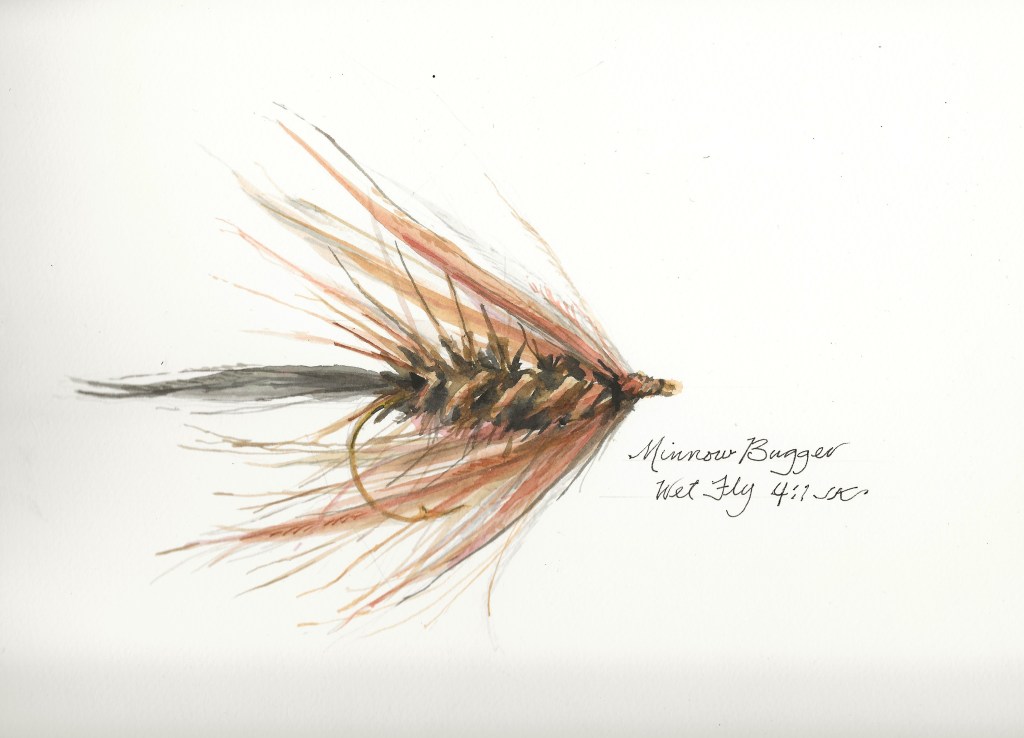
The Minnow Bugger is large as trout files go with its hook measuring about an inch. Some flies are minuscule. This pattern simulates a minnow thus is necessarily larger than the ones that represent gnats and bugs. It travels below the surface of the water making it a “wet fly”.
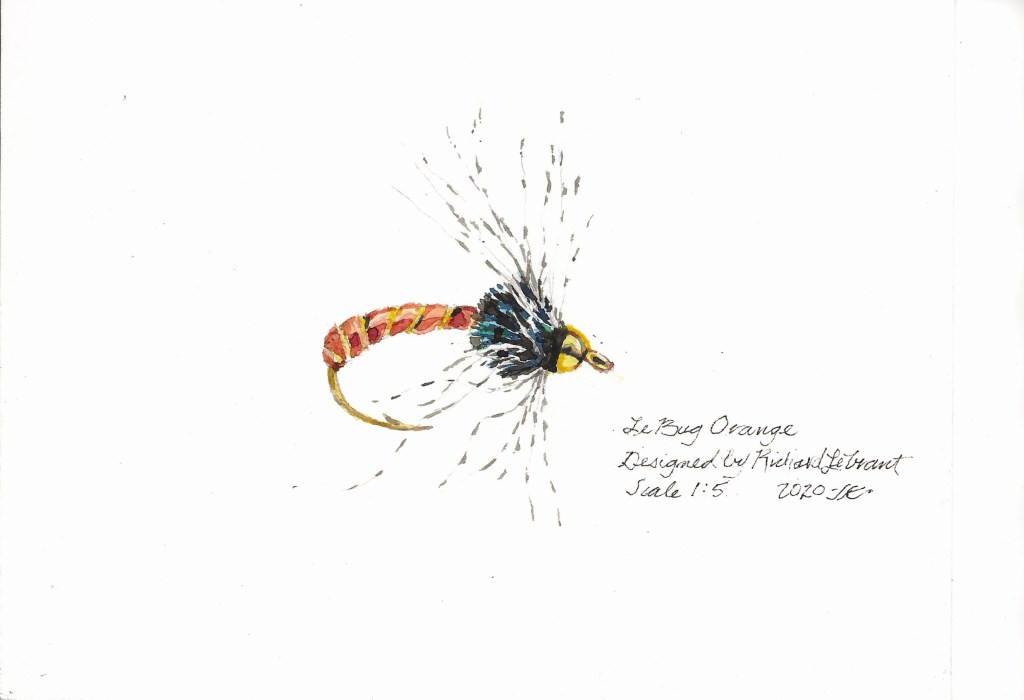
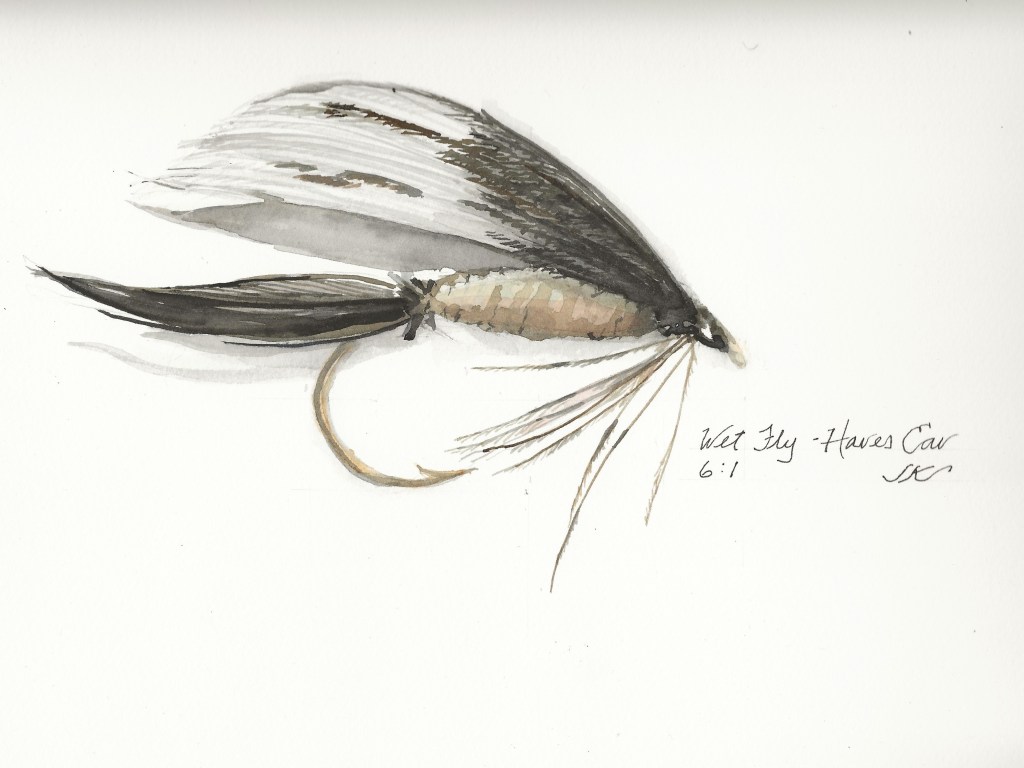
This painting of a Hares Ear trout fly has many variations. I like that about flies, these tiny handmade works of art. Although each fly pattern has prescribed materials and techniques, each bait bears the characteristics of it maker. The patterns may mutate over time as new materials and fly tiers arrive on the scene or they may remain faithful replicas of the designs of the person who invented them.
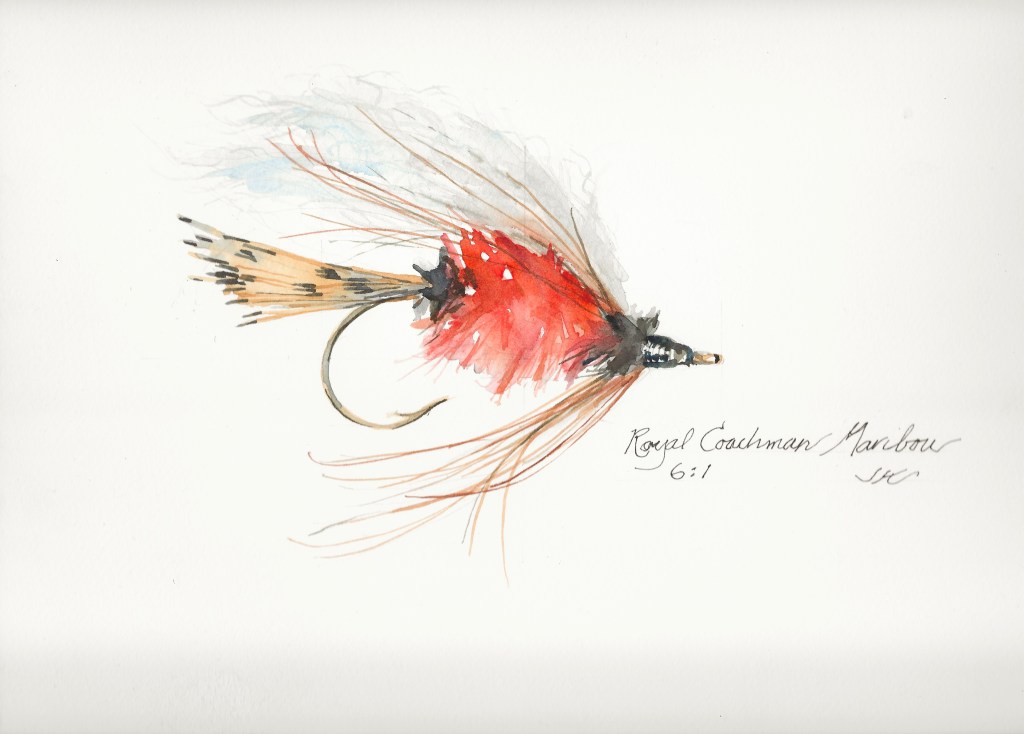
This trout fly is a variation of a classic Royal Coachman pattern. It’s popular and one of the better known lures among fly fisher-folks. This painting is one of my ongoing series of watercolor fishing lures. It pairs nicely on the wall with other paintings in the series or it displays very well all by itself. It’s a one of a kind painting for offices, libraries or family rooms. I will paint custom patterns upon request, email me.
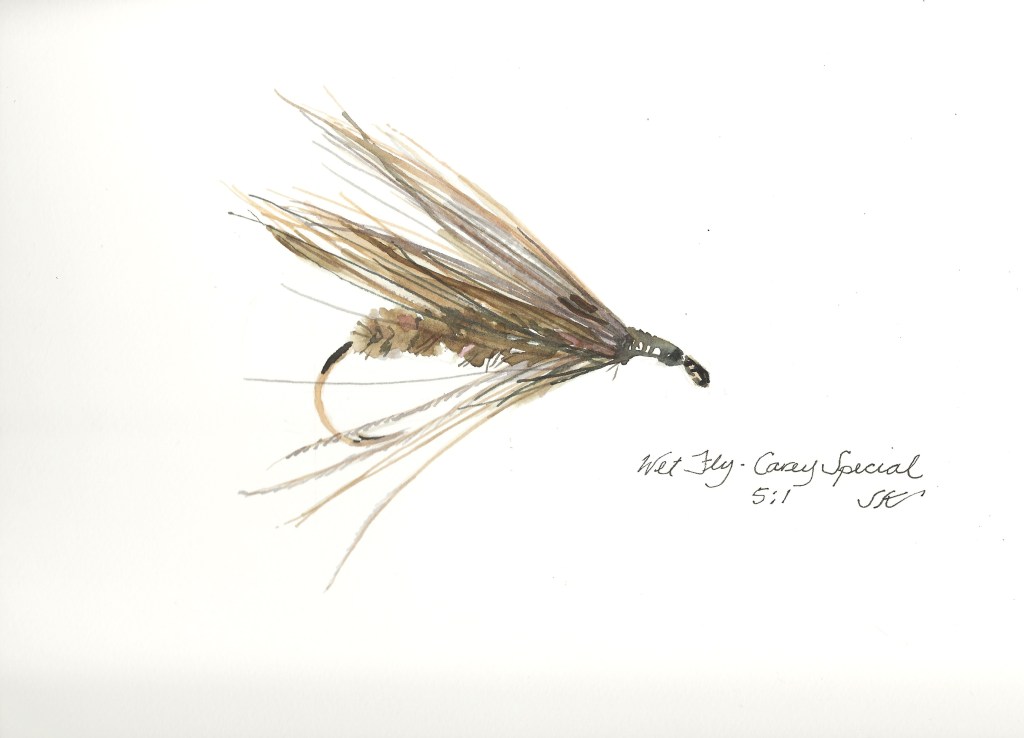
The Carey Special is a common trout fly with a lot of variations. It’s a wet fly which means it travels under the surface of the water rather on to of it. Look at my series of Trout Fly Paintings at the link above. They all show well individually or as a grouping.






 Jean Krueger Fine Art

