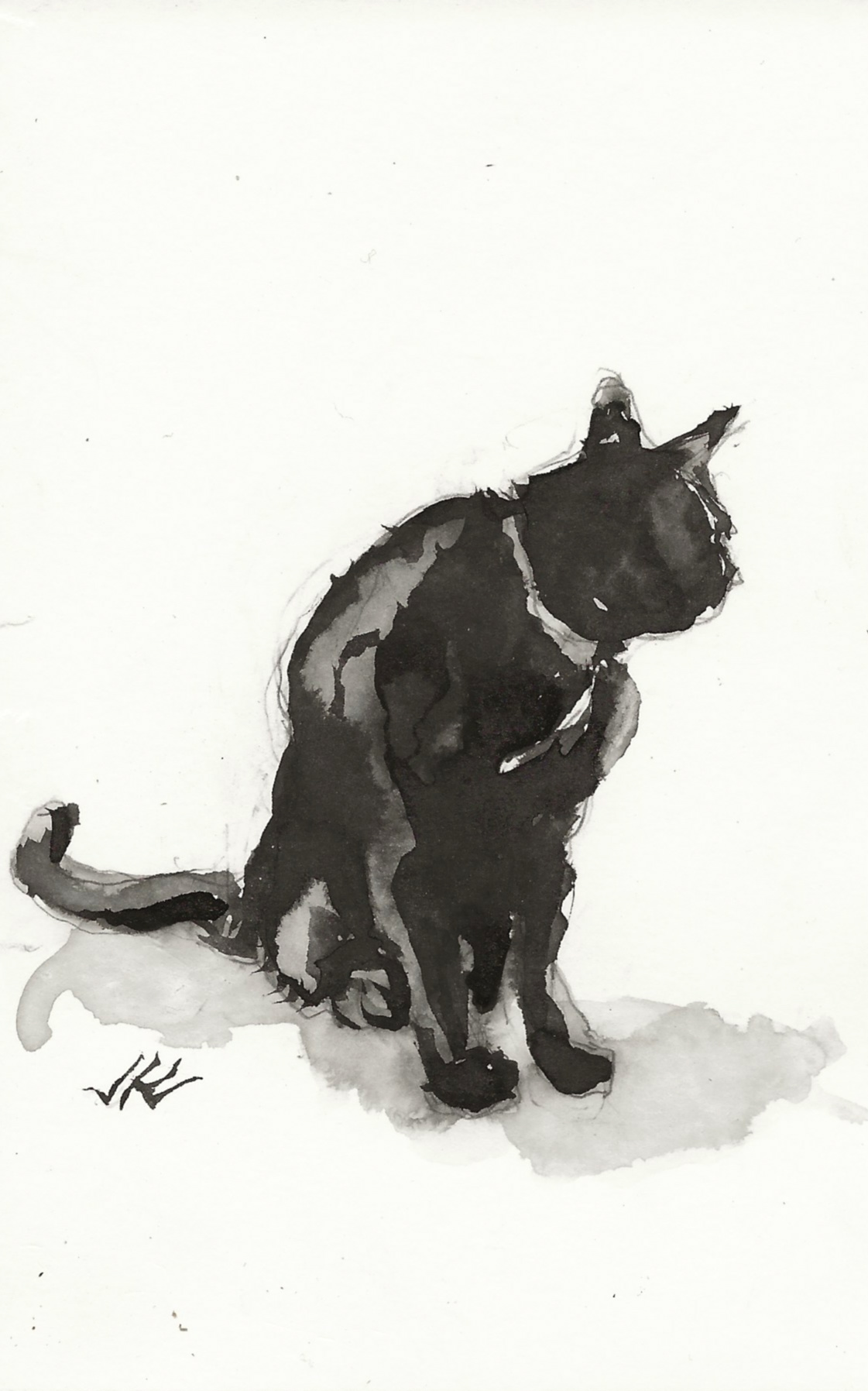
Buck the Cat always tries to watch his back. Meow.
Buck the Cat always tries to watch his back. Meow.

Buck the Cat issuing an ultimatum. Meow.
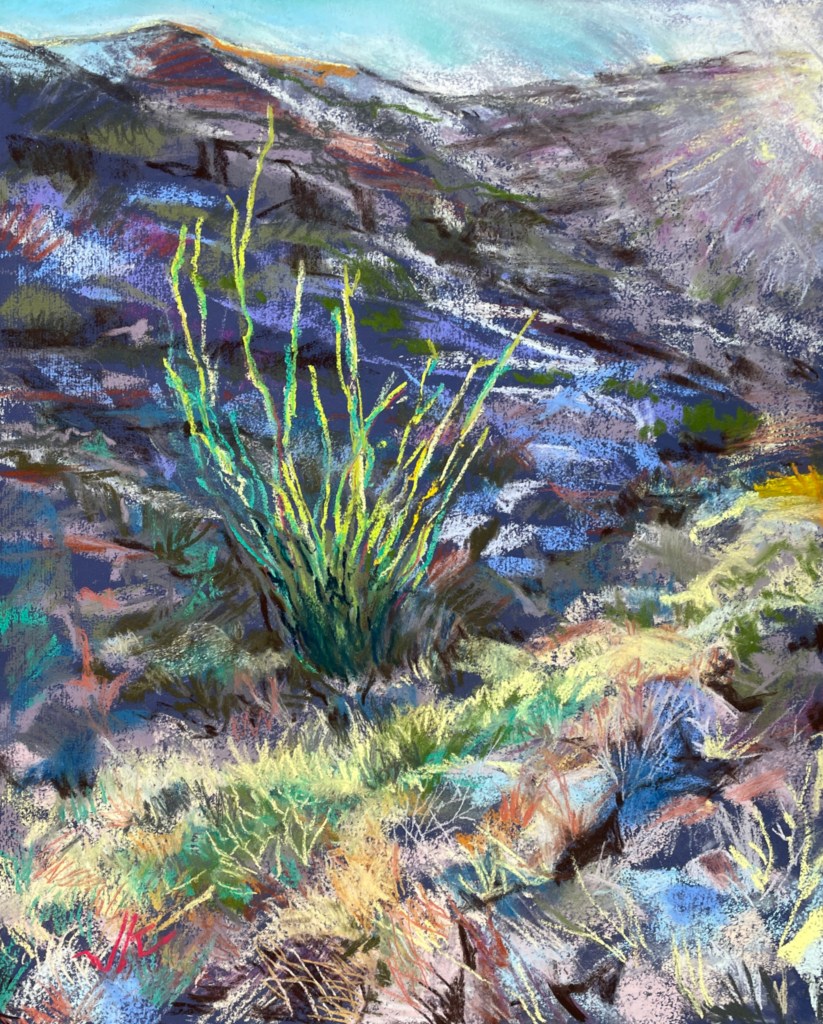
The setting for this painting is of the Sonoran Desert in Arizona. The time of year is winter. I hike a lot when I’m here and was surprised when I saw the Ocatillo I’ve featured in this painting. The cactus was all leafed out and bushy which I don’t remember happening at this elevation til 4-6 weeks later in the growing season. Nonetheless, I admire this species and have painted it before. I’ve included a painting I posted a few years ago to illustrate how intricate and downright lovely it is when its leaves emerge. Hope you like it.
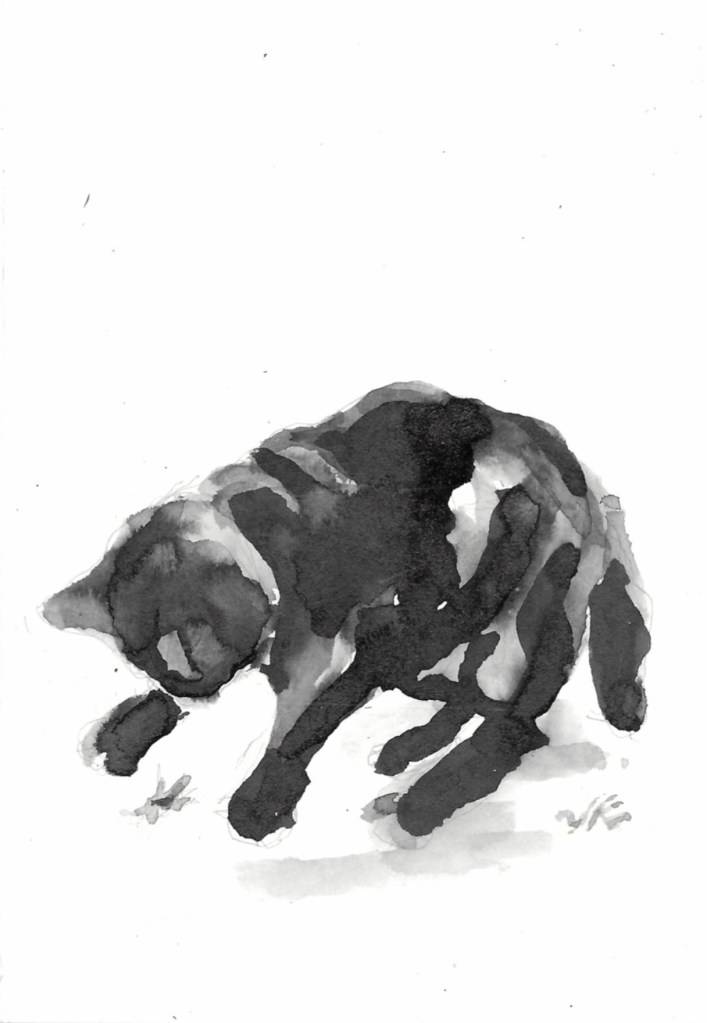
Buck the Cat’s a relentless, driven beast when it comes to small moving things. Here you see him delivering a fishing fly the coup de grace.
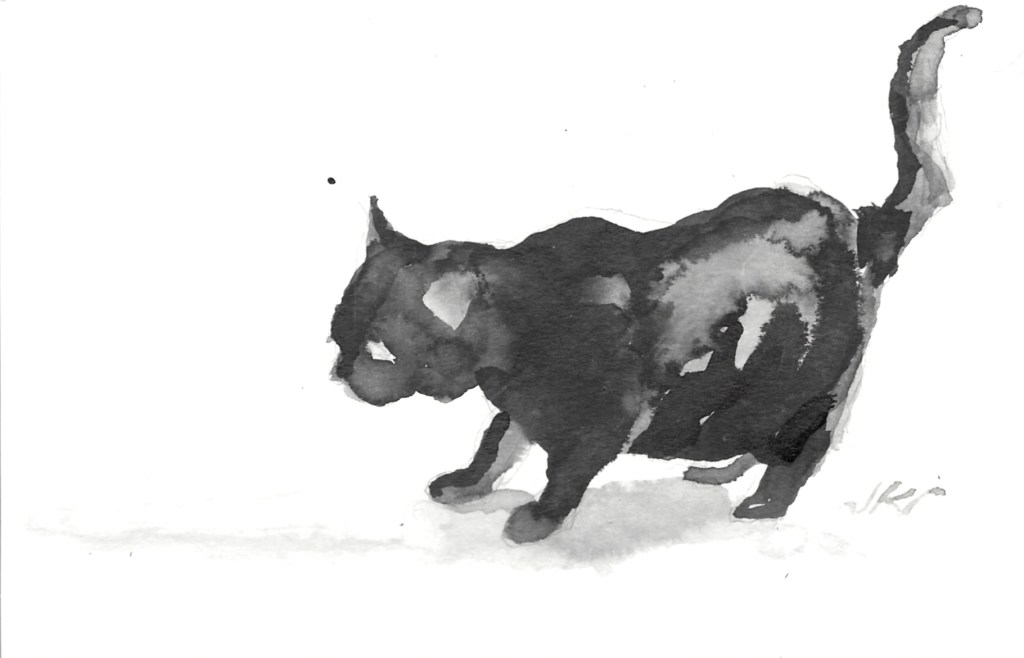
Curious and quizzical. Meow
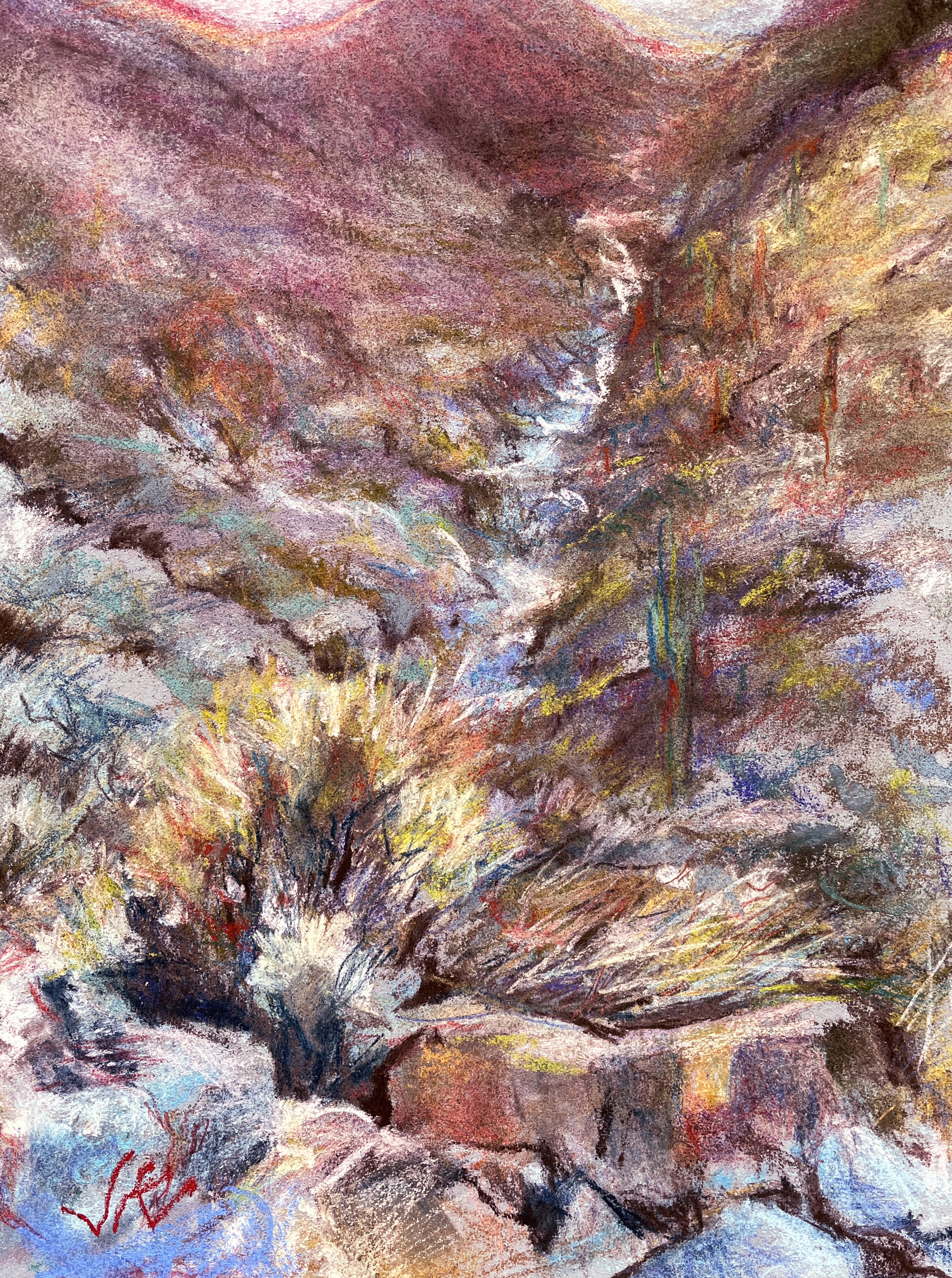
In the desert when the sun has just vanished below the mountains the light shifts in ways revealing colors not seen at any other time. This amazes me. Fact is, color changes all day long and through the night. Our color perceptions are defined by time and space. Yeah, really…..
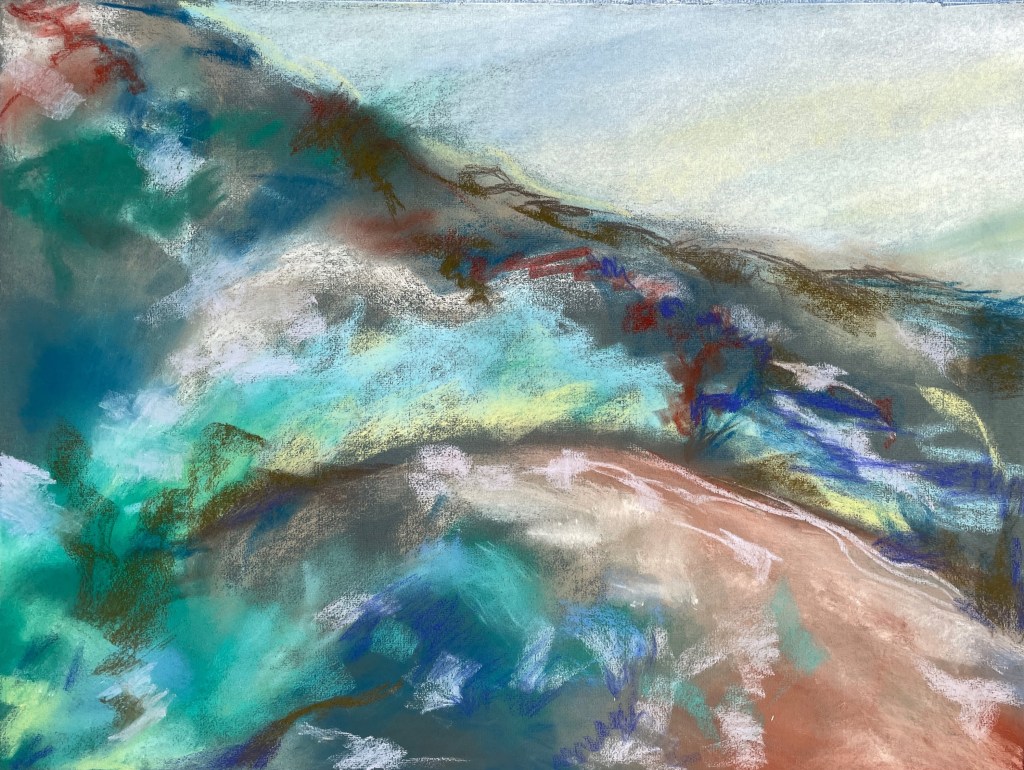

This painting is of a wondrous scene I encountered while hiking. I was taken by the arabesque forms of cactus and earth. I’ve included a shot the initial layout of of the painting which I used as a guide for the painting’s progression. I’m pleased with this painting and I hope you’ll enjoy it, too.
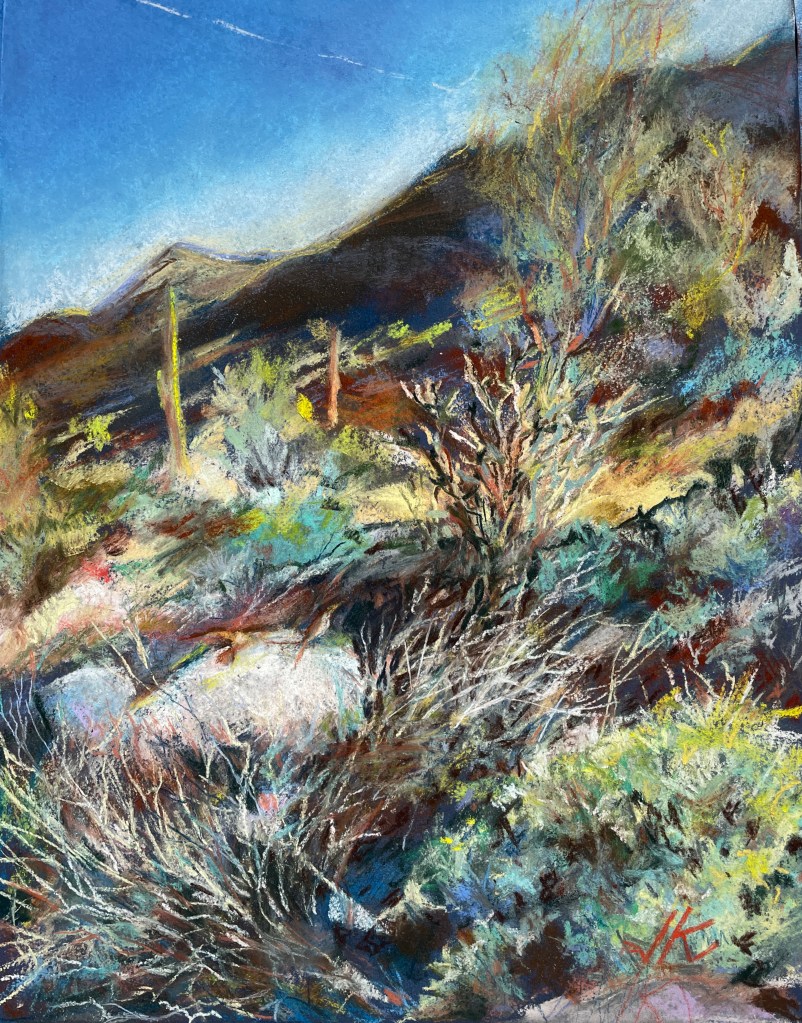
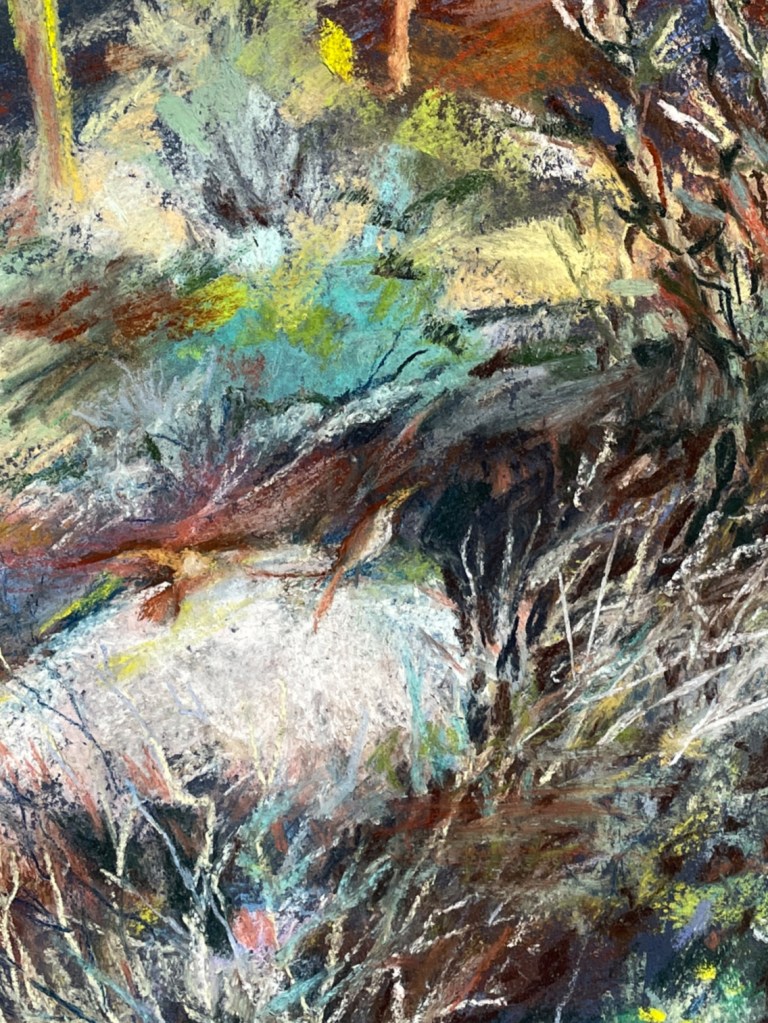
I’m hiking as much as I can while I spend a few weeks of winter in Arizona. Each hike I determine to see at least one wondrous sight. Sometimes I see the rare desert pool of water, sometimes I see a herd of deer, perhaps a lizard or an early blooming of cactus. Most frequently my wondrous sight is the composition of the desert landscape all by itself as its many elements arrange themselves into intricate layers with lines and swirls of light and color. This painting is of a wondrous sight I witnessed while hiking at the end of a day.

Buck the Cat looks askance.

The San Pedro Cactus is a gorgeous plant. They grow tall and wide and have straight regular columns or can be quite gnarly and contorted, depending on the growing environment and genetic mutations. The one I’ve painted is of the gnarly type. It grows at altitudes of 2-3,000 ft and is a known hallucinogen. What’s not to love.
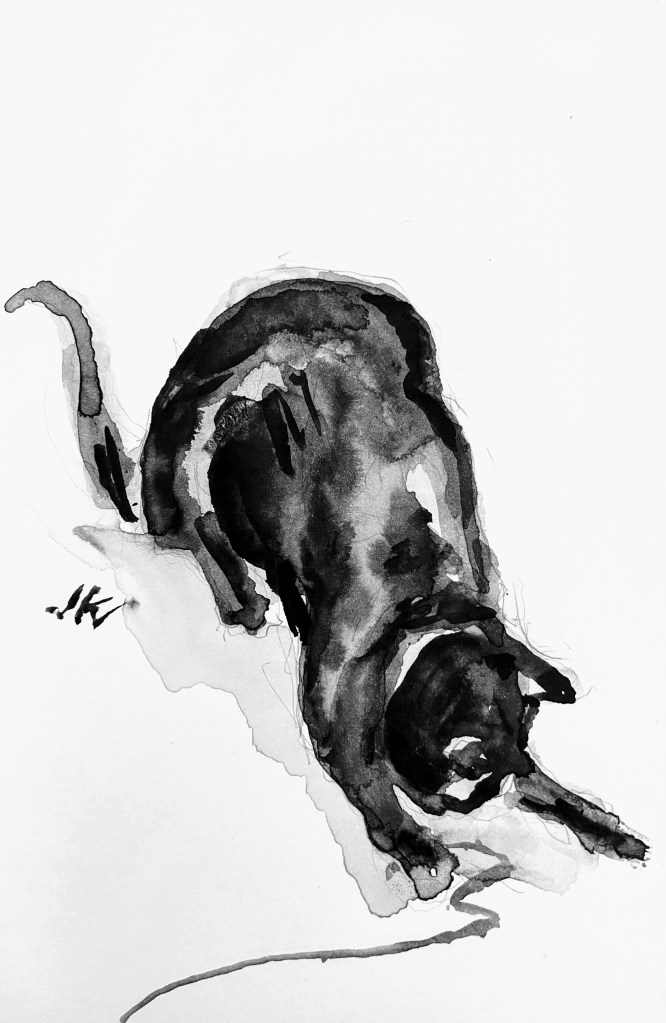
Buck the Cat chases string. What do we chase? Meow.
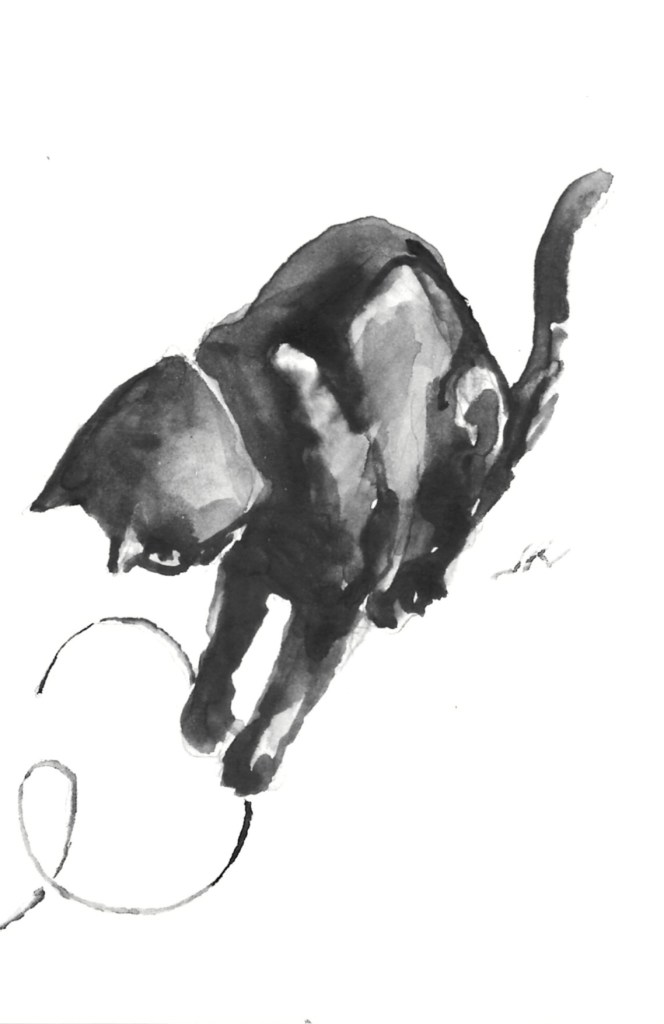
Buck the Cat is almost always busy. Meow.

Buck the Cat in a modified pounce. Meow.
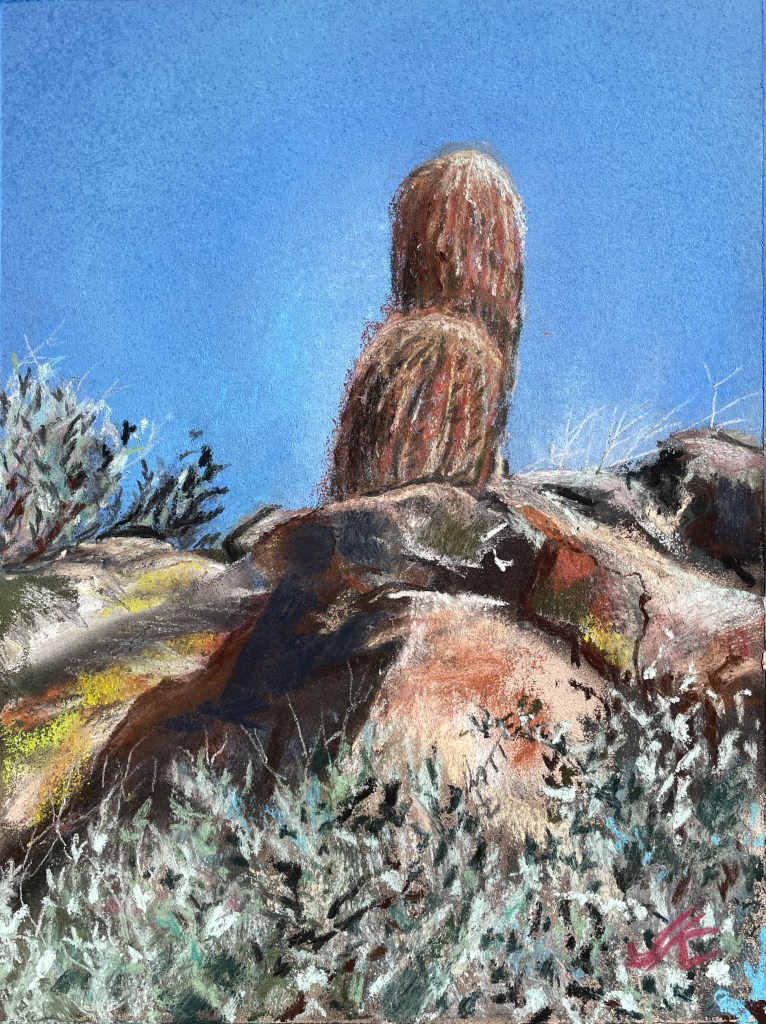
While in Arizona I try to hike every day. The temperature is still below 70 degrees F. during the day, perfect for walking. I walk in one of the Maricopa County Regional Parks, a wild and varied landscape with lots of rocks, animals and plants. I’m always looking for my next painting when I’m there.
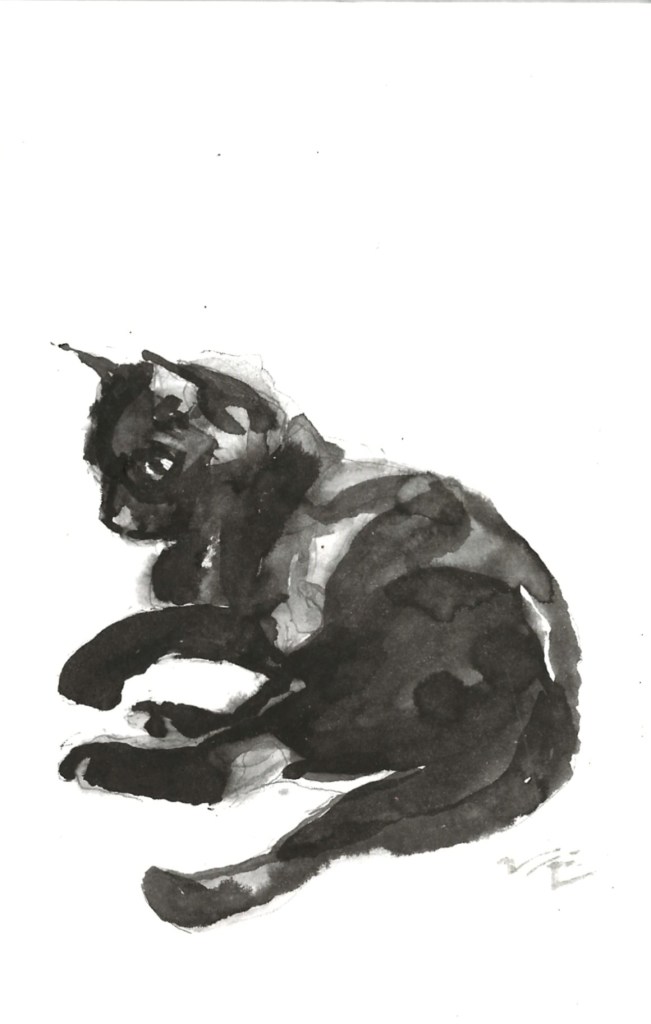
Buck the Cat on defense. Meow.
The Eastern Bracken Fern is found in the Adirondacks of New York State. It’s a deciduous rhizome that appears in spring, lives and spreads in the summer, looses its fronds in the fall, winters underground and then starts it all again when the earth thaws. This painting shows the fern in early spring.
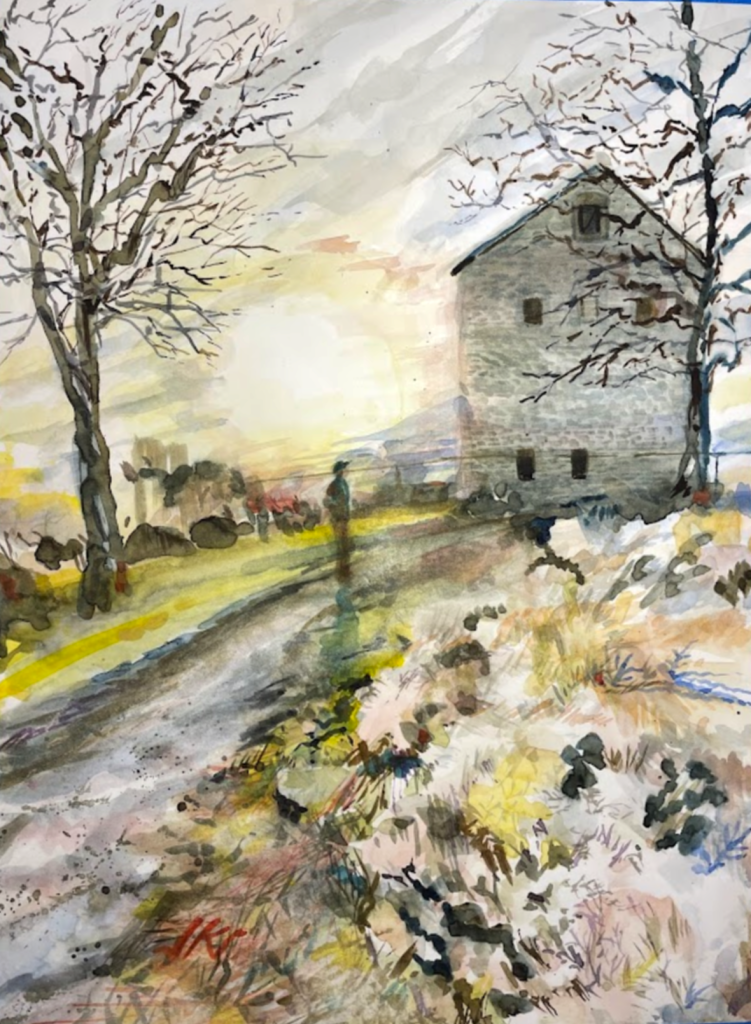
Autumn is upon Valley Forge. The stone barn shown here was built and added to in the 19th c. It has the remnants of a Palladian window in the wall below the ridge, dating it to the Federalist era of architecture.
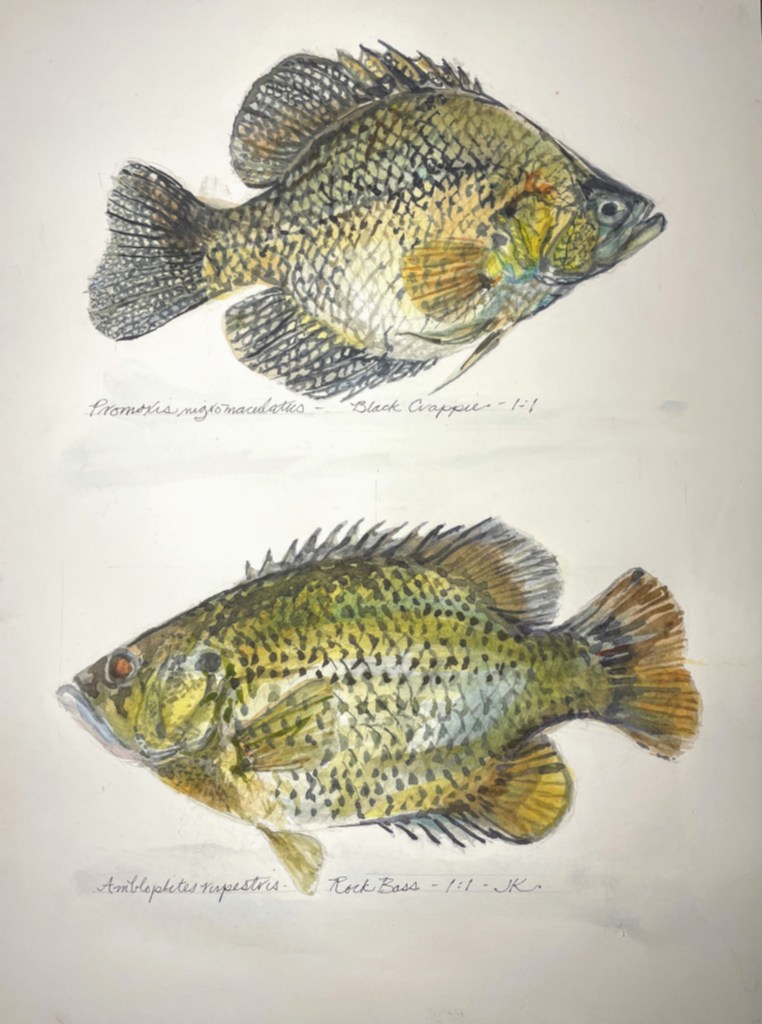
The Black Crappie and the Rock Bass are closely related, both ranging throughout the United States. These were caught in Upstate New York. They are painted true to size.
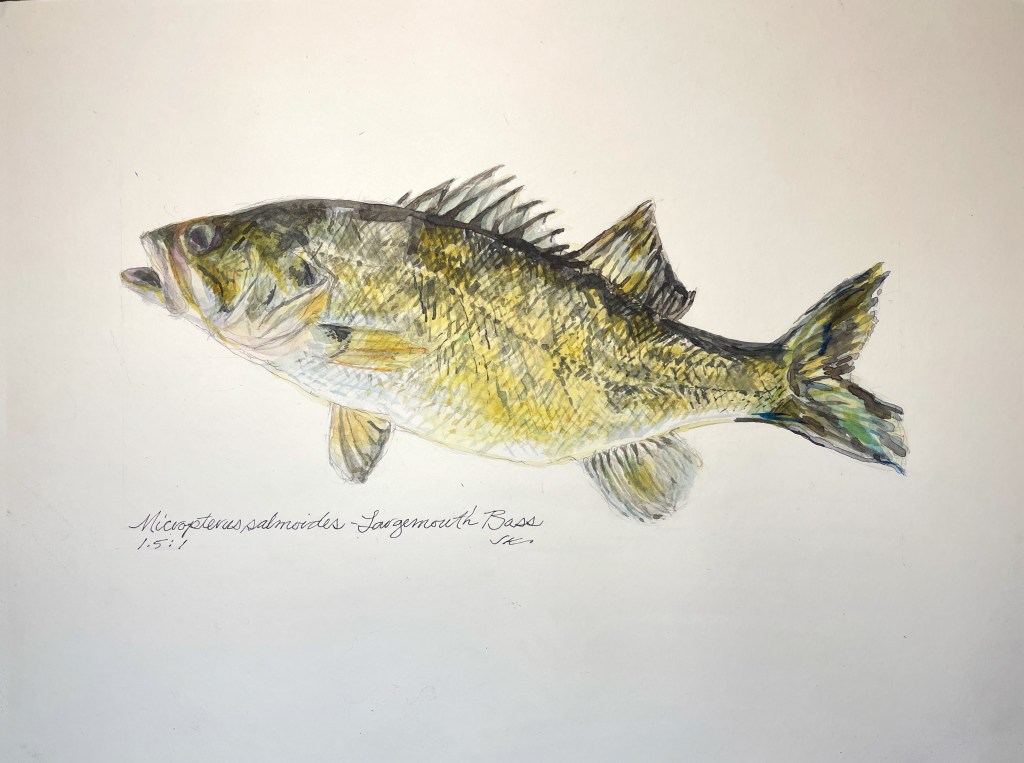
This large mouth bass is painted at a scale of 1.5:1 which means the live one was bigger by half. They can grow really big and don’t like to be caught, putting up a strong fight. The husband caught him, I photoed him and he was released back into the Upstate New York Lake from which he came. Now he’s immortalized in this highly desirable painting.Watercolor, 16×12″, 2021, $265.https://www.dailypaintworks.com/buy/auction/1249639
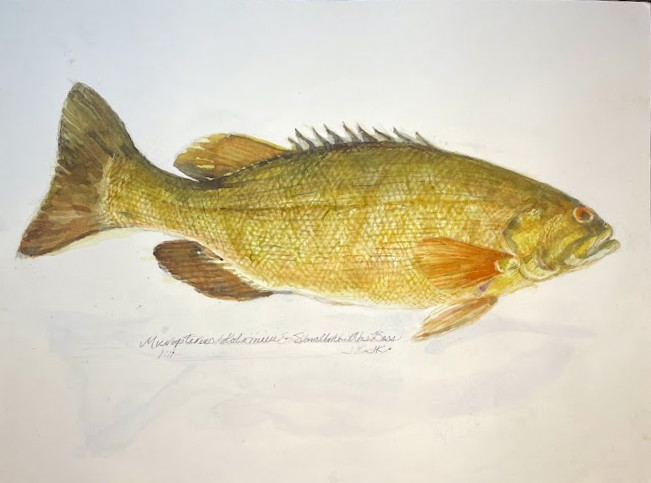
Small Mouth Bass are found in waters of the US, north to south East to west. The fish shown here was caught in the Adirondack Park in New York. It’s a little unusual in that it was a yellow ocher color. Most are in the green grey range. Perhaps the anomaly can be explained by the fishes diet.

 Jean Krueger Fine Art